
Drew a Fortune Stick in Taiwan? An AI Will Explain It for NT$6 a Minute
Since September 22, nine temples in Taipei and New Taipei have run 0203 phone lines where an AI explains your fortune poem and takes follow-up questions. Temples sign up free and share the per-minute call revenue. Landline callers pay NT$6 a minute; the mobile rate has not been published.
At many Taiwanese temples, asking the gods a question ends with a numbered bamboo stick and a slip of classical verse that few visitors can read unaided. Since September 22, nine temples in Taipei and New Taipei have offered another way to get it explained: dial the temple's own 0203 phone number, say the number on your stick, and an AI voice reads the poem back in plain language and takes follow-up questions. The service comes from AIGO, a Taipei startup, running on Chunghwa Telecom's network. Representatives of the nine temples and a deputy secretary-general of the Executive Yuan, Taiwan's cabinet, turned up for the launch. According to the Economic Daily News and other launch reports, the lines answer around the clock in Mandarin, Taiwanese, English, Japanese and Vietnamese, and callers pay NT$6 a minute on their phone bill.
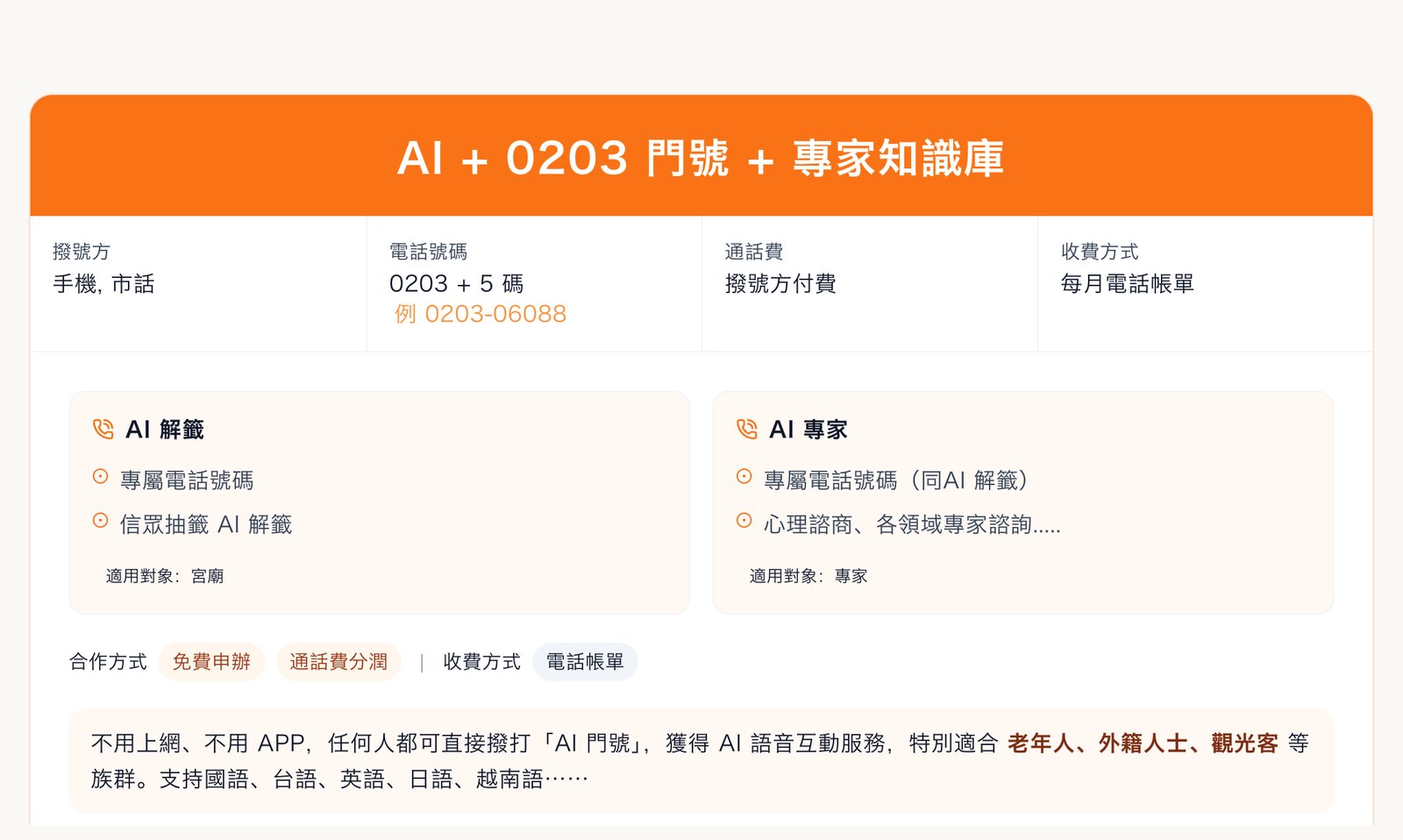
Reading fortune poems online is nothing new. Lukang's Tianhou Temple, for one, lets you draw a stick on its website and shows the full verse once the divination blocks say yes. What changes here is the door and the meter. AIGO's site names its intended callers outright, older people, foreign residents and tourists, and stresses that no internet, app or sign-up is needed. At the temple itself, interpretation depends on staff. Xingtian Temple in Taipei, for example, sends people who have drawn a stick to its service office to collect the slip and ask for an explanation, between 7:30am and 8:30pm, with pauses on the 1st and 15th of each lunar month and during ceremonies. China Times reported that temple readings have long been limited by staffing, opening hours and language, and that people often queue. The phone line picks up at 3am. It is just not a person.
The money is laid out more plainly in AIGO's FAQ than in any of the launch coverage. Temples pay nothing to set up a number and no monthly fee. Instead they share the call revenue: Chunghwa counts the calls and minutes, multiplies by a revenue-share rate, and pays out on a schedule. Neither the rate nor the split between AIGO, Chunghwa and the temples has been published. What the formula does make clear is that the more people call, and the longer they stay on the line, the more the temple earns. Each temple gets its own number, and according to the companies the AI answers from that temple's own poems and interpretations.
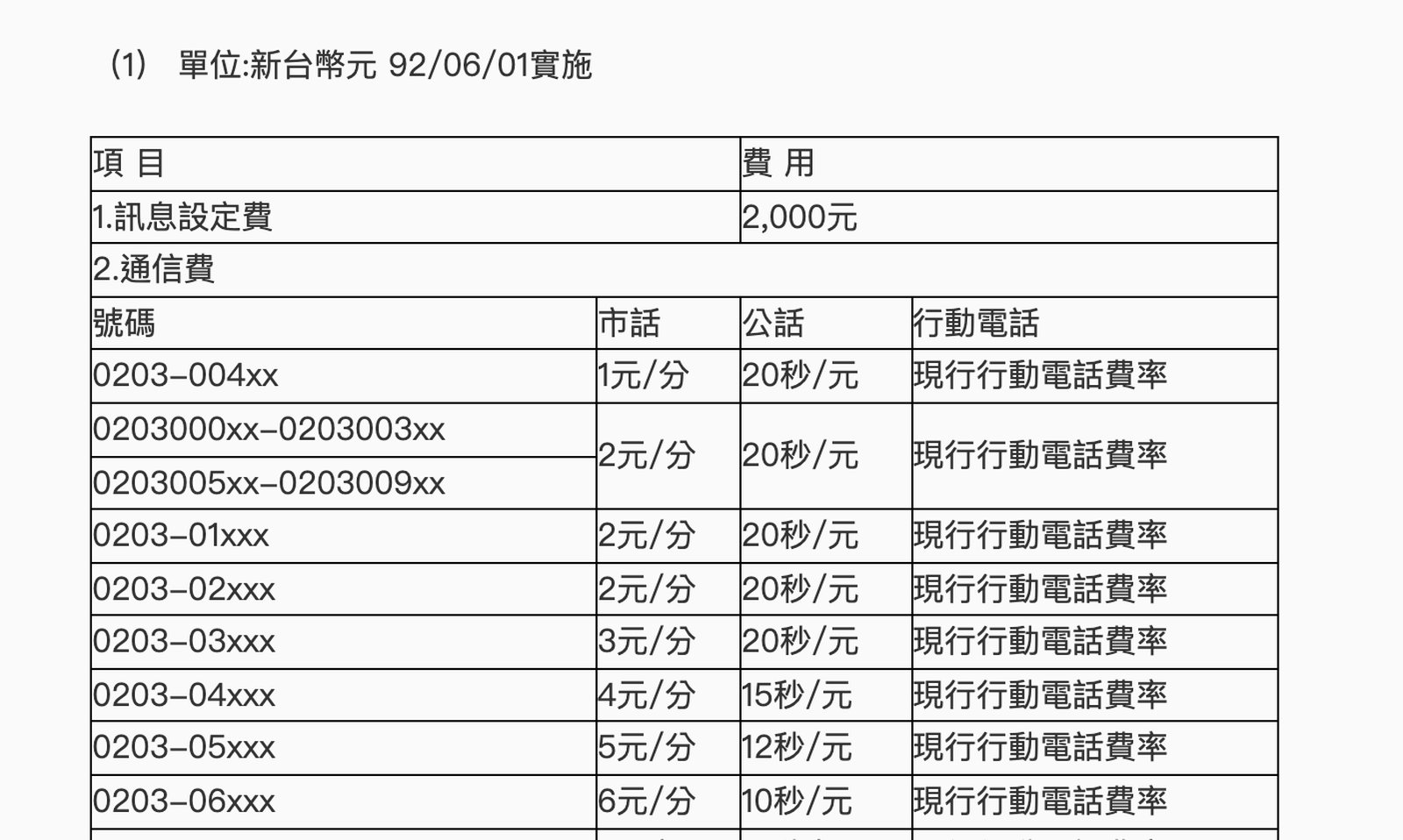
So what does a call actually cost? The launch figure was NT$6 a minute. Chunghwa's published tariff for 0203 numbers, in force since 2003, is more specific. Numbers beginning 0203-06 cost NT$6 a minute from a landline and NT$1 per 10 seconds from a payphone, which works out the same. The mobile column just says "current mobile rates". AIGO's own sample number, 0203-06088, sits in that NT$6 band. In other words, the NT$6 figure checks out if you ring from a home phone. From a mobile, it depends on your carrier and plan, and neither the launch coverage nor Chunghwa's press release gives a number. The same tariff page lists what 0203 lines have traditionally been used for: stock quotes, phone votes, and checking whether a typhoon has closed offices and schools.
What you can ask is broad, at least on paper. China Times wrote that callers with doubts about work, health or relationships can keep asking, and the AI answers from the temple's knowledge base. AIGO's FAQ says each client can set which material the AI may quote, which questions it may answer and which it must refuse. Nothing published so far shows where the nine temples drew those lines, or whether the AI steers health questions toward a doctor. The launch coverage did not list the temples' full numbers either, so for now you have to get one from the temple itself.
Fortune slips are only AIGO's first application. Its FAQ lists who it hopes will want a number next: influencer clones, nutrition advice, counselling, pet health, legal advice, stock analysis. Each would get one phone number, one knowledge base and the same per-minute revenue share. For someone holding a fortune slip, the practical advice is short. Call from a landline if you want to know the price. On a mobile, check your plan first. And every follow-up question keeps the meter running.
Recommended
 FateKitSponsoredBest for astrology and Chinese-metaphysics readers who want to compare several chart systems for the same moment, inspect the sky data behind them, and prepare structured context for an external AI without uploading a profile by default.
 Cantian AIFor people who want AI Bazi readings and also want to cast a hexagram, check feng shui, or choose a name in the same app.
Sources
Similar stories
Korea's Newest Saju Apps Want You to Bring a Friend
Types now trades unlimited saju questions for friend invites, and at least five new Korean fortune apps since September are built around the people you know: a benefactor field guide, group-chat compatibility rankings, a couples drawing game and an AI that reads your crush's texts. Their ratings are still in single digits, but they're all heading the same way.
BaZiEast Asian divination
Swipe Up for a Shaman: A Korean Video App for Fortune-Tellers Hits the Top-Grossing Chart
FlipToc turns human fortune-tellers into a swipeable video feed with per-minute calls, leaving AI to subtitle, translate and take notes. It reached Korea's top 25 grossing Lifestyle apps within a week on three ratings, and its public ranking shows 1,659 sessions in 18 days.
Astrology MarketplacesEast Asian divination
You Can Now Ask Siri to Ask Your AI Astrologer
A month into iOS 27, Hypergate AI and yap let the new Siri pass questions to their AI astrologers. Both are tiny apps; Co-Star, Nebula and CHANI haven't mentioned Siri, and the answers depend on each app's own AI.
AI AstrologyVoice AI