
Stamping the Small Things
Koyonari puts small actions, evening prompts and personal notes around a daily I Ching reading. Its winter events turn the seals marking those actions into a souvenir of the season.
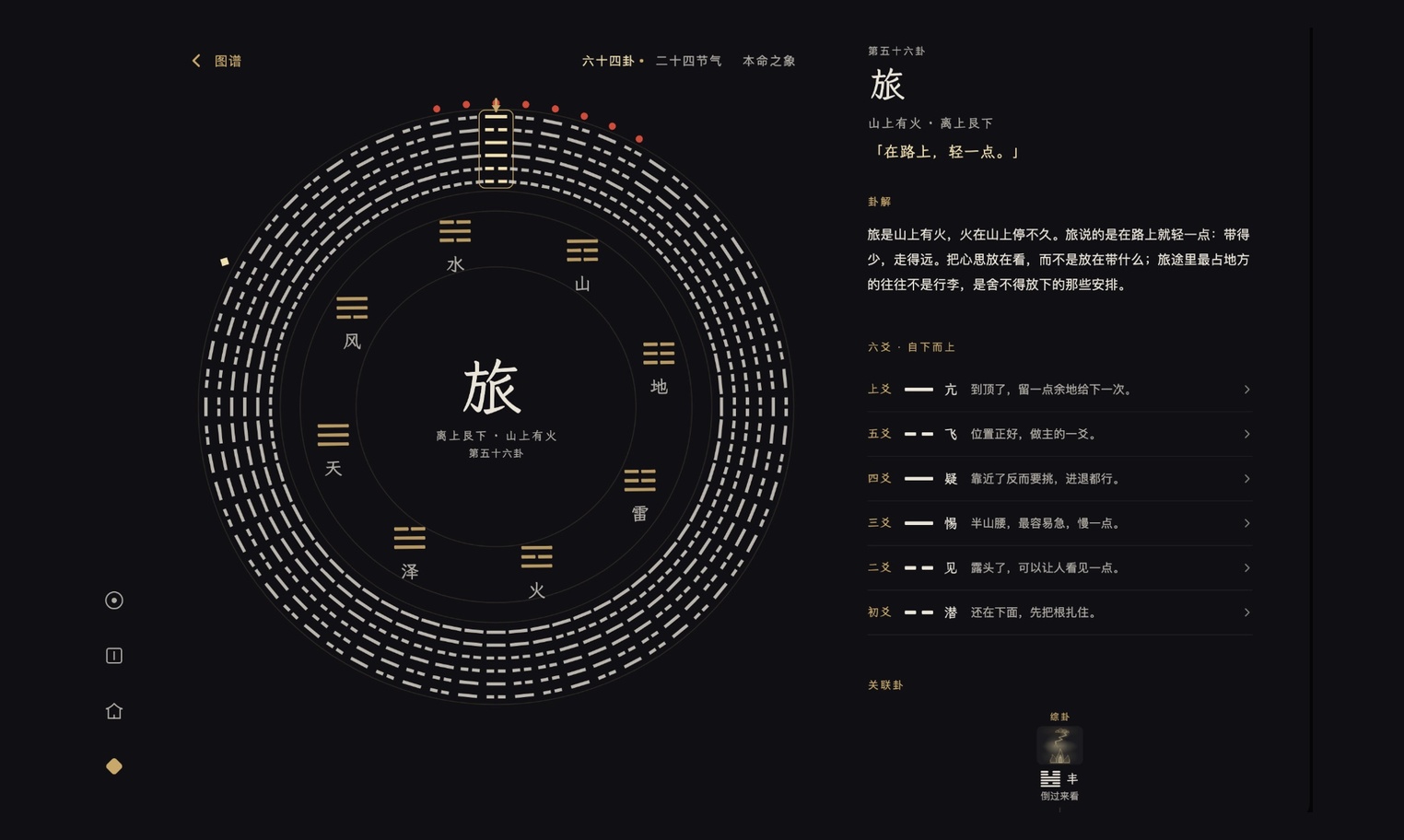
Koyonari opens with a dial of concentric rings for the hour, solar terms and moon phase. A daily I Ching slip carries three things to do, each with a seal the user can press when finished. A note and a photograph can join the reading later in the day. For the approaching Start of Winter, the app is giving those small completion marks a seasonal reward, a commemorative seal earned over the fifteen days before Minor Snow.
The suggestions also respond to the situation selected. In the public website's Chinese-language Daily demonstration, a slip labeled 师之临 suggests clearing one corner of a desk, silencing the phone for an hour while noting what gets done, and delivering a small result that can be finished in fifteen minutes. Switching to Work keeps the same hexagram label. The first two suggestions change to declining something that should not be your responsibility and seeking another person's view. The fifteen-minute result stays on the list.
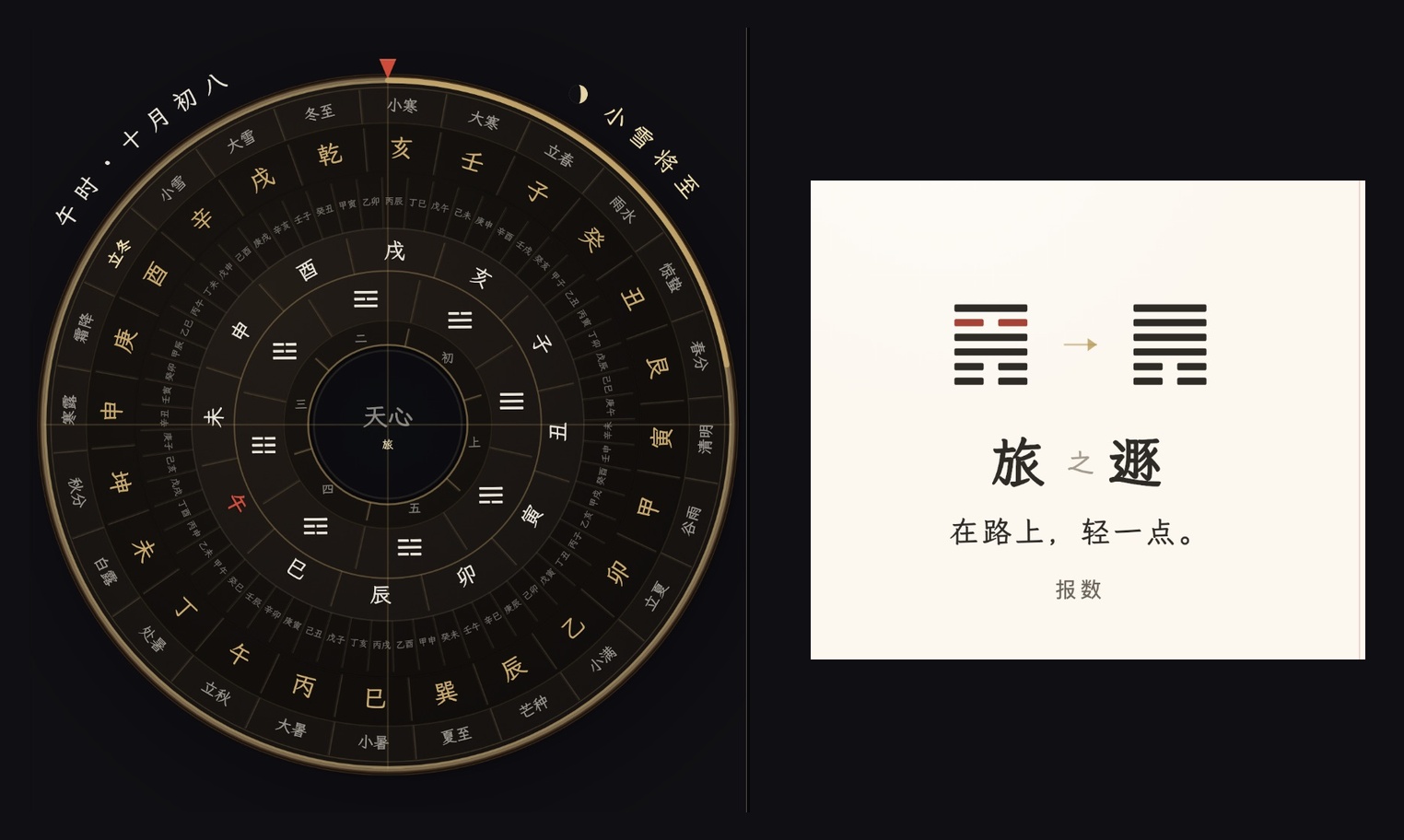
There is a corresponding change at the other end of the day. Daily asks for a recollection of the lightest part of the day. Work asks which unnecessary task was set aside. The evening prompt follows the kind of attention the earlier actions called for. These are changes observed in the website's interactive example, where a seal can be pressed and the slip turned to reveal a writing field.
The native app's store description assigns the reading and the record to opposite sides of the paper. The front holds the hexagram and its commentary. Three actions, a note and photos occupy the reverse. The calculation follows the Plum Blossom method, taking information from the moment to form a primary hexagram, a changing line and a relating hexagram.
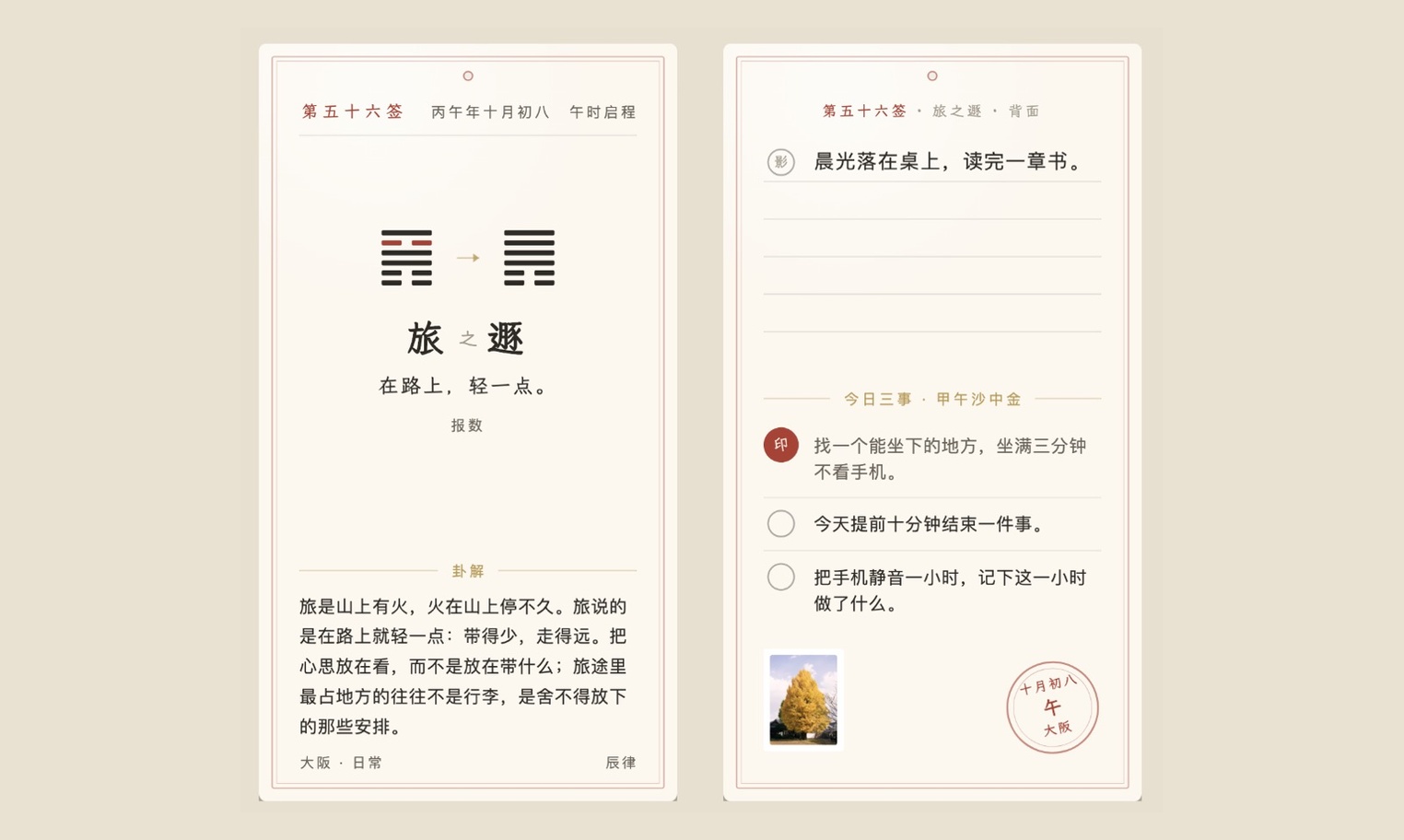
An official store image suggests sitting somewhere for three minutes without touching a phone, or finishing one task ten minutes early. Each suggestion has an empty circle beside it. Once marked, the circle carries a vermilion 印, the Chinese character for a seal.
The Daybook then files the slips by lunar month. In the official archive image, the cards show hexagram names, dates and small circles filled red in different numbers. The product description says notes and photos remain with their slips, and that past records can be searched in full. Its atlas marks encountered hexagrams on a ring. An old reading can therefore be reopened with the words, images and completion marks recorded beside it.
For winter, Koyonari is tying one of the three daily actions to the solar term. Its thirty-day event runs from Start of Winter to Major Snow. Slips drawn during that period carry an action written for the term, with a fresh set arriving at Minor Snow.
The nine-seal challenge covers the first fifteen days of that event, ending at Minor Snow. Its rules track both quantity and spread. Users need nine seals in total and at least one in each of the three pentads, the roughly five-day divisions of the period. The commemorative 立冬 seal appears on the profile page once those conditions are met.
A filled seal can mark something as small as a cleared desk corner or three minutes with the phone set aside. The Daybook keeps those entries beside the day's reading.
Related apps

Recommended
 Cantian AIFor people who want AI Bazi readings and also want to cast a hexagram, check feng shui, or choose a name in the same app.
 FateKitSponsoredBest for astrology and Chinese-metaphysics readers who want to compare several chart systems for the same moment, inspect the sky data behind them, and prepare structured context for an external AI without uploading a profile by default.
Sources
Similar stories
Folklore Spirits Open a Fortune-Telling Alley
Moonlit Fortunes gives each divination a shopkeeper, from a nine-tailed fox to a black cat. Their identities carry into the reading cards, with stories promised for returning visitors.
Content formatsEast Asian divination
This Dream Journal Turns Familiar Symbols Into Constellations
DreamBuddy’s October update counts the images that recur across your dreams, connects them in a sky and builds a shareable personality card from ten different symbols.
AI Dream JournalSelf Reflection
This Baby-Name App Lets Grandma Cast a Vote
Areumjit gives three baby names perfect scores in its official example, then offers a family poll. Relatives can pick a favourite through a link without installing the Korean naming app.
BaZiEast Asian divination