
Sleep-Talk Apps Used to Share Your Mumbles. Now They Interpret Them
Japan's Negoto Uranai now turns overnight sleep talk into clean sentences and a dream-style reading, and two new English-language recorders hand the transcript to AI. A decade ago these apps were about uploading funny clips to a public leaderboard. The new ones can keep recordings on the phone and read them back to you alone.
A Japanese app called Negoto Uranai, roughly "sleep-talk fortune," updated on Oct. 12 so that whatever you mutter overnight comes back the next morning as clean sentences, followed by a dream-style reading of what is on your mind. On Oct. 20 it sat at No. 48 on Japan's paid Lifestyle chart. Two other sleep-talk recorders launched this year, Sleep Talk AI Recorder and Sleep Talk Recorder & Snore, do much the same: transcribe the mumbling, then hand it to AI to interpret.
Sleep-talk recorders have been on the App Store for well over a decade, and the fun used to be playing the funniest clips for other people. The new ones treat sleep talk as a clue to your dreams, read it back to you alone, and promise in their listings that your audio can stay on the phone. None of them is a hit yet. The most-rated has two ratings. But the way into a dream app is shifting: instead of typing up a half-remembered dream at breakfast, you let the phone listen while you sleep.
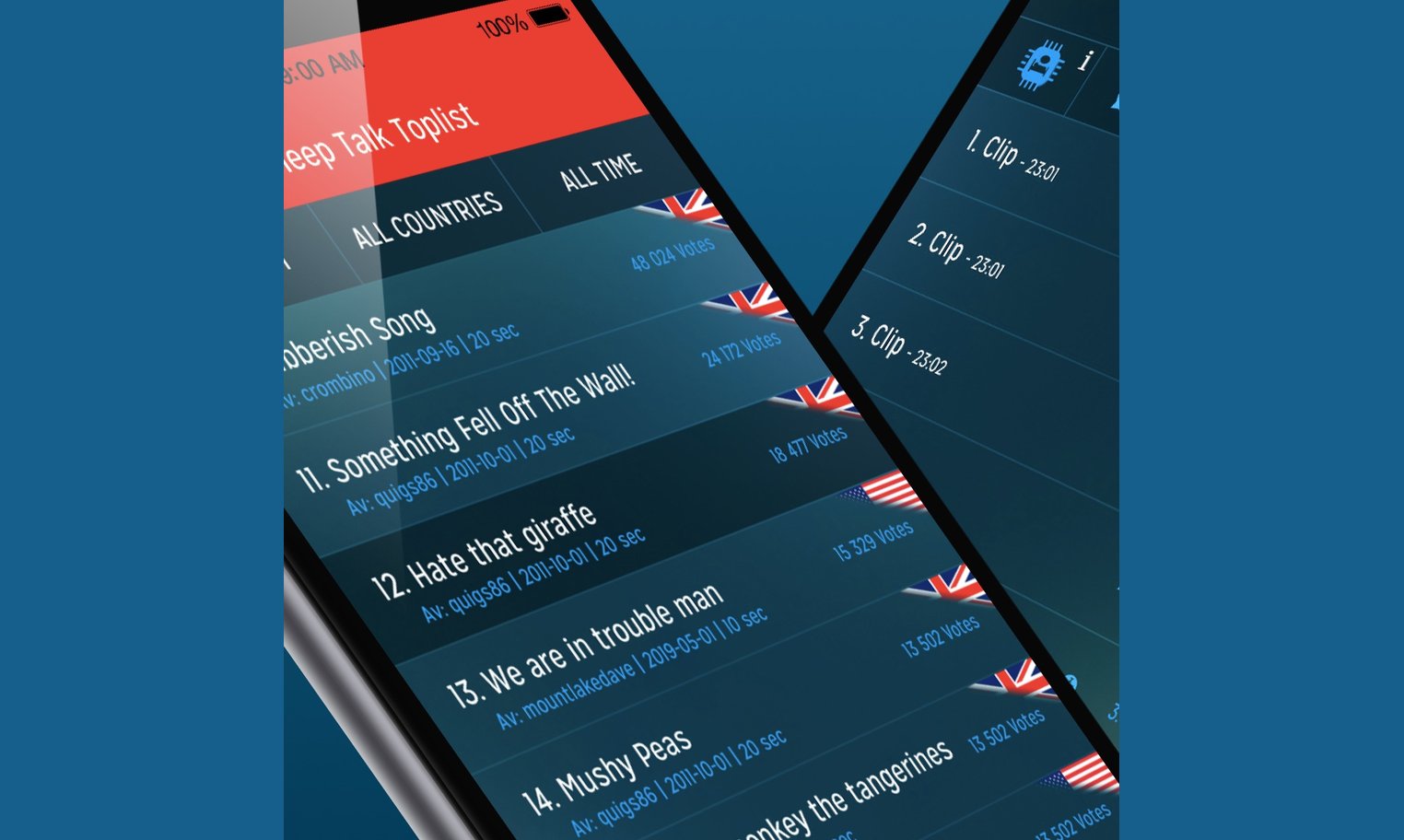
The best-known of the older apps is Sleep Talk Recorder, launched in 2010. Its listing says more than 6 million people have tried it and more than 160,000 clips have been shared to its Sleep Talk Toplist, where entries such as "Hate that giraffe" and "Mushy Peas" have each collected over 10,000 votes. Dream Talk Recorder, from 2011, also lets users post clips to a public website. Sleep Talk Recorder shipped an update on Oct. 19 and now uses AI to sort sounds into talking, snoring and everything else, but it still doesn't transcribe or interpret anything. Its recent reviews mostly complain that recordings now sit behind a paywall.
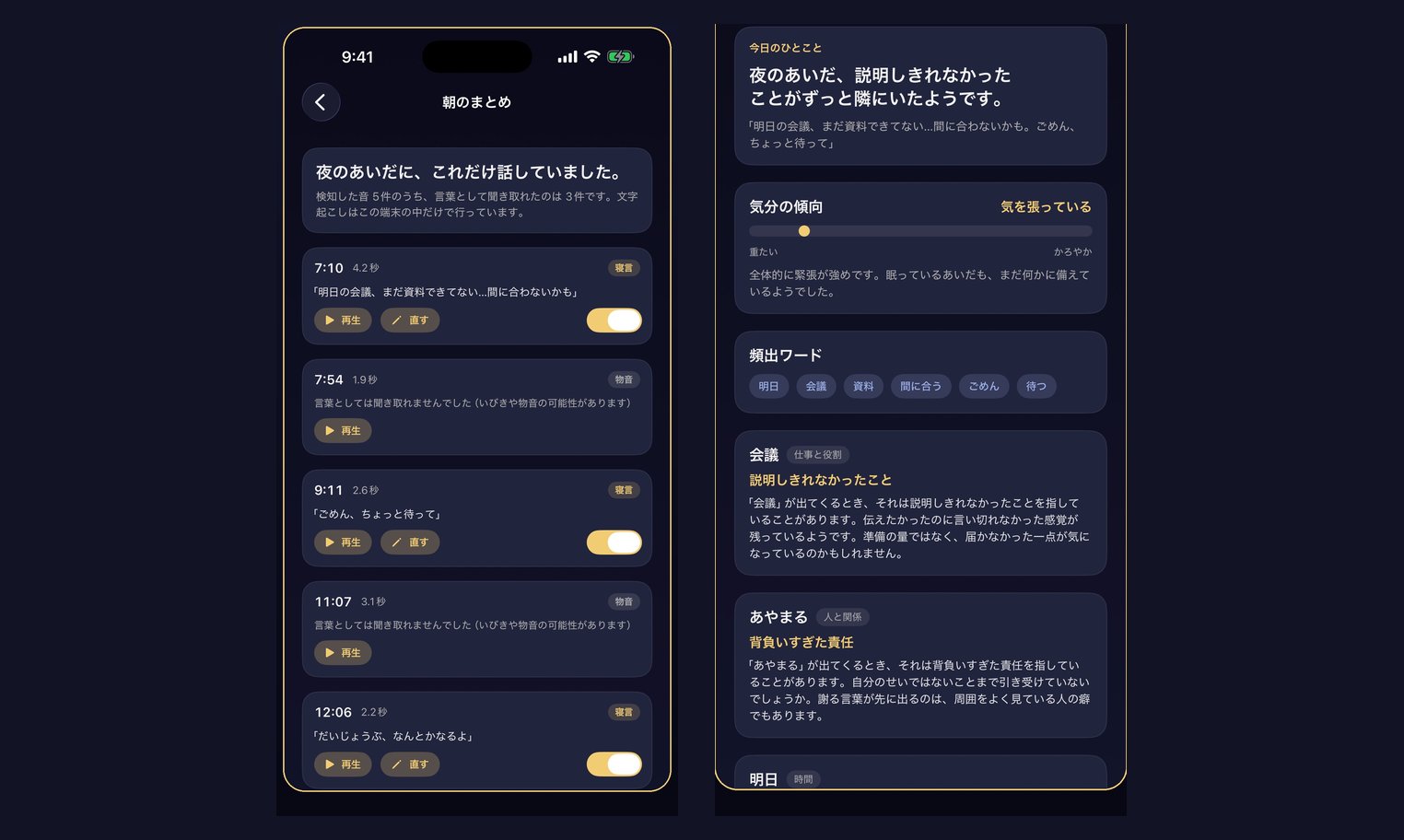
Negoto Uranai, which launched Aug. 20, turns the night into a morning digest. The phone sits by the pillow and records only when it hears something. In the morning, a summary screen transcribes each clip in order and separates speech from snoring and noise. In one store screenshot, the 7:10 a.m. clip reads, in Japanese, "Tomorrow's meeting, the slides aren't done... might not make it," and the 9:11 clip is "Sorry, hang on." The Oct. 12 version adds punctuation and drops filler words like "um," and the release notes add that the app never adds to or changes what you said.
For the reading itself, the app doesn't claim to use AI. It relies on a built-in dictionary of dream symbols. In the screenshots, "meeting" points to something you couldn't fully explain, "apologize" to taking on blame that wasn't yours, and the night's overall mood is tagged as tense. The Sept. 28 update added a bedtime checklist of eight items, including alcohol, caffeine, a late dinner and stress. After at least two nights with and without a given item, the app compares the mood of your sleep talk. The same update added English, Korean, Traditional Chinese, German and French, each with its own symbol dictionary. One of the app's two Japanese reviews says the recordings revealed a sleeper who apparently couldn't stop thinking about takoyaki.
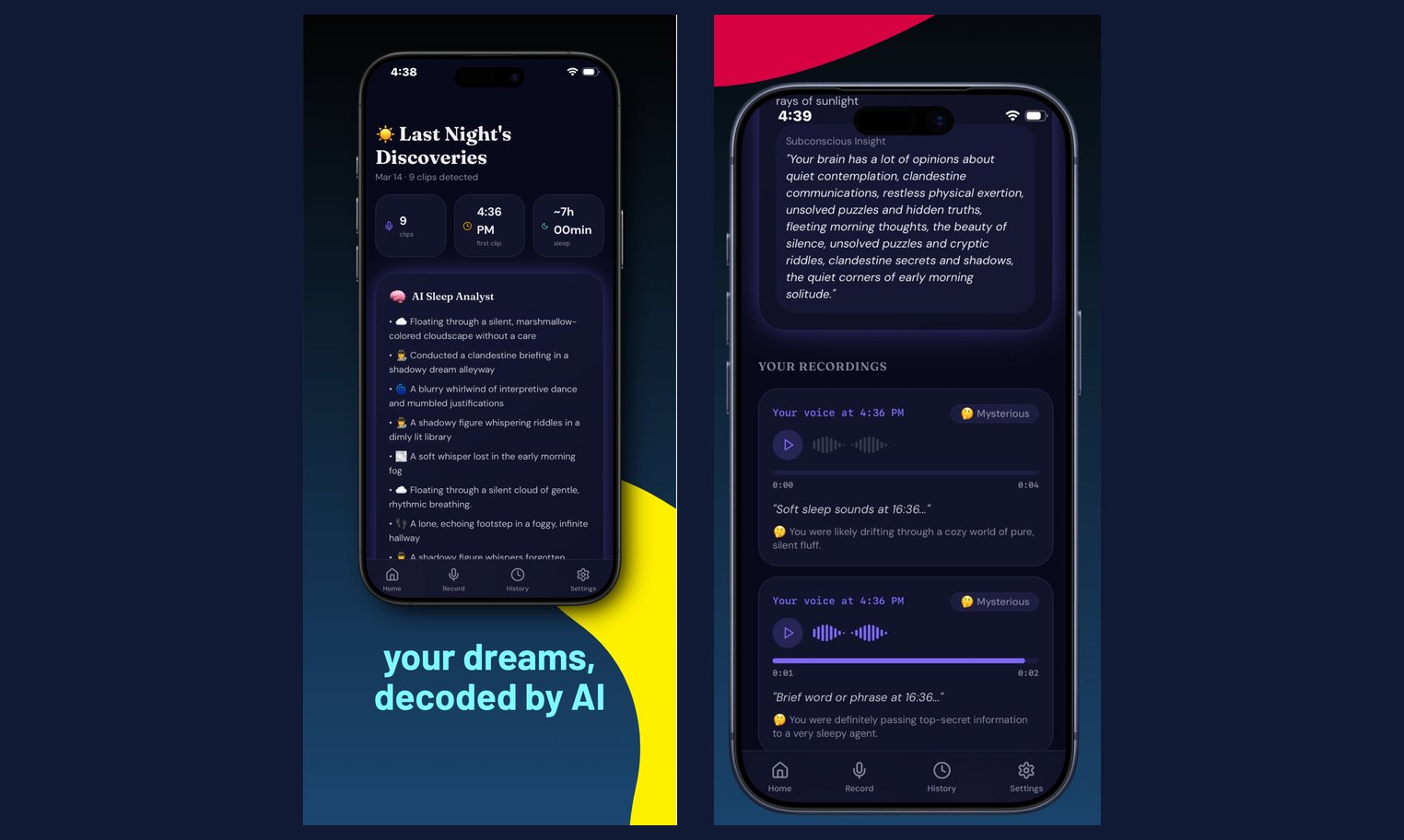
Sleep Talk AI Recorder, which launched in April and calls itself Sleep Talker inside the app, gives the interpretation to AI. Each morning it writes an "AI Sleep Analyst" report and attaches a mood tag and a guess to every clip. The store screenshots show how freely it guesses: a few seconds tagged as a brief word or phrase becomes, in the app's words, "passing top-secret information to a very sleepy agent." A setting called Keep Everything On Device, the listing says, keeps recordings on the phone and runs the AI analysis locally.
Sleep Talk Recorder & Snore, released in June by Stationify, is closer to a sleep log with dream readings as an extra. It transcribes on the device, labels snoring, breathing and coughs, and with Apple Health places each sound in a sleep stage such as deep or REM. On devices with Apple Intelligence, the listing says, it offers a gentle interpretation of what a fragment might mean. The Oct. 7 version lets users set separate retention periods for audio and transcripts, and when a transcript expires, the related dream readings and night summaries go with it.
All three new apps lead with privacy. Stationify promises no account, no cloud and no analytics. Negoto Uranai says recording, transcription and readings all happen on the device and work in airplane mode, with only anonymous usage counts that can be switched off. That is the opposite of the old leaderboard. Sleep talk can include work, family and worries, and what these apps interpret is far more personal than a funny clip. All three also say they are not medical products, and Negoto Uranai and Stationify specifically say they don't diagnose sleep apnea.
A decade ago, people recorded their sleep talk to play it for friends over breakfast and laugh. Now the apps want to hear what you didn't finish saying during the day. Some nights, though, the message really is just takoyaki.
Related apps
Recommended
 FateKitSponsoredBest for astrology and Chinese-metaphysics readers who want to compare several chart systems for the same moment, inspect the sky data behind them, and prepare structured context for an external AI without uploading a profile by default.
 Cantian AIFor people who want AI Bazi readings and also want to cast a hexagram, check feng shui, or choose a name in the same app.
Sources
- Apple App StoreNegoto Uranai on the App Store
- Apple App StoreApp Store Japan paid Lifestyle chart
- Apple App StoreSleep Talk Recorder on the App Store
- Apple App StoreDream Talk Recorder on the App Store
- Apple App StoreSleep Talk AI Recorder on the App Store
- Apple App StoreSleep Talk Recorder & Snore on the App Store
Similar stories
This Dream App May Sell Your Dreams to AI Developers, If You Say Yes
DreamApp's July 21 privacy update lets it train its own models on dream content and, with opt-in consent, license or sell dream datasets to AI developers; withdrawing can't recall copies already delivered. A few small apps are moving readings onto the phone instead, with trade-offs.
AI Dream JournalRisk and trust
Dream apps are becoming memory tools, not answer machines
Dreamvibe, Dreamly, and Reverie show the same shift: AI dream apps are moving from one-off interpretation into sleep context, weekly reports, journal questions, and long-running personal records.
AI Dream JournalSelf Reflection
You Can Now Ask Siri to Ask Your AI Astrologer
A month into iOS 27, Hypergate AI and yap let the new Siri pass questions to their AI astrologers. Both are tiny apps; Co-Star, Nebula and CHANI haven't mentioned Siri, and the answers depend on each app's own AI.
AI AstrologyVoice AI