
Tarot Readers Are Putting AI to Work
A reader who uses AI can still give a human reading. An AI product advised by a reader does not necessarily offer one. A service sold as a personal consultation should deliver the practitioner's own interpretation.
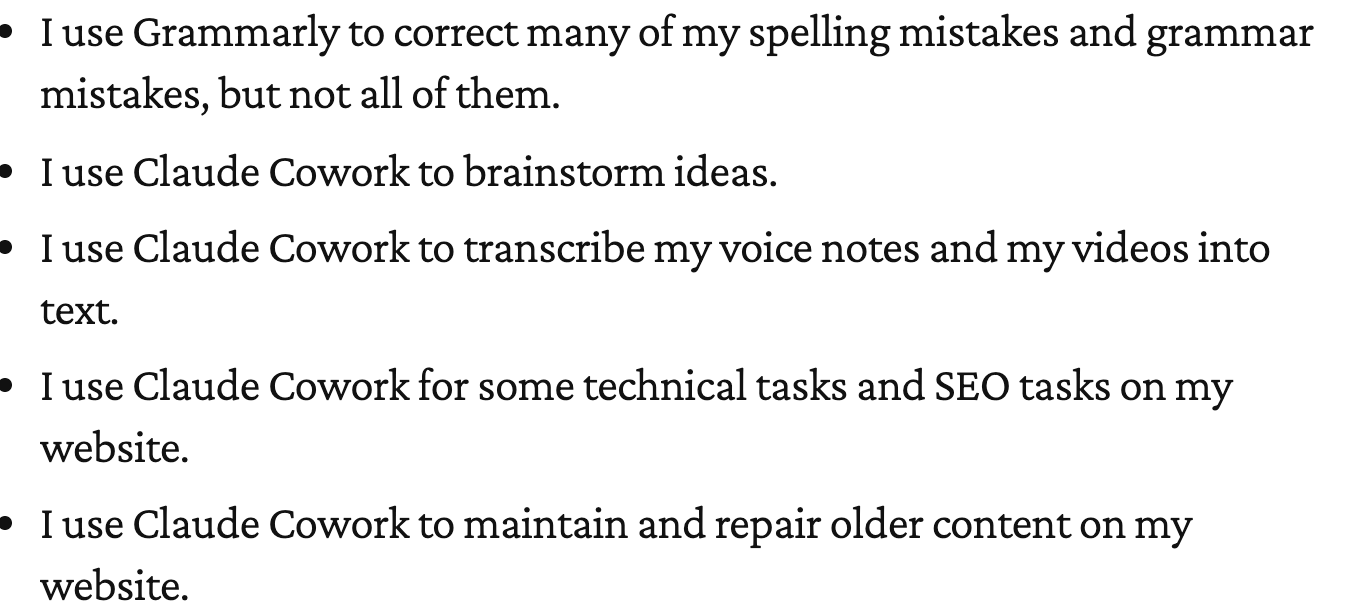
Tarot reader Madhavi Ghare lists spelling checks, transcription and website maintenance in her AI policy, then makes a separate promise to clients: she still performs every tarot reading herself. Using the software has not, by her account, meant handing it the consultation.
Practitioners can also contribute to automated interpretations, checking card meanings and assessing answers for platforms. Their experience shapes the product without them personally handling each customer's question.
The work that keeps getting postponed
For New Jersey tarot reader Madhavi Ghare, running a practice includes keeping two websites going largely on her own. In an early September essay, she described the technical work she struggles with and the cost of hiring help. Transcripts, search-related tasks and website problems had joined a backlog she kept meaning to tackle. AI helped her get some of it done.
She had initially thought AI required programming. A friend’s explanation and tarot author Mary K. Greer’s published AI conversations encouraged her to try it.
She also promises to do the teaching herself and review content before publication.
A tarot reader reviewing the machine
British tarot reader Inbaal Honigman has taken on a different role. She confirms on her own website that she works with Tarotoo, contributing to a review of its reading methodology, spreads and prompts. Her knowledge is being used in the production of an automated service.
Tarotoo says she tests questions and checks answers for relevance, consistent card meanings and appropriate tone. It also states that individual readings are generated automatically, without manual review before delivery. Her oversight concerns the method, rather than each customer’s result.
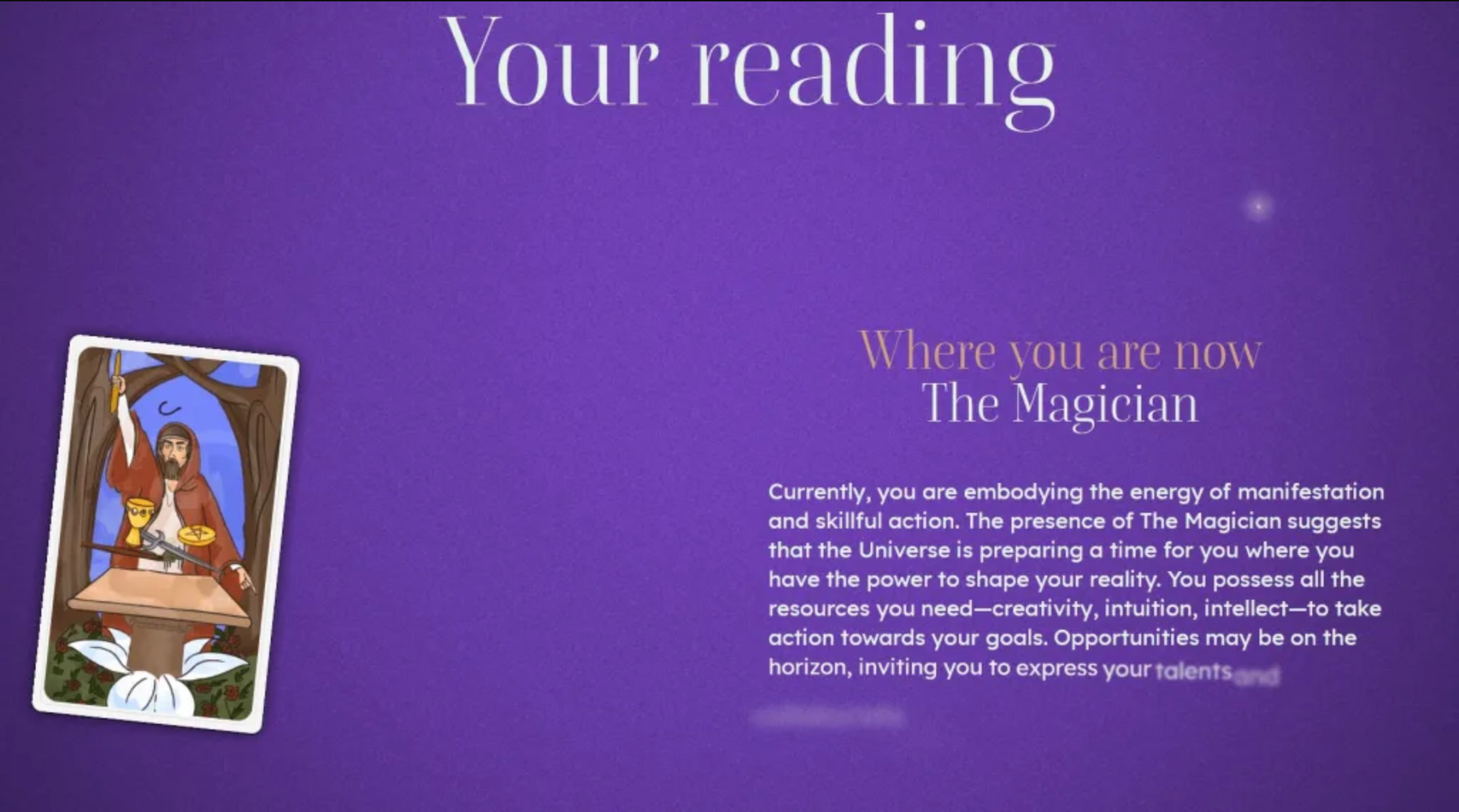
Honigman's contribution can have value without making the resulting text her personal advice. Tarotoo's disclosure makes that distinction explicit: professional input into the method and automated delivery of the answer coexist.
Putting a human author on the label
Astrology app CHANI makes a different promise. In an article arguing against AI astrology, it says its website and app content is written and recorded by human astrologers. It also publishes an AI answer marked with red crosses, objecting to its treatment of sunrise and the resulting day-or-night chart classification.
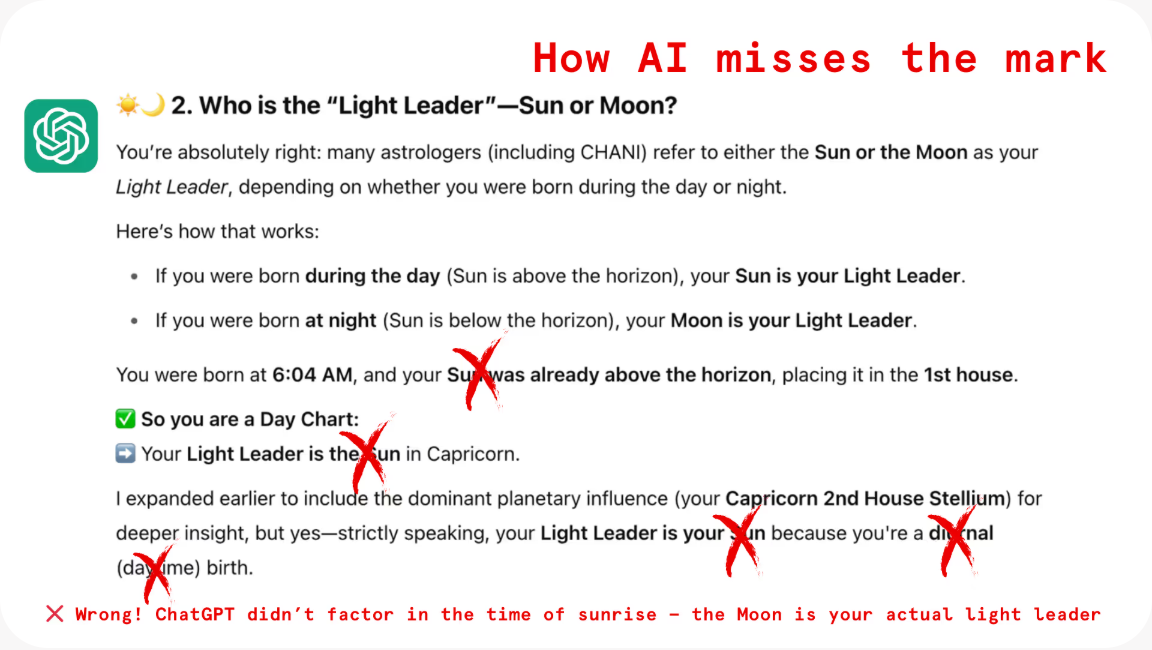
It is a brand-selected example, not a test of every AI astrology product. Nor does human authorship establish predictive accuracy. It does answer a narrower question that matters to someone following an astrologer’s work: who wrote what they are reading?
Customers are already comparing the price of human consultations with AI. In an April blog post, astrologer Andrew Smith recalled a longtime client whose daughter had asked why she paid for a consultation when she could ask an AI system. Smith objected to the planetary placements in the answer she showed him, though he did not publish the full exchange needed to check it. Finding fault with that answer does not, on its own, explain what his appointment adds.
In a 2025 interview with Chinese magazine New Weekly, a practitioner identified by the pseudonym Jia Xin offered a more concrete account of the work. He described clarifying what clients actually meant to ask, then hearing back from some after the reading to discuss events or arrange another consultation. His argument rested on an ongoing exchange.
Practitioners charging for a personal consultation need to explain the work they do for that client. An AI service can sell convenience, and a practitioner can sell their time and judgment. There is room for both. But where the promise is a personal reading, the human involvement cannot end at the name on the page.
Related apps


Recommended
 FateKitSponsoredBest for astrology and Chinese-metaphysics readers who want to compare several chart systems for the same moment, inspect the sky data behind them, and prepare structured context for an external AI without uploading a profile by default.
 Cantian AIFor people who want AI Bazi readings and also want to cast a hexagram, check feng shui, or choose a name in the same app.
Sources
- Madhavi GhareGhare’s AI policy
- Madhavi GhareGhare’s essay
- Inbaal HonigmanHonigman’s collaboration announcement
- TarotooTarotoo’s methodology
- CHANICHANI’s article
- Andrew SmithSmith’s account
- New WeeklyNew Weekly’s reporting
Similar stories
You Can Now Ask Siri to Ask Your AI Astrologer
A month into iOS 27, Hypergate AI and yap let the new Siri pass questions to their AI astrologers. Both are tiny apps; Co-Star, Nebula and CHANI haven't mentioned Siri, and the answers depend on each app's own AI.
AI AstrologyVoice AI
Siri Can Tell You the Planetary Hour. It Can't Read Your Horoscope Yet
Two weeks into iOS 27, Siri handles astrology only in a narrow way: a few small apps let it answer what planet rules the hour or where the Moon is tonight. Ask about your day and it has nothing, because Co-Star, CHANI, Nebula and the other big reading apps have not plugged in.
AI AstrologyApp store updates
An AI Reads Your Turkish Coffee Cup in Seconds. The Human Readers Make You Wait
Turkey's coffee cup reading apps have long sent your photos to human readers, and reviews complain about hours of waiting and stock phrases. Telveden lets AI read the grounds in seconds, publishes its 85-shape atlas and sources, and admits a different model would see different shapes.
AI DivinationAI metaphysics products