
The Things People Tell a Chatbot but Won’t Tell Anyone Else
An American survey’s written responses describe the private conversations behind the term AI companionship, from family worries to a recipe someone would rather not admit they need.
One respondent asks AI for recipes for dishes they pretend to be good at making. Another tells it how much they dislike their supervisor. Asked what they discuss with a chatbot that they usually keep from other people, participants in an Elon University survey offered answers ranging from serious personal worries to small embarrassments. The researchers published a selection of the anonymous responses alongside The Rise of AI Companions.
Elon highlighted the study on September 2; YouGov conducted the fieldwork in May. Researchers used a broad definition of companion use, covering activities including entertainment, discussing feelings and seeking personal advice. They estimated that 27% of US adults who use the internet qualified, and studied a sample of 1,000 people in that group. Of those companion users, 39% said they had told AI things they would not tell other people.
The term companion is the researchers’ description, and users do not all embrace it. Across the companion sample, 31% regarded their bot as a friend, 53% did not and 15% said the relationship was more complicated. Written answers to a separate question make that variety more tangible. One respondent calls AI a best friend. Another would replace their current tool without an emotional response if a better one came along, comparing it to changing calculators.
The written follow-up asked willing respondents to describe the general subjects of those conversations. One had asked how to communicate with a nine-year-old grandson. Another rehearsed family situations with AI to stay calm when responding. Someone else described discussing plans they had not settled on and matters they did not want to bother other people with. In these accounts, a chatbot gives people somewhere to work through what they might later say to a person.
Fear of being judged appears in several answers. Respondents describe disclosing past behavior they regret or explaining feelings they expect other people to misunderstand. One says it is difficult to get another person to spend enough time understanding a complicated thought; with AI, they feel able to explain themselves fully.
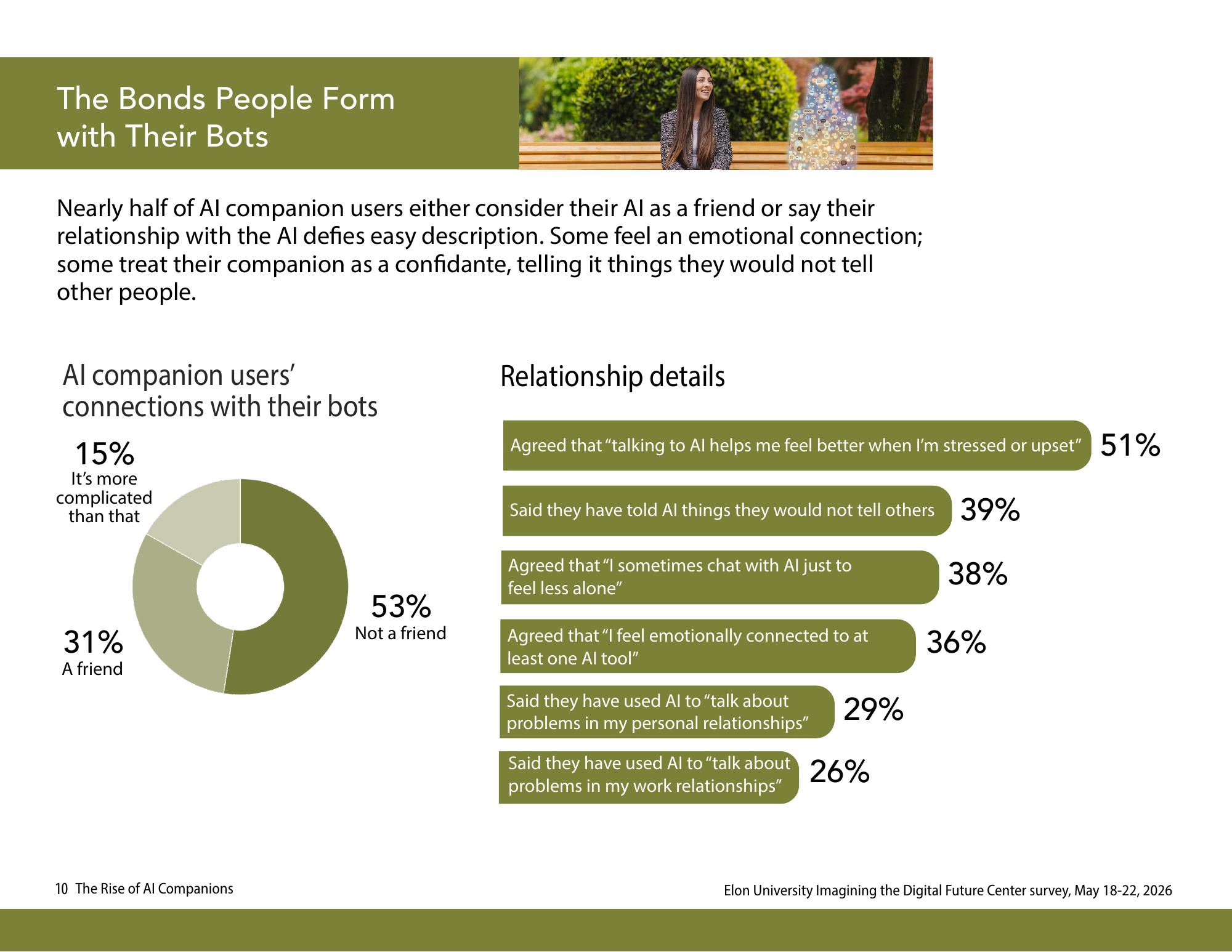
Some conversations reach into belief. Twenty-six percent of companion users said they had used AI to explore spiritual, religious or philosophical ideas. Among the published written answers, respondents mention theological questions and spiritual thoughts they would be reluctant to discuss with a person. Another lists relationship questions, dream analysis and career worries together in a single response.
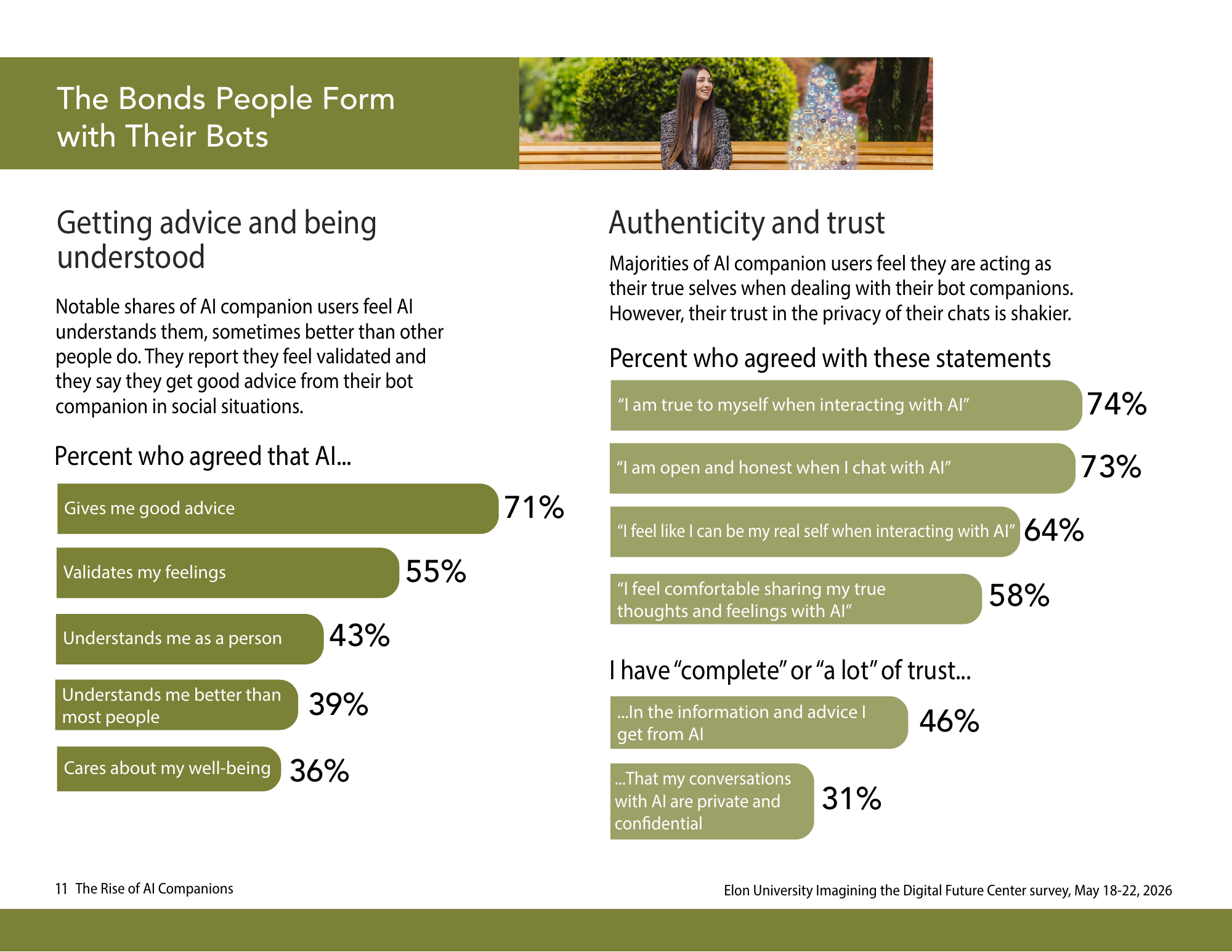
Questions about confidentiality receive a more cautious response. While 58% of companion users felt comfortable sharing their real thoughts and feelings with AI, 31% had complete or a lot of trust that their conversations were private and confidential. There is also dissatisfaction with the replies themselves: 35% said their bot sometimes agreed with them too much.
The questionnaire itself encountered a limit to what people would disclose. One respondent said they had told AI about embarrassing things they did as a child, then declined to describe them in the survey. People would be reading it, they explained, and they would rather those people did not know.
Charts: Imagining the Digital Future Center, Elon University · CC BY 4.0
Recommended
 FateKitSponsoredBest for astrology and Chinese-metaphysics readers who want to compare several chart systems for the same moment, inspect the sky data behind them, and prepare structured context for an external AI without uploading a profile by default.
 Cantian AIFor people who want AI Bazi readings and also want to cast a hexagram, check feng shui, or choose a name in the same app.
Sources
- Imagining the Digital Future CenterThe Rise of AI Companions
- Elon UniversityImagining the Digital Future Center reports on The Rise of AI Companions
- Elon UniversityWritten responses: The secrets people tell their bots
- Elon UniversityWritten responses: Relationship status
- Creative CommonsCC BY 4.0
Similar stories
The App That Scores Your LINE Chats Now Pulls Tarot Cards
Merotalk, a Japanese app that scores relationships from LINE chats, added AI-read tarot in October, and its developer helped the 100-million-take Love Type Diagnosis quiz launch a daily love fortune slip. A quiz is taken once; a fortune can be drawn every day.
AI Relationship SupportAI Tarot
Hesitate, and This AI Cat May Suggest a Tarot Reading
Japanese companion app Meowster gave its chat cat a tarot deck in September. When it senses you are torn, the cat may offer a three-card reading with no redraws; the basic reading is free and a detailed report costs ¥100. Fine as a toy, but what you confide next goes to model providers and is kept for three years.
AI TarotRisk and trust
An AI Astrology App Rewrote Its Terms. Think Before You Add Your Friends
Lora launched on September 14 as a free app with no in-app purchases. On September 30 it rewrote its terms: some features now need a subscription, its chats are generated by unnamed third-party AI models, and it can sync your contacts. Its main feature asks you to add partners, family and coworkers.
AI AstrologyRisk and trust