
Fortune Apps Are Already Selling You 2027
Korea's Jeomsin PRO and Hellobot opened their 2027 New Year readings between Oct. 19 and 21, and apps in Vietnam, Brazil and the English-language App Store put 2027 into their names and release notes. With the saju new year still three months off, the yearly reading now comes as a chaptered book, an audio track or a day-by-day calendar.
Korea's Jeomsin PRO pushed an update on the morning of Oct. 21 (Beijing time) that opens its 2027 New Year fortune and swaps "2026" for "2027" in the app's name. Two days earlier, Hellobot, a Korean fortune app with more than 125,000 ratings, shipped its own 2027 reading. Apps in Vietnam, Brazil and the English-language App Store did the same in mid-October.
New Year's Day is more than two months away. In saju, the Korean name for BaZi, the new year doesn't start until Ipchun, the solar term that falls around Feb. 4, which is more than three months off. In several apps the year is now the loudest part of the name, and the yearly reading itself is changing shape: some now come as a book with a cover and chapters, some can be played like audio, and some mark good and bad days one by one. None of the apps has shared sales figures or said why it moved this early. What follows is what their store pages show.
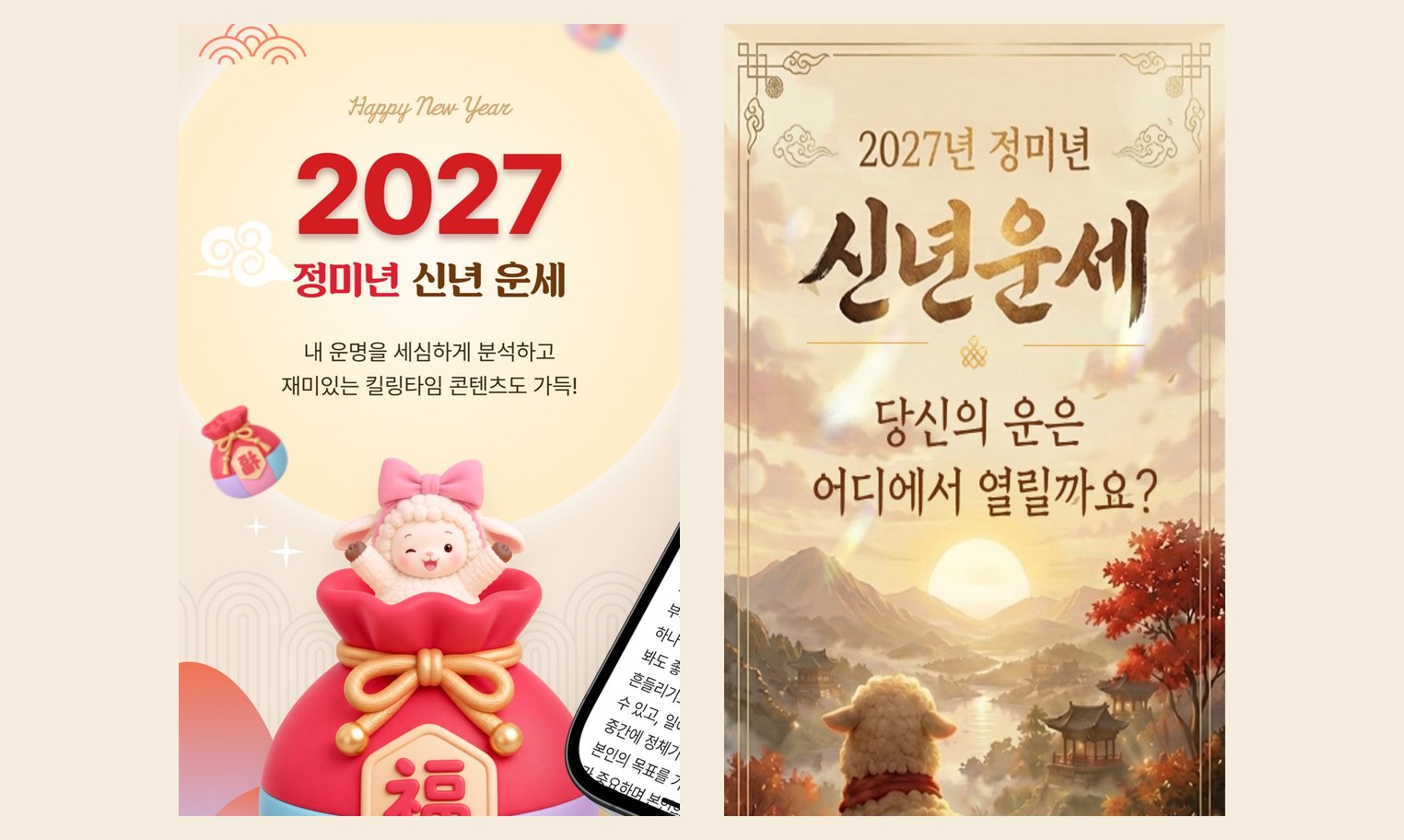
In Korea, the year shows up in the name first. Hellobot has already renamed itself "Hellobot: 2027 New Year Fortune, Saju, Tarot," and its listing claims 3.16 million users to date. IPAPAS, which makes saju and compatibility apps, has added "2027" to the names of four of them, including Jeongtong Saju, which has more than 5,000 ratings. The Jeomsin family is moving at two speeds: the PRO edition has switched to 2027, while the main app, with more than 110,000 ratings, still carried "2026" in its name on the morning of Oct. 21.
Hellobot sells 2027 by the day. Its Oct. 19 release notes say the new reading mixes saju with spirit divination, lets you check which days are lucky and which to avoid one day at a time, and adds an in-depth consultation once a month. Just as prominent on the listing: love readings that promise to work out a wedding date and the neighborhood where you might meet the person.
Others are turning the year into a book. Sajuworld, a Korean birth-chart calendar app, launched its 2027 reading on Sept. 22, and the release notes say next year's themes, money, work, love and study, plus a month-by-month chart, now come in a single volume. Its screenshots lay the reading out as chapters one through seven. The cover has already moved to 2027; the chapter titles in the table-of-contents screenshot still say 2026. LoveLab, a horoscope app sold in several languages, did nearly the same thing on Oct. 17: its Year tab now has a cover, chapters, planetary themes and a calendar of key dates, which the update notes say should feel like "a book written for you."
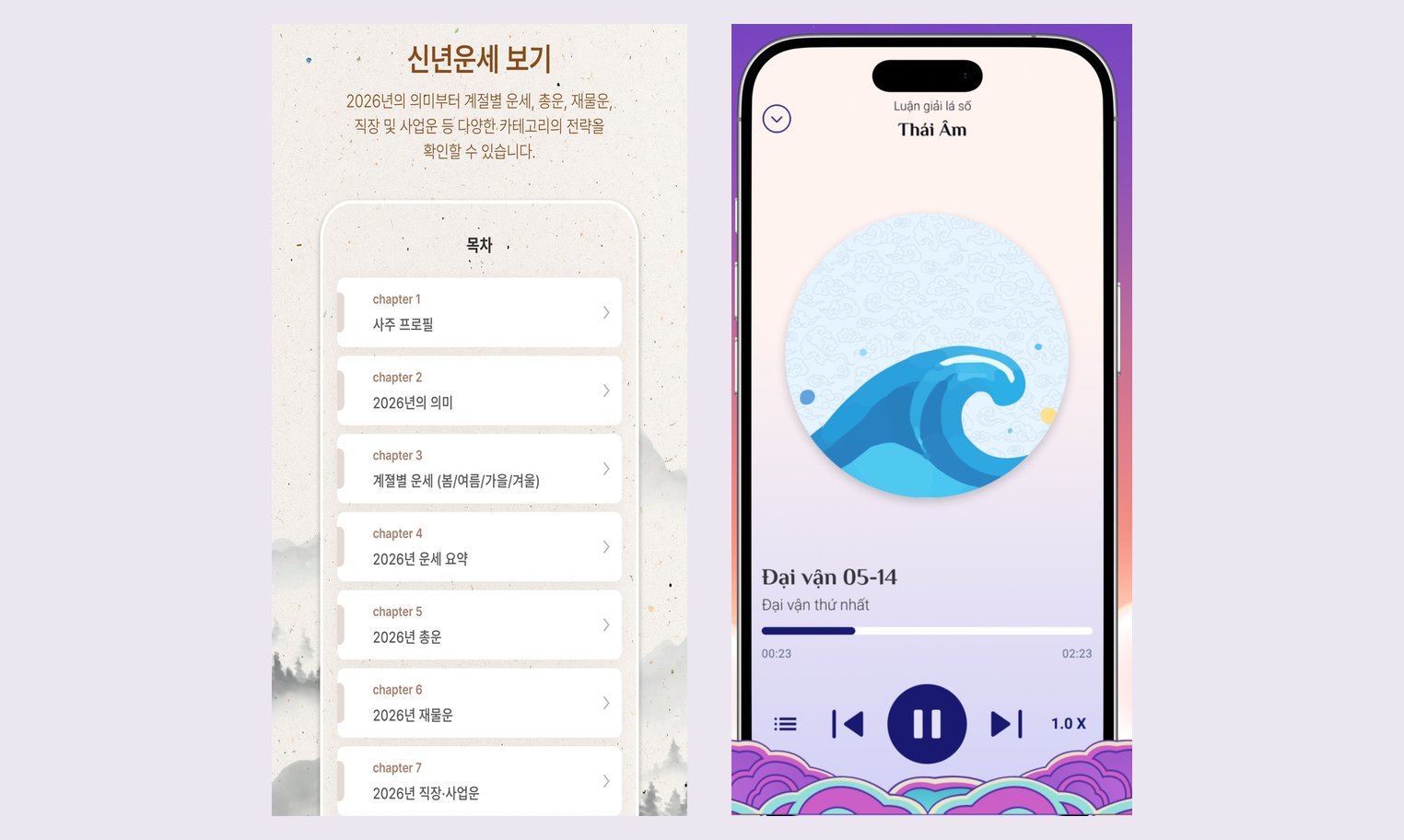
Some apps will read the year to you. Soulloop, an astrology and meditation app, added its Astroforecast 2027 on Oct. 20, to be read chapter by chapter or played aloud in a calm voice, even with the app in the background. In Vietnam, the Tu Vi app Thai Am renamed itself "Thai Am - Van So Tu Vi 2027" in mid-October and sat at No. 10 on Vietnam's top-grossing Lifestyle chart on Oct. 21. Its screenshots show chart readings in a player with a speed button, like a podcast episode. The Oct. 17 release updated a "Master Tue Minh" feature, which the screenshots show as a timed chat with 28:28 left on the clock. The listing doesn't say whether the master is an AI. Horos 365, which bills itself as "AI Tu Vi," updated its 2027 readings in early October, and Xem Boi, Tuong So, Tu Vi 2027 followed on Oct. 18.
A small Japanese tool keeps a different calendar. Shichu Suimei Kantei Note, a Four Pillars notebook app, added a "fortune of the year" card to the top of its fortune tab on Oct. 19, but says 2027's stem, branch and life-stage readings won't be available until November, and the card will flag the switch at Risshun, the Japanese name for the same early-February solar term. A sister app for sanmeigaku, a Japanese fate system, uses its card to tell users that 2026 through 2027 is a two-year "void" period. Both have two ratings each and, judging by their screenshots, are built for people who cast their own charts and keep notes.
2027 hasn't started, but inside these apps it already has a cover, a table of contents and a narrator. With Ipchun still three months away, that's enough of a book to last from autumn into winter.
Related apps
 2026 점신 : 병오년 신년운세, 사주, 타로, 상담Useful for people who want guidance around specific questions, live readings, or relationship concerns.
 HelloBot - Astrology & TarotFor people who want saju, tarot, palm, and love readings through chat, starting with free readings.
 정통사주 - 사주 사주팔자 운세 만세력 대운 오늘의운세정통사주 - 사주 사주팔자 운세 만세력 대운 오늘의운세. Providing detailed horoscopes based on today's daily events In-depth diagnosis of your own flow, including love, marriage, career, wealth, and relationships Strengthening the balance of the five elements and Sewoon/Daeun fortune analysis Opening of GPT fortune-telling counseling, including selection of compatibility for the ne.
 LoveLab: Zodiac Sign HoroscopeUseful for people who want a practical astrology app built around charts, timing, and repeat use.
 SoulloopConheça a si mesmo mais profundamente, durma melhor e viva cada dia com mais clareza. Soulloop é o app de astrologia e meditação que conecta seu mapa astral a orientações diárias personalizadas para descanso, foco e crescimento pessoal.
 Thái Âm - Tử Vi 2026Useful for people who want a practical astrology app built around charts, timing, and repeat use.
 Horos 365: AI Tử Vi - 2027For readers used to Vietnamese-style temple lots, six-line casting and tarot.
 四柱推命 鑑定ノートUseful for people who want a practical astrology app built around charts, timing, and repeat use.
Recommended
 FateKitSponsoredBest for astrology and Chinese-metaphysics readers who want to compare several chart systems for the same moment, inspect the sky data behind them, and prepare structured context for an external AI without uploading a profile by default.
 Cantian AIFor people who want AI Bazi readings and also want to cast a hexagram, check feng shui, or choose a name in the same app.
Sources
- Apple App Store2027 Jeomsin PRO on the App Store
- Apple App StoreHellobot on the App Store
- Apple App StoreJeongtong Saju on the App Store
- Apple App StoreJeomsin on the App Store
- Apple App StoreSajuworld on the App Store
- Apple App StoreLoveLab on the App Store
- Apple App StoreSoulloop on the App Store
- Apple App StoreThai Am on the App Store
- Apple App StoreApp Store Vietnam top-grossing Lifestyle chart
- Apple App StoreHoros 365 on the App Store
- Apple App StoreShichu Suimei Kantei Note on the App Store
- Apple App StoreSanmeigaku Kantei Note on the App Store
Similar stories
Photo fortune-telling has to show what it sees
Faladdin, Binnaz, Fincan, HelloBot, and Libra show why photo divination is more than throwaway palm-reading pages. The harder test is whether the app can say what it saw, where the interpretation comes from, and how the photo is handled.
AI DivinationPalm Reading
An AI Saju App Sells Its Memory. Its Worst Reviews Are About That, Too
Korean AI fortune app Sajuping markets itself as the friend who remembers you, and its Oct. 6 update fixed mixing up the people you mention. Reviews praise not repeating yourself, and complain about wrong pillars, stale charts and deleted chats it still recalls. Free and paid answers use different models.
BaZiEast Asian divination
Korea's Newest Saju Apps Want You to Bring a Friend
Types now trades unlimited saju questions for friend invites, and at least five new Korean fortune apps since September are built around the people you know: a benefactor field guide, group-chat compatibility rankings, a couples drawing game and an AI that reads your crush's texts. Their ratings are still in single digits, but they're all heading the same way.
BaZiEast Asian divination