
Photo fortune-telling has to show what it sees
Faladdin, Binnaz, Fincan, HelloBot, and Libra show why photo divination is more than throwaway palm-reading pages. The harder test is whether the app can say what it saw, where the interpretation comes from, and how the photo is handled.
Start by filtering out low-quality photo readings
Search for AI palm reading and you will find plenty of weak pages: upload a hand photo, wait a few seconds, receive a report that could have been assembled from a template. The problem is not only the writing. It is hard to tell who is behind the page, what was actually read in the image, or what happens to the photo after upload.
The better cases have enough shape to inspect. Some are large consumer divination apps. Some are advisor marketplaces. Some are narrow coffee-cup or palm-reading products where the photo is part of the whole flow, not just a decorative upload box.
Faladdin has more than 10 million downloads on Google Play and places coffee cup readings, palm readings, tarot, dream interpretation, horoscopes, and live chat in one broad consumer divination app. Binnaz is closer to an advisor marketplace, with more than 2,000 experts and written, voice, or video sessions. Fincan is narrower and more precise: it is built around Turkish coffee cup photos, symbol detection, daily readings, follow-up questions, and a premium layer. HelloBot brings palm analysis into a Korean fortune app that also includes saju, tarot, name reading, dreams, and AI chat. Japan's AI手相鑑定Libra is a dedicated camera palm-reading app from a long-running developer, with free readings, premium menus, saved palm data, and sharing.
These products are not identical. That is the point. Photo-based fortune-telling is not just one scammy AI trick. It appears in entertainment apps, advisor marketplaces, cultural coffee rituals, Korean fortune chat, and Japanese palm-reading subscriptions.
A photo feels heavier than a prompt
Text fortune-telling is easy. A user enters a birth date, names a relationship question, or asks whether a decision will work out. The product can answer quickly, but the interaction can feel close to a normal chatbot.
A photo changes the mood. Coffee grounds, a palm, a hand shape, or an image sent to an advisor carries something physical. The user is not just typing a question. They are handing over a trace that looks personal and hard to copy.
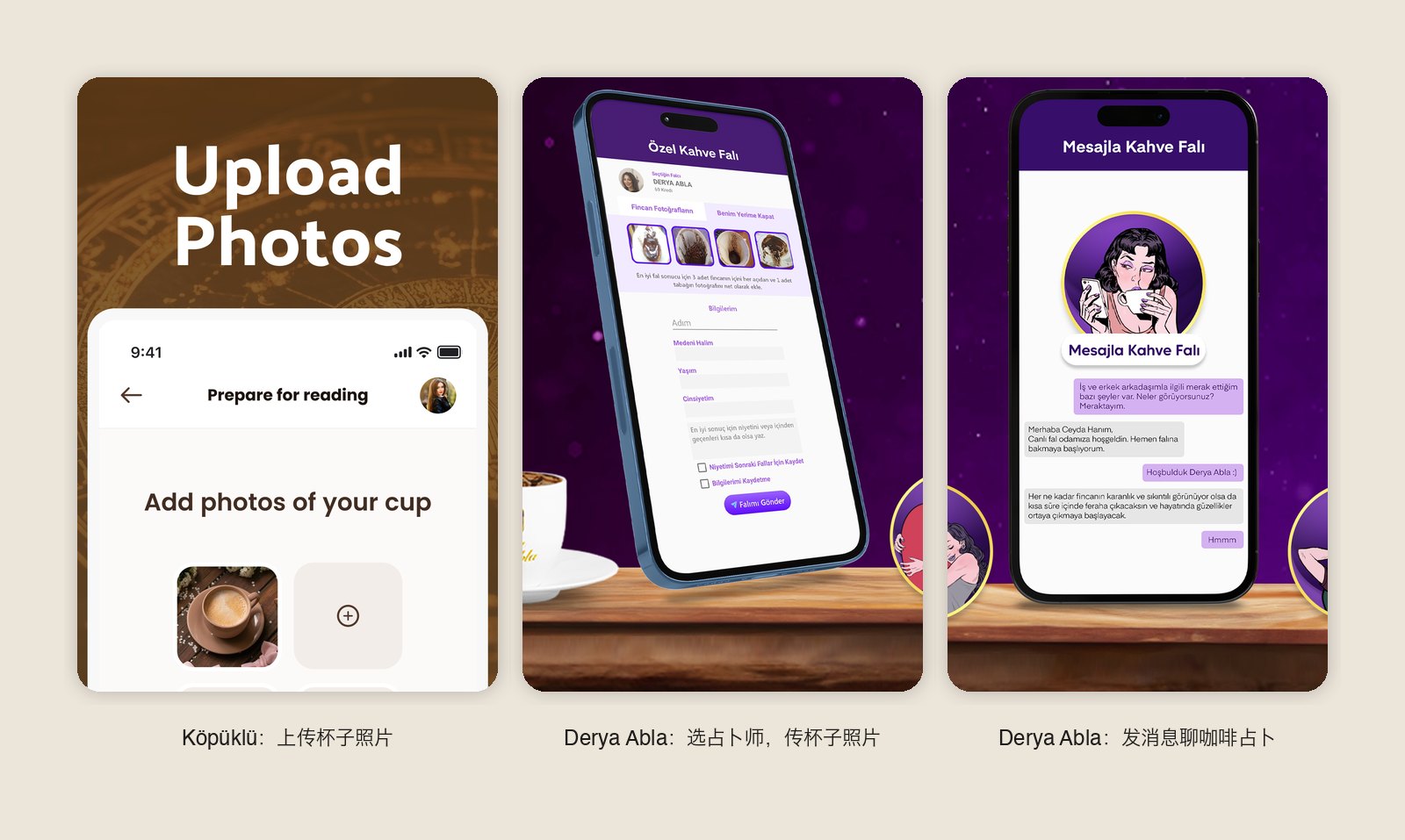
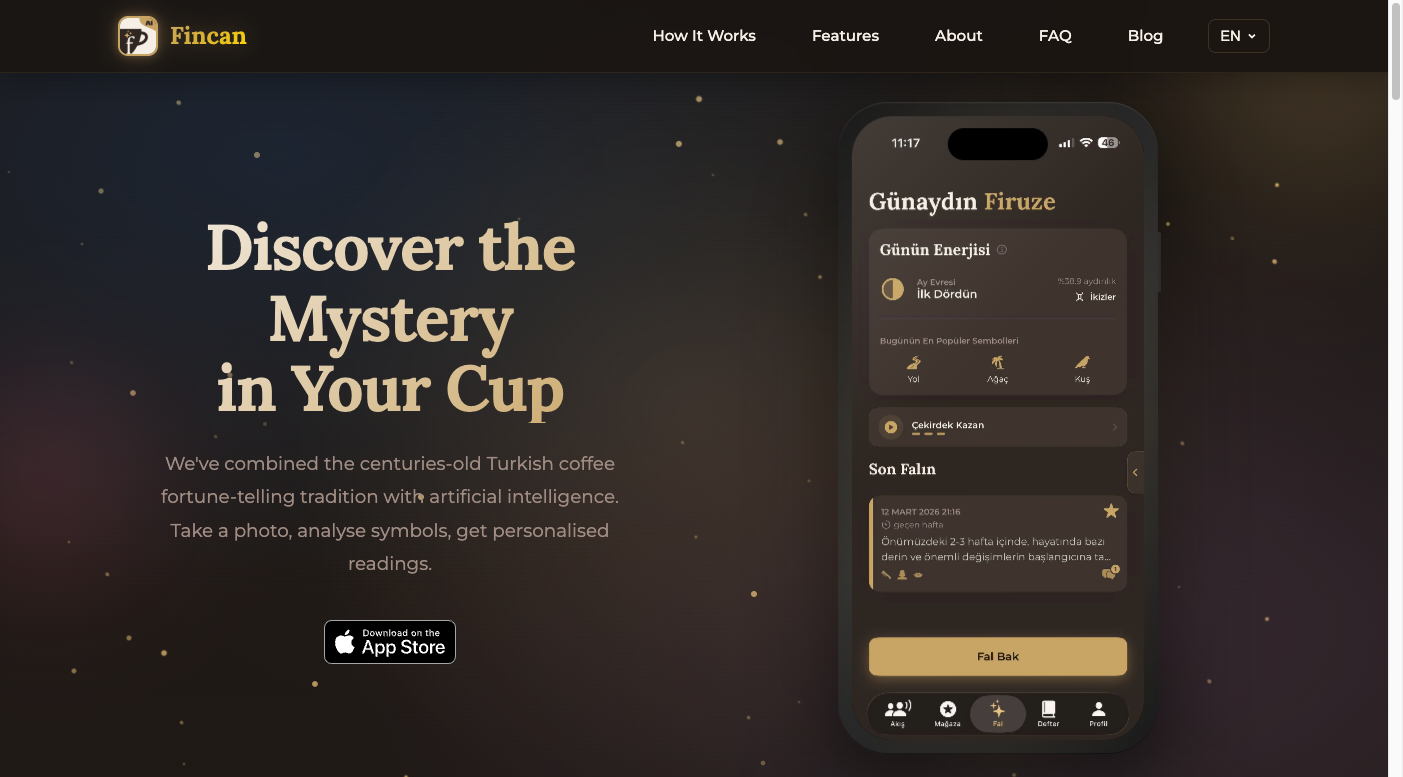
Fincan is the cleanest example. It does not sell a generic "AI fortune" page. It asks the user to drink Turkish coffee, flip the cup, take a photo of the grounds, and let the app detect symbols before producing a reading. Its site names a 250-symbol library, seven languages, one free daily reading, follow-up questions, and premium access. The AI is not only writing soft advice. It is asked to read shapes.
Faladdin works differently. It is a broad consumer fortune app with a large audience and a playful reading menu: coffee cup readings, palm readings, tarot, dreams, a genie character, and real-time chat. The app's own Google Play description says it serves 1 million readings every day. The number is a company claim, not an independent count, but it shows the kind of use Faladdin is aiming for: casual, frequent fortune entertainment rather than a single formal report.
Human readers are still part of the picture
Not every photo reading is automated.
Binnaz keeps the human reader at the center. The app lets users speak with consultants through text, voice, or video, across astrology, spiritual counseling, therapy, and coaching. In that model, the image is not only data for a model. It is material for a person to respond to.
That split matters. Photo fortune-telling can move toward instant AI reports, or it can support higher-trust advisor sessions. The first path is cheaper and faster. The second path leaves room for a reader, especially when the user wants a personal response rather than a fixed report.
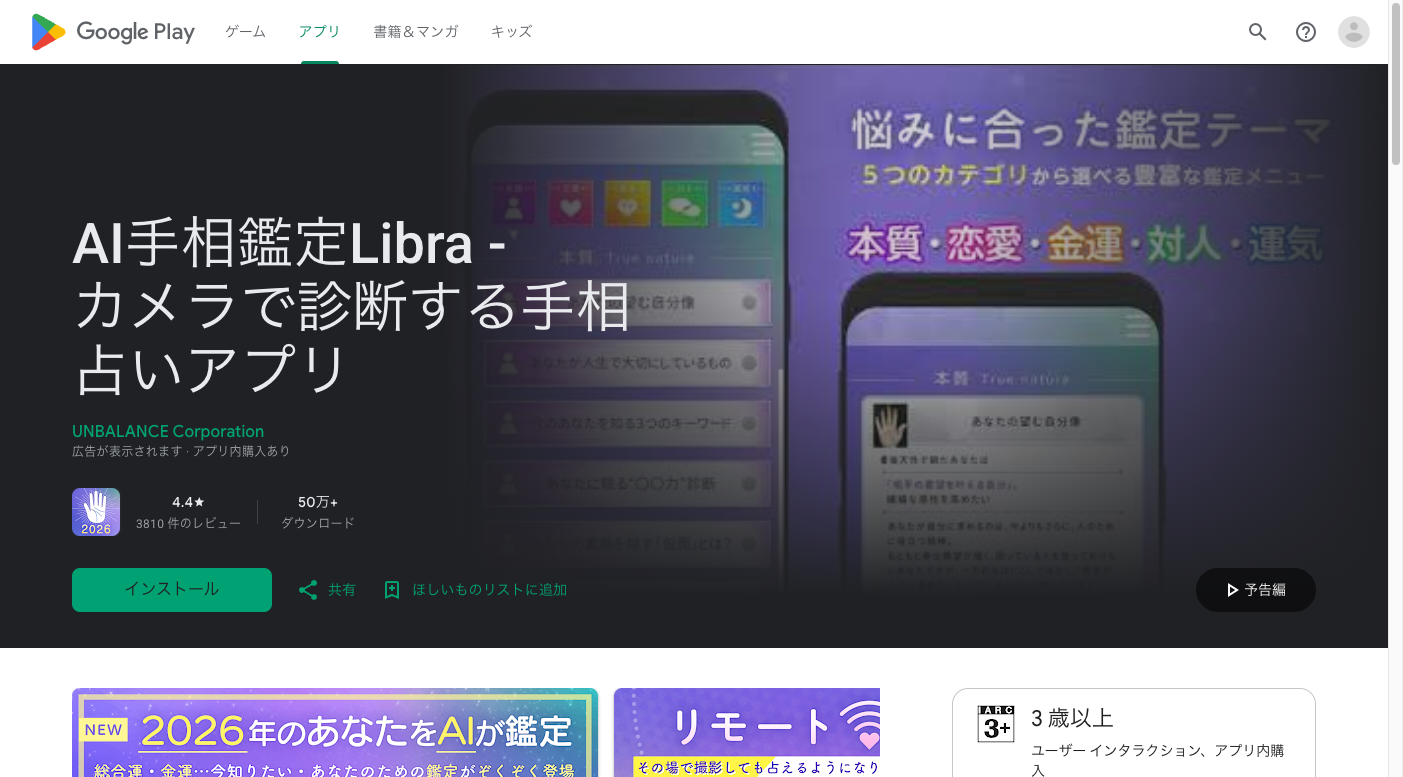
HelloBot and Libra sit closer to the automated side. HelloBot folds palmistry into a wider Korean fortune product alongside saju, tarot, zodiac, name reading, and dreams. Libra stays with palmistry. It asks users to photograph their palms, combines palm analysis with zodiac traits, offers compatibility features, and sells premium menus. Its Japanese Google Play page shows more than 500,000 downloads and a 2026-themed update.
The app has to show what it recognized
The hard question is not whether a fortune reading can be objectively accurate. The more practical question comes earlier: did the app actually read the image, and does the interpretation come from a source the user can inspect?
Coffee cups are a little easier to inspect. Fincan at least says it detects symbols from the grounds and names a library of more than 250 symbols. That does not prove the reading is accurate, but it gives the user something to question: which symbols were detected, why those symbols lead to a certain interpretation, and what happens when the image is unclear.
Palm reading is harder. Palm lines change with lighting, camera angle, hand pose, and image quality. If an app only says "take a palm photo and let AI analyze your fate," without showing palm-line markers, recognition output, error handling, examples, or expert basis, the camera is doing more trust work than technical work.
The source of the interpretation matters too. Korean saju, tarot, palmistry, and coffee cup reading each have their own terms and reading traditions. If the product does not say whether the answer comes from rules, human advisors, practitioner-written content, or free-form model generation, the user cannot tell whether they are seeing entertainment, advice, or a fluent paragraph made on demand. Image recognition does not automatically make the reading better. Fortune vocabulary does not automatically mean expertise.
The real question is the image
This story becomes weak if it is framed as "AI can read palms now." That is too small. It also becomes vague if it is framed as technology changing tradition. The useful question is narrower: what happens when fortune products ask for images instead of only text?
Images raise the trust cost. A user may casually type a relationship question into a chatbot. Uploading a hand, a cup, or other personal photo asks for more. Will the image be stored? Can it be deleted? Who can see it? Is it used for model training? Does a human advisor receive it, or only an automated system? These questions are part of the product, not a footnote.
The stronger apps make the action legible. Fincan explains the cup process. Faladdin shows a broad reading menu and a large user footprint. Binnaz makes the advisor relationship explicit. HelloBot and Libra place palm photos inside established mobile fortune experiences. The weaker pages hide behind mystical copy and give the user no reason to believe the image is being read carefully.
That is why photo divination is worth a Pulse story. The category is not only about AI writing another prediction. It brings back a visible ritual: turn the cup, photograph the grounds, show the hand, send the image, wait for a reading. The image makes the result feel closer to the person. It also makes the product easier to charge for.
Accuracy is not even the first test. The first test is whether the product can show what it saw, explain where the reading came from, and respect the moment when a user gives it something personal enough to feel like evidence.
Related apps
 Faladdin: Astrología & TarotFaladdin: Astrología & Tarot. ► LIVE CHAT Discover the future with Faladdin Live Chat Fortune Telling, our newest feature combining Faladdin’s prediction abilities with AI!
 BinnazBinnaz. Persönliche Sitzungen via Text, Audio oder Video Unsere Berater/innen Unsere über. Kartenlegen mit Tarot, Lenormand und Handlesekunst.
- FincanUseful for people who want a dedicated Turkish coffee cup reading app with photo input rather than a general horoscope or tarot chatbot.
 HelloBot - Astrology & TarotFor people who want saju, tarot, palm, and love readings through chat, starting with free readings.
 AI手相鑑定Libra カメラで診断する手相占いアプリAI手相鑑定Libra カメラで診断する手相占いアプリ.You can easily share your results in images with the push of a button!The remote compatibility/fortune telling function is a menu that allows you to enjoy compatibility with someone who is far away by "sharing" your palm reading via SNS or email.
Recommended
 FateKitSponsoredBest for astrology and Chinese-metaphysics readers who want to compare several chart systems for the same moment, inspect the sky data behind them, and prepare structured context for an external AI without uploading a profile by default.
 Cantian AIFor people who want AI Bazi readings and also want to cast a hexagram, check feng shui, or choose a name in the same app.
Sources
- Google PlayFaladdin: Tarot & Horoscopes
- FincanCoffee Cup Reading App | Fincan
- App StoreBinnaz: Wellness, Astrology
- App StoreHelloBot - Astrology & Tarot
- Google PlayAI手相鑑定Libra - カメラで診断する手相占いアプリ
Similar stories
An AI Reads Your Turkish Coffee Cup in Seconds. The Human Readers Make You Wait
Turkey's coffee cup reading apps have long sent your photos to human readers, and reviews complain about hours of waiting and stock phrases. Telveden lets AI read the grounds in seconds, publishes its 85-shape atlas and sources, and admits a different model would see different shapes.
AI DivinationAI metaphysics products
Tarot Is Common Among Young Americans. Asking AI for Spiritual Guidance Isn't
A Harris Poll survey finds 30% of Gen Z and Millennials regularly did astrology or tarot in the past year. An NPR/Ipsos poll finds only 11% of AI users have asked AI for spiritual or religious guidance, and 69% say they never would. Neither survey asked whether the card-pullers use AI.
AI DivinationAI Tarot
Drew a Fortune Stick in Taiwan? An AI Will Explain It for NT$6 a Minute
Since September 22, nine temples in Taipei and New Taipei have run 0203 phone lines where an AI explains your fortune poem and takes follow-up questions. Temples sign up free and share the per-minute call revenue. Landline callers pay NT$6 a minute; the mobile rate has not been published.
East Asian divinationVoice AI