
Undersky computes a birth chart in your browser and shows the arithmetic rather than dressing it up. Positions are apparent geocentric ecliptic longitudes of date, resolved to the arcminute, and the site states they are regression-tested against a Swiss Ephemeris matrix spanning 1800 to 2099 plus real equinox, solstice, eclipse, station, ingress and house-cusp anchors. Charts go back to 1800.
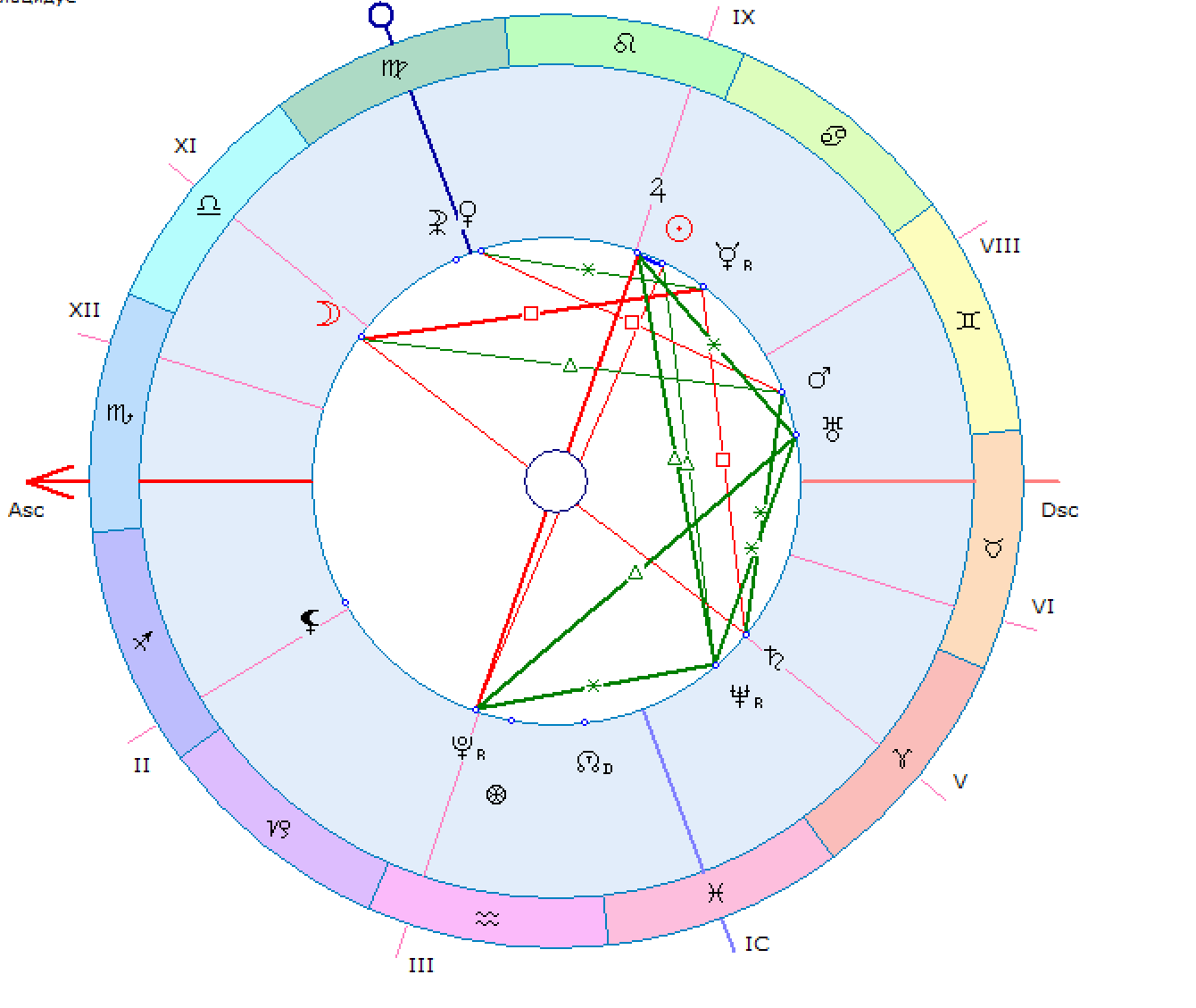
The free chart covers the Sun through Pluto, Chiron, Black Moon Lilith and both lunar nodes, with houses, angles, aspects ranked by orb, and named configurations. A Customise panel opens the parts most calculators hide: tropical or sidereal with a choice of Lahiri, Fagan/Bradley, Krishnamurti, Raman or Yukteshwar, Placidus, whole-sign or equal houses, mean or true nodes and Lilith, three orb profiles calibrated per pair, an extended sky adding Ceres, Pallas, Juno, Vesta and Pholus with minor and declination aspects, and a researched UTC offset you can enter for records older than standard time, which overrides the zone without moving the birthplace. Near polar latitudes, where Placidus is mathematically undefined, the page says so and falls back to whole-sign instead of drawing cusps that do not exist.
An unknown birth time is handled by refusing to fill the gap. Fast-moving bodies show their honest range across the birth day, aspects state whether they held all day, houses are read as solar houses, and the Rising line reads that it needs a birth time. The celebrity section applies the same rule in public: the Taylor Swift page shows the Sun as a range, the Moon as Gemini or Cancer, and explains that the 5:17 AM time repeated across the web traces back to a part-fiction paperback and a fan post, with Pennsylvania sealing birth records for 105 years. The Einstein page cites the Ulm registrar entry reproduced by the Max Planck Institute and computes on Ulm local mean time.
Nothing is uploaded to draw the chart. As you type a birthplace, only those letters reach the site's own server to suggest towns, and that lookup is not tied to you. Full birth data leaves the browser only if you buy the Deep Reading. A shared chart link carries the birth data inside the link itself, which the site says plainly, and names never enter links.
The Deep Reading is the paid part: $29 USD for one chart, paid once, delivered as an 80-plus page A4 PDF about two minutes after checkout, with a license key in the receipt for re-downloading. It runs seven chapters, from the Sun, Moon, Ascendant and Midheaven read as one system, through the natal lunar phase, every placement in its house, the tightest aspects with their geometry drawn, named configurations included only when the chart forms them, the elemental and modal emphasis, and a closing set of questions rather than predictions. Sections are fixed by the computed chart before the writing exists, so nothing can describe a placement the record lacks. Twenty-four real pages of the sample edition are published to read before buying. Refunds run 14 days, valid until you download, after which delivery is complete.
The site is in English and published by Tomer N. Marketing and Sales Ltd in Beit Shemesh, Israel, with Dodo Payments as merchant of record. Readings are presented for reflection and entertainment, not medical, legal or financial advice.