
从八字出发的 AI Agent
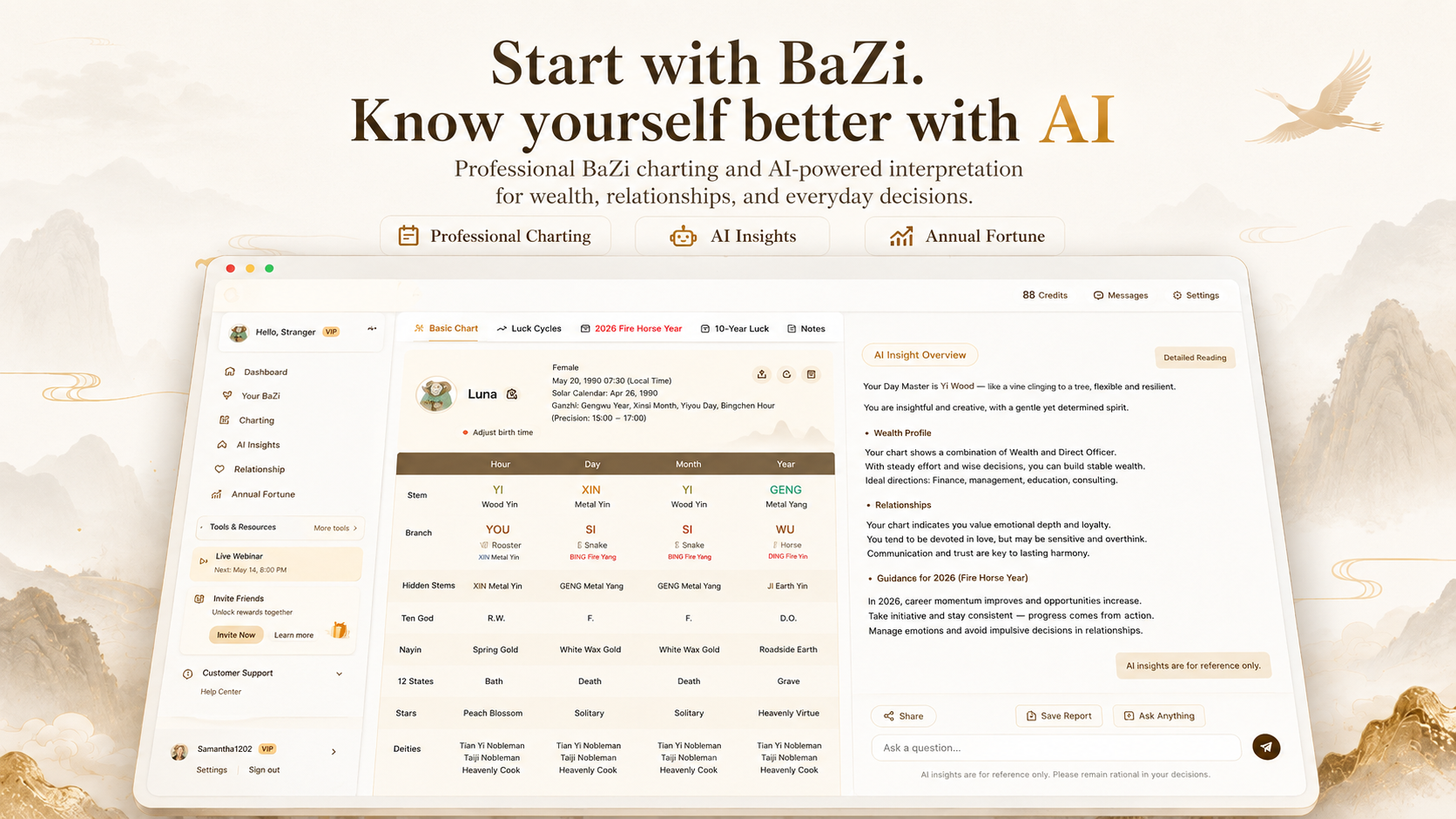
参天 AI(Cantian AI)是一个以八字为主入口的 AI 算命应用。它被做成一个 AI Agent,背后是八字、占卜、风水、起名等专门技能,能问事业、财运、感情和日常选择。网页版在 cantian.ai 直接使用,另有 iPhone 和 Android 应用,ChatGPT 的 GPT 商店里也有一个版本。官网和 App Store 页面都写有一百万以上用户。
流年分析、起卦断事、摆放布局、趋势解读和灵魂伴侣
首页按门类列出五个功能:
- 八字:流年分析
- 六爻:起卦断事
- 风水:摆放布局
- 易经:趋势解读
- 技能:灵魂伴侣
此外还能起名和合盘,网站的技能池示意图上另外列着紫微斗数、奇门遁甲和梅花易数。
一个问题调用几个技能
感情、占卜、起名这类问题各有对应的技能,一个问题可以由几个技能一起处理。按官网的说法,AI 会先判断提问的人真正担心什么,再决定怎么回应:结果可以是文字解读,也可以是图片和视频、专业报告,或者落到现实里的行动和仪式。
《易经》和《三命通会》整理成规则
参天 AI 把《易经》、八字典籍《三命通会》等古籍整理成知识图谱和推理规则,供 AI 读取和调用。网站的知识库里另有签诗合集、八字案例库、参天百科、流年列表和八字天象仪。
iPhone 版:挑一个性格的 AI 来聊
App Store 上的 Cantian AI - Bazi & I Ching AI 以对话为主。它根据用户的八字和个人资料建立一个东方式的性格模型。AI Agent 有温和、直接、学者型和活力型几种风格可选,各自带不同的知识和技能,用来自我梳理、做决定和日常聊天。应用会记住对话里的关键时刻和情绪线索,聊得越多越了解用户。App Store 页面说明,个人资料、八字信息和对话内容都加密保存,不与第三方共享。
免费的基础体验和需要解锁的报告
官网问答说,参天 AI 提供部分免费内容和基础体验;更细的八字分析、更完整的命盘报告和更多 AI 技能,按需要解锁。iPhone 版在 App Store 免费下载。
界面语言和 Android 安装
网页版界面有英文、简体中文、繁体中文、韩文、日文和越南文。Android 版可以从 Google Play 下载,也可以直接下载 APK 安装。App Store 页面标注的语言是英文。
全球算命师大赛季军和开源的 Bazi MCP
官网最新动态写到,参天 AI 获得 2026 年第十七届全球算命师大赛季军;官方称是全球首个的 Bazi MCP 也已开源发布。