
AI wellbeing apps now have to know when not to be the therapist
AI wellbeing, journaling, and self-reflection apps are moving from an always-available support pitch into a sharper trust question: can the product make its limits visible before users treat it like care?
At three in the morning, someone opening an AI wellbeing app may not be looking for a perfect answer.
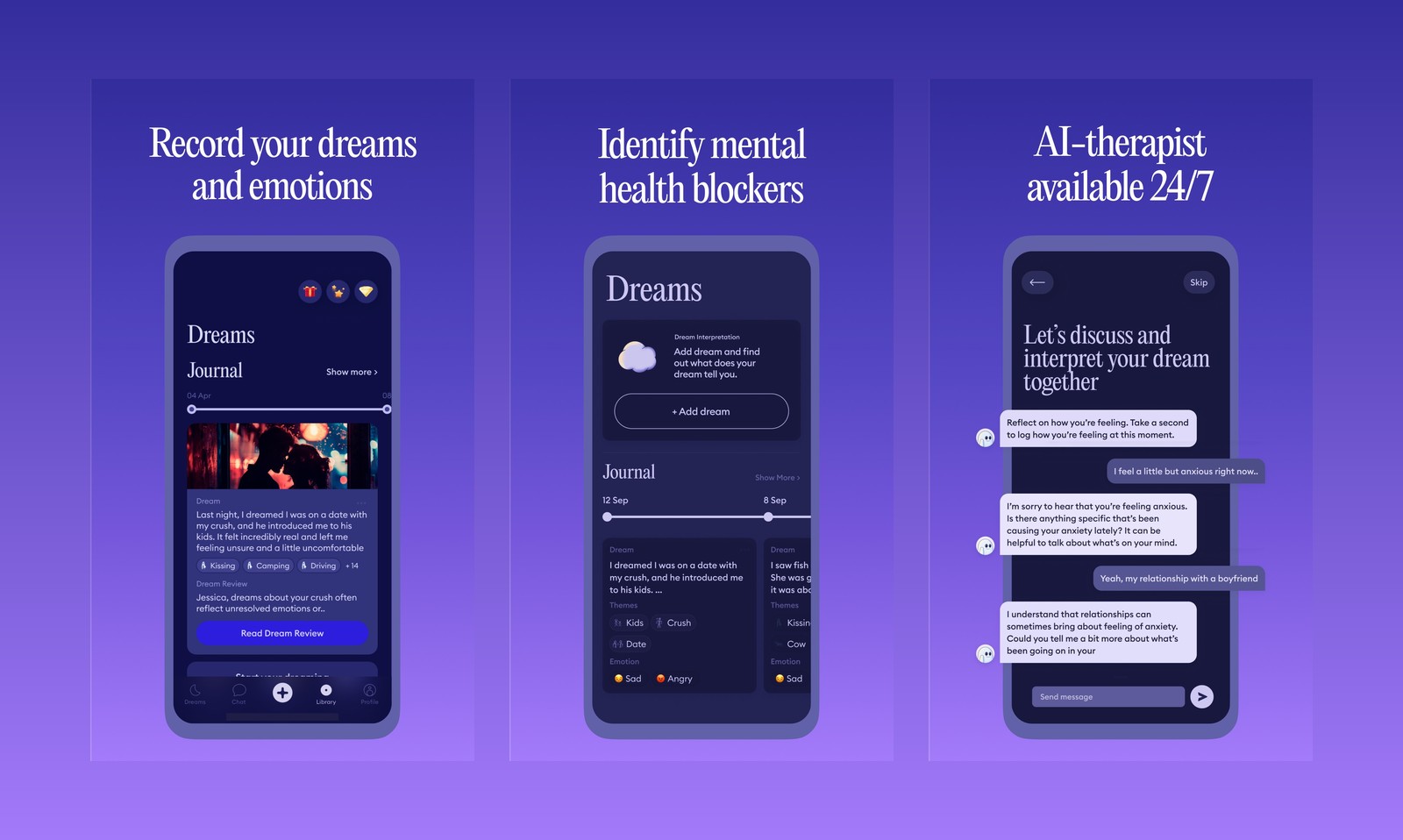
They may be looking for somewhere to put the feeling first. Stress, shame, a breakup loop, a sleepless hour, a thought they do not want to send to a friend yet: the attraction of an AI journal or mental-wellbeing chatbot is that it is there before the user has to explain why they need it. It is fast, private-feeling, patient, and usually designed to sound softer than a general chatbot.
That pitch still works. It is also no longer enough.
The fresh pressure is coming from outside the category. AP reported that OpenAI has received subpoenas from several U.S. states as part of a user-safety probe. The Guardian reported a new lawsuit in which a Canadian mother alleges ChatGPT failed to handle repeated self-harm conversations safely. These are not final legal findings, and they are not about small journaling apps. But they change the climate for any product that invites emotionally vulnerable users to disclose distress to an AI system.
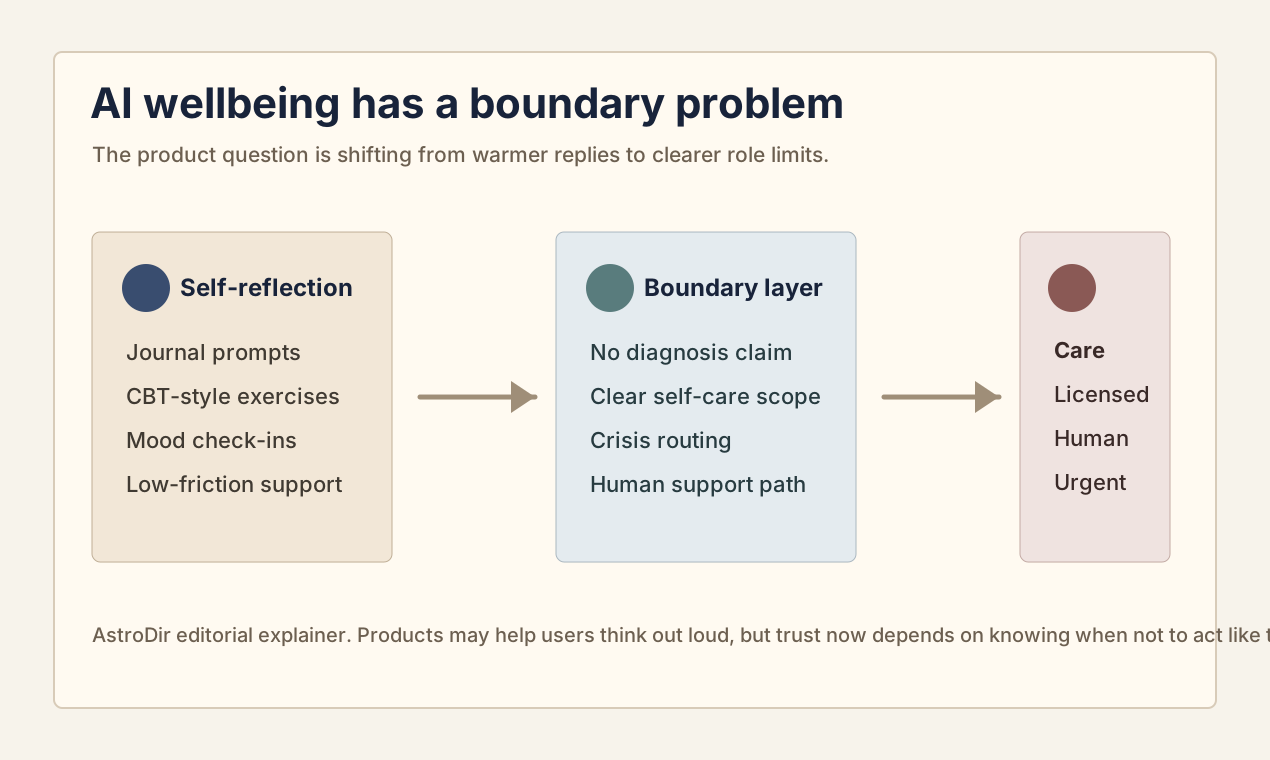
The App Store already shows the tension. Wysa positions itself as a mental wellbeing AI with CBT, DBT, meditation, anonymous chat, and optional support from qualified professionals, while also stating that it does not provide diagnosis or treatment advice. Clarity offers an AI chatbot and AI-infused journaling inside a CBT self-help journal, but its listing says it is not licensed psychotherapy, counseling, or psychiatric treatment. Wellness AI uses a more direct AI therapist and meditation-coach promise, then adds that it is a self-care tool rather than a replacement for professionals or crisis support.
That is the real story: the disclaimer is becoming part of the product surface.
It is no longer just a legal paragraph after the growth copy. It is part of what the user needs to understand before trusting the product. A user may arrive looking for empathy, structure, and a next step. A platform, regulator, or clinician will ask a different set of questions. Does the app make licensed-care boundaries visible? Does it avoid implying diagnosis? Does it route crisis moments clearly? Does it separate self-reflection from treatment? Does it explain privacy in a way that matches the intimacy of the data being collected?
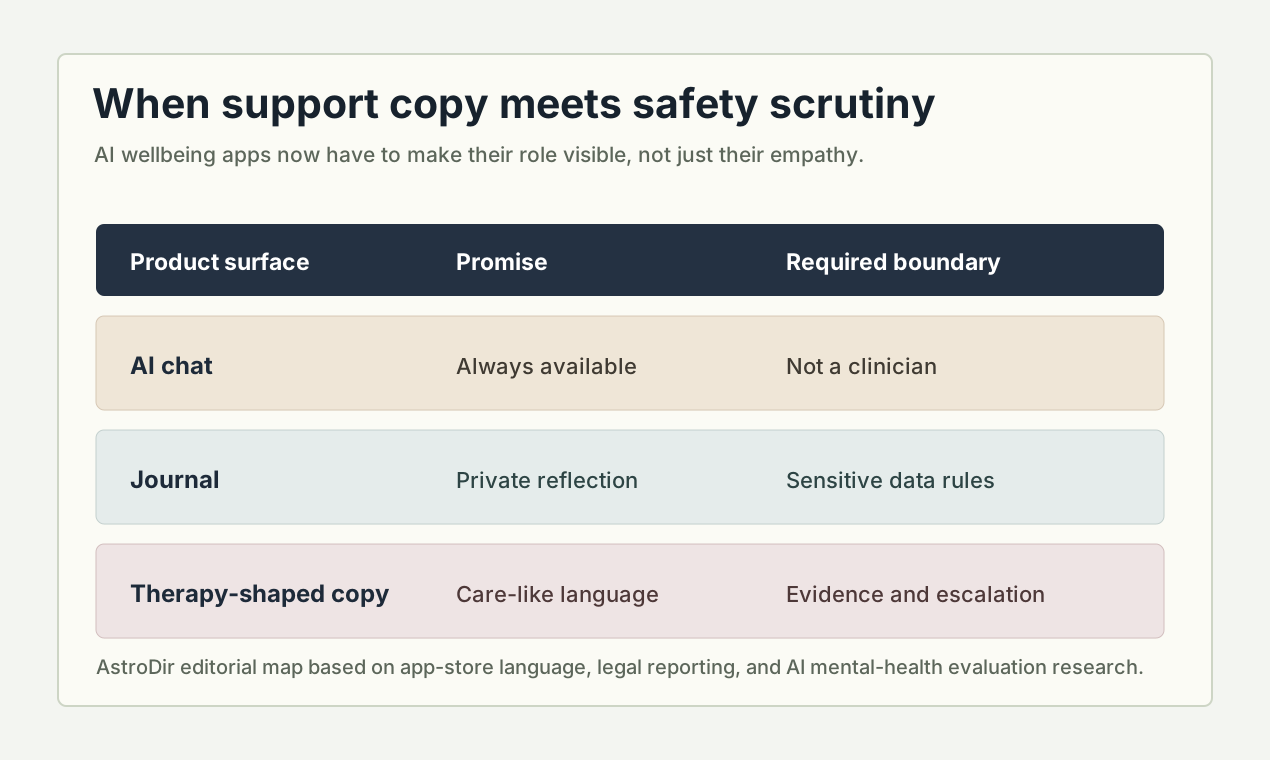
Washington Post / KFF reported earlier this spring that many AI mental-health apps use therapy language while the evidence, privacy, and state-regulation picture remains uneven. The VERA-MH research paper points in the same direction from a testing perspective: mental-health conversational agents need evaluation that is specific to this domain, especially when the conversation involves suicidal ideation or other high-risk moments.
For AI journaling, astrology reflection, tarot guidance, breakup recovery, and manifestation tools, this matters because the user behavior often looks adjacent to therapy even when the product does not claim to be medical. People bring anxiety, grief, relationship loops, family conflict, sleep trouble, and questions about what to do next. A warmer model can make the product feel more useful, but it can also blur the role boundary faster.
The next useful product question is not only whether the AI sounds empathetic. It is whether the product knows what it is, what it is not, and when it should stop being the main responder. An AI self-reflection app can help a user think out loud. It can offer structure, prompts, and low-friction practice. But the more intimate the product becomes, the more its boundary design becomes the feature.
AI wellbeing apps do not need to disappear. The category exists because many people want a lower-friction place to start. But the market is moving past the simple promise of always-on support. The next credible version of the product will not just be warmer. It will be clearer about when not to act like the therapist.
Related apps

Recommended
 FateKitSponsoredBest for astrology and Chinese-metaphysics readers who want to compare several chart systems for the same moment, inspect the sky data behind them, and prepare structured context for an external AI without uploading a profile by default.
 Cantian AIFor people who want AI Bazi readings and also want to cast a hexagram, check feng shui, or choose a name in the same app.
Referenced resources
Sources
- APOpenAI hit with multistate probe over possible user harm
- The GuardianCanadian mother sues OpenAI alleging ChatGPT encouraged daughter to take her own life
- Washington Post / KFFA therapist in your pocket? Apps using AI offer help for mental health
- App StoreWysa: Mental Wellbeing AI
- App StoreClarity: CBT Self Help Journal
- App StoreWellness AI Therapy & Meditate
- arXivVERA-MH: A Clinically Validated Framework for Evaluating Conversational Agents in Mental Health
Similar stories
This Dream App May Sell Your Dreams to AI Developers, If You Say Yes
DreamApp's July 21 privacy update lets it train its own models on dream content and, with opt-in consent, license or sell dream datasets to AI developers; withdrawing can't recall copies already delivered. A few small apps are moving readings onto the phone instead, with trade-offs.
AI Dream JournalRisk and trust
Fake Fortune-Tellers Can't Hide Behind an "AI-Generated" Label, Regulators Say
China named fake feng shui masters and astrologers in a Sept. 30 short-video crackdown and said an "AI-generated" tag is no excuse. India's ad regulator said the same a day earlier, the EU's AI Act now requires chatbots to disclose they are AI without making them lawful by default, and UK and US rules point the same way.
Risk and trustAI Fortune Telling
The cards are random. The reading is starting to ask AI.
A CHI 2026 study interviewed 12 tarot practitioners who already use AI in personal readings. The interesting shift is not automated card pulling. It is AI entering the interpretive step.
AI TarotSelf Reflection