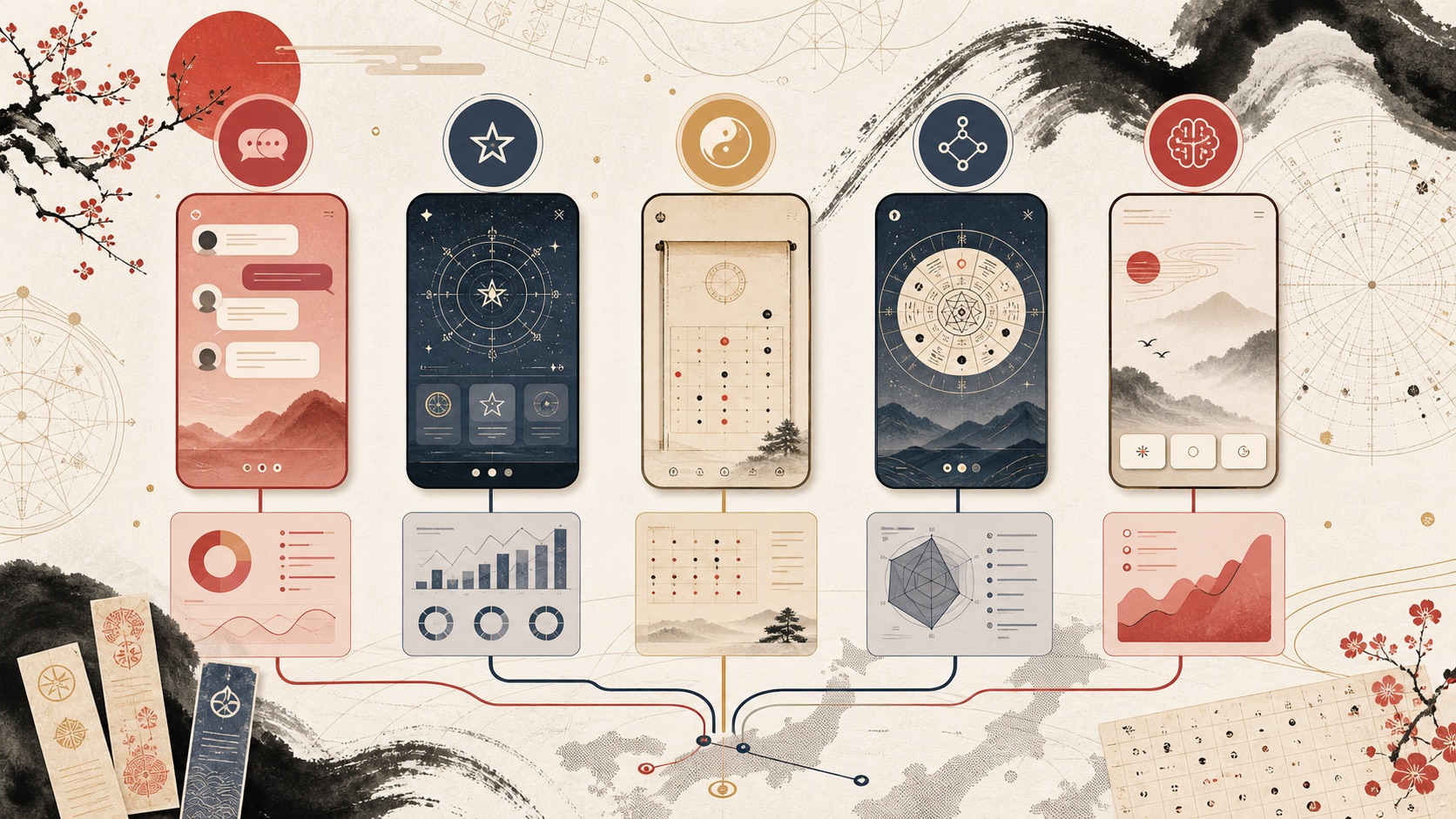
A product read on Japan's fortune-telling apps, from LINE占い and celebrity systems to AI-native readings and the narrower path Cantian AI would need.
2026/05/17
A Japanese fortune-telling app cannot get by on a pretty reading screen. The user is usually asking a quieter question first: who is speaking to me, and why should I let this answer matter?
That is why Japan is a difficult market for generic astrology and AI reading products. The local winners do not all look alike, but they share a habit. They borrow trust from somewhere specific: LINE as a daily communication layer, a famous reader, a named method, or an older practitioner brand.
That is the lens I would use before comparing features. LINE占い is the access model. ゲッターズ飯田の占い and 星ひとみの占い are named-system products. 銀座の母 is old-school authority. Uranao is the smaller AI-native reference. Cantian AI is useful because it shows how much method depth an Eastern-metaphysics AI product can carry, if it enters Japan with restraint.
If I were preparing a Japan launch, I would not begin with a checklist of tarot, astrology, Bazi, compatibility, daily luck, and chat. That list gets long very quickly, and it says less than it seems.
The better question is simpler. Does the product give the reading a believable source? In Japan, a reading often needs a face, a school, a channel, or a familiar ritual before the interface matters.
LINE占い is still the first reference I would study. The App Store listing describes more than 8 million downloads, over 1,600 advisors, and chat, phone, video, digital menus, daily luck, tarot, astrology, numerology, and name readings. The page also shows a large review base.
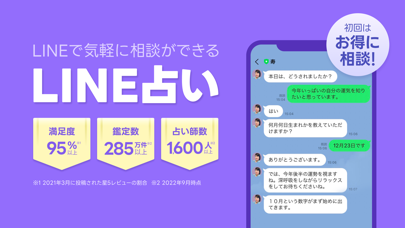
The screenshot does not look quiet. It looks like a service counter: advisors, categories, conversation routes, paid readings, and daily hooks. For a serious chart person that might feel messy. For someone sitting with a relationship problem late at night, it can feel practical.
That is the product lesson. LINE占い does not need to convince the user to trust a new destination first. It starts from a place where consultation already feels normal.
ゲッターズ飯田の占い has a different source of permission. The listing leans on 五星三心 and the public weight of Getters Iida. The product is not trying to invent a new method every time the user opens the app. It has a named system, and the app turns that system into daily, yearly, love, work, money, and compatibility readings.
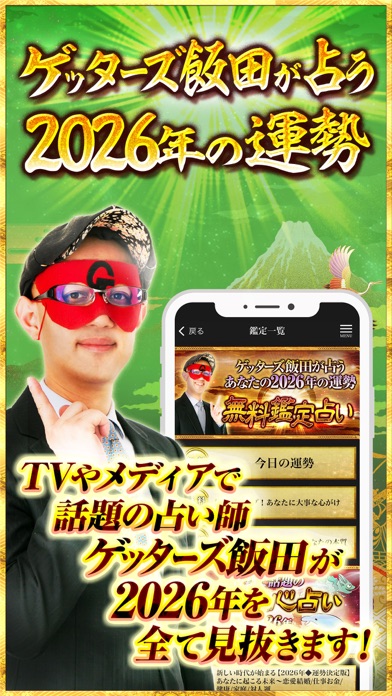
That may sound obvious, but it is not. A named system gives the writing a voice. It tells the user what kind of sharpness or softness to expect. A generic AI reading has to earn that voice from zero.
星ひとみの占い sits in the same family, but with a different texture. The app connects the reading to 天星術 and to Hoshi Hitomi's public persona. In product terms, the method and the person are not separate. They are the wrapper that makes the paid answer feel less anonymous.
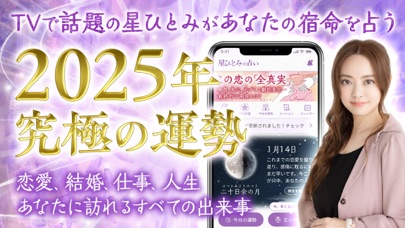
The weak point is repetition. When users feel that paid text is recycled, the trust breaks faster than it would in a plain utility app. The whole product promise is that the answer has a human source.
銀座の母 is the least modern reference here, and that is exactly why it matters. The App Store name puts 四柱推命 in the title. The screenshot uses a familiar fortune-telling world: daily luck, life, love, marriage, compatibility, and a recognizable practitioner figure.
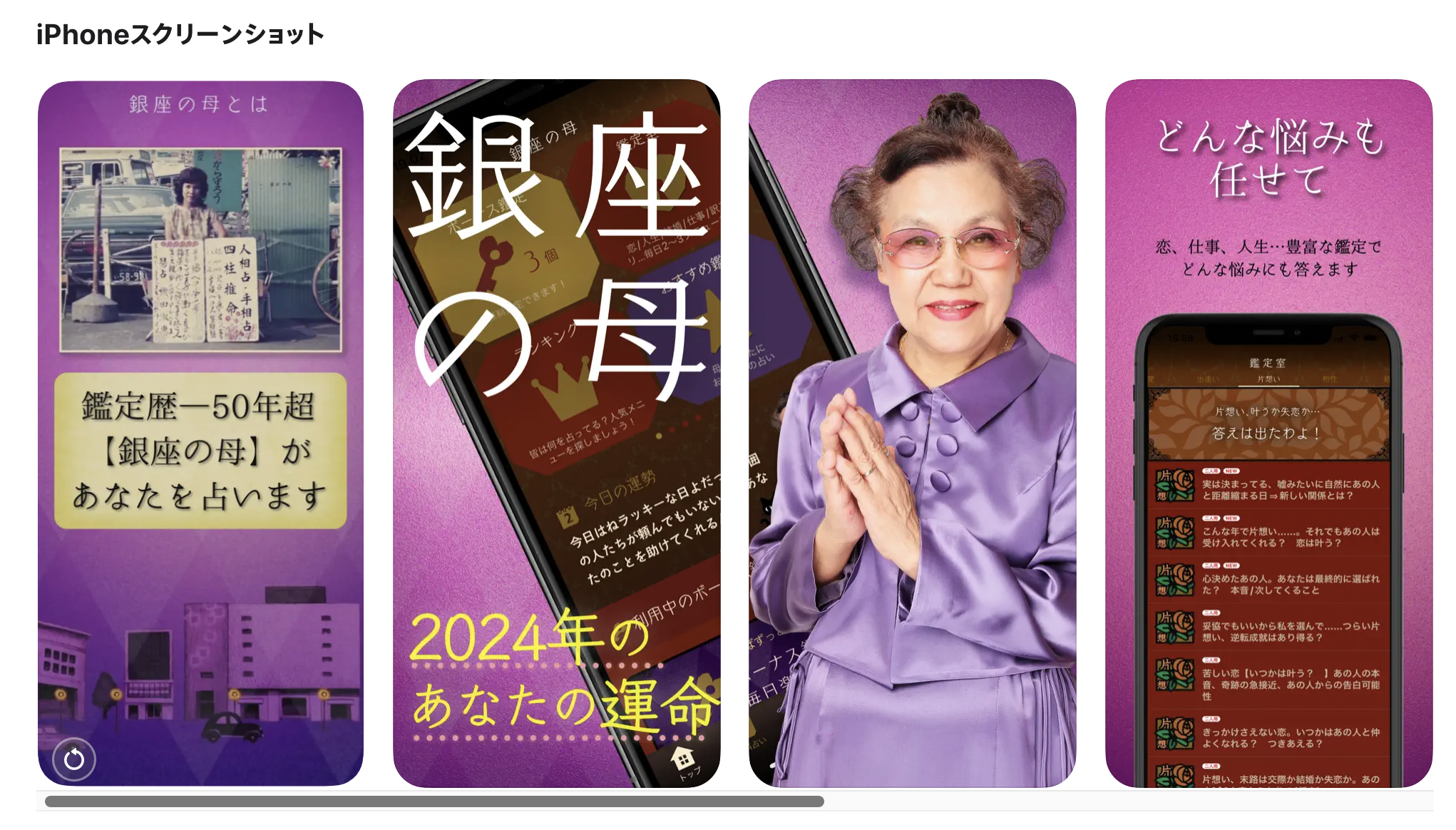
This is not neutral software. It is a practitioner brand in app form. For Japan, that still has value. The danger is accuracy handling. 四柱推命 depends on birth data, and unknown birth time cannot be treated as a tiny input detail. If a product hides that limit, the warm brand voice starts to feel evasive.
Uranao is smaller than the big App Store products, but I like it as a signal because it does not sell a vague mystical chatbot. It names Six-Star Astrology and Nine-Star Ki, then frames readings around personality, timing, compatibility, and a chart-like structure.
That gives AI something to stand on. If the product only says it can answer anything about destiny, it becomes weightless. A local method gives the answer boundaries. Boundaries make the reading easier to trust.
Cantian AI is broader. It starts from Bazi and stretches into Feng Shui, I Ching, Liuyao, naming, and other Eastern methods. That breadth is useful, but Japan would not be the place to show the whole cabinet at once.
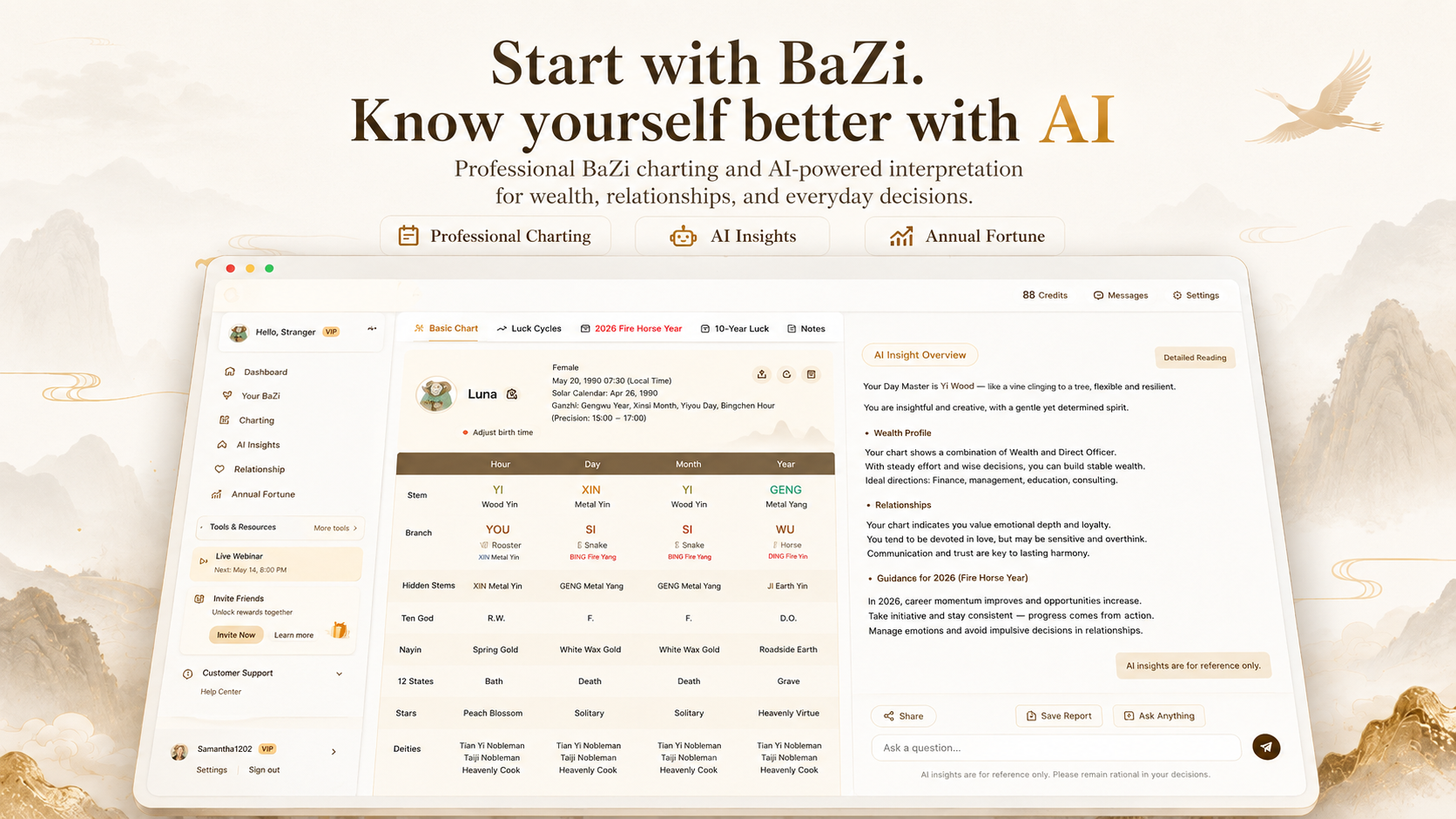
I would narrow the first Japanese-facing experience. Start with a Bazi or 四柱推命 reading that is honest about birth time, time zones, and method limits. Then compatibility. Then naming. Then the deeper library.
The AI layer should continue the reading, not replace the source of trust. That is the difference.
I would copy LINE占い's low-friction access, Getters Iida's named system, Hoshi Hitomi's recognizable voice, Ginza no Haha's practitioner authority, and Uranao's method-first AI framing.
I would avoid a huge landing screen that says the product can do every kind of Eastern wisdom. That reads imported. In Japan, the smaller door is often stronger: today, this year, this person, this timing.