A closer look at Cantian AI, ShenShu, BaziAI, Tianfu Agent, and Zendi, and why they should not be judged as one generic Bazi AI category.
2026/05/17
Bazi AI sounds like one product category until you open a few of the tools. Then it starts to split. Some products want to be a chart calculator with better explanations. Some want to be a specialist engine. Some behave like a daily companion app that happens to use Saju or Bazi language.
That split matters more than the word AI. A user who needs a clean chart is not asking for the same thing as a user who wants relationship advice at 1 a.m. A practitioner building a workflow is asking for something else again.
I would read this market through five products: Cantian AI, ShenShu AI, BaziAI, Tianfu Agent, and Zendi. They are close enough to compare, but not solving the same job.
There are three lanes here. First, chart-first products. They win or lose on input handling, chart clarity, and whether the interpretation is tied to visible structure. Second, professional engines. They matter when the user cares about repeatable analysis and deeper metaphysics logic. Third, mobile companions. They trade depth for habit.
A lot of weak Bazi AI pages blur those lanes because it sounds safer to say they serve everyone. They do not. The product gets sharper when it admits who it is really for.
Cantian AI is the reference point because it is not only a Bazi page. The site presents Bazi beside Feng Shui, I Ching, Liuyao, naming, Zi Wei Dou Shu, and other Eastern systems. The screenshot feels like a library of methods rather than a single report generator.
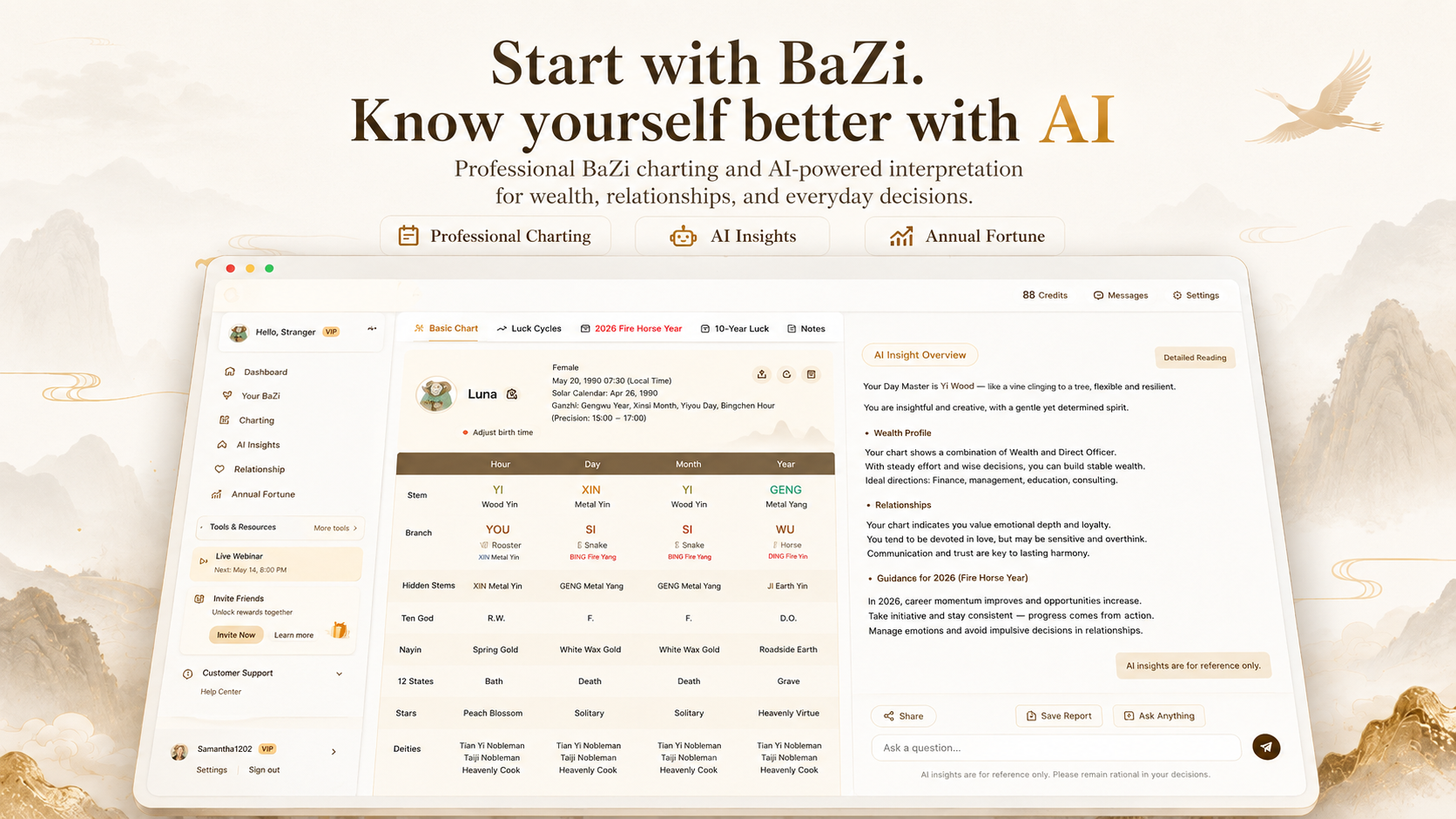
That is a strength if the product can keep method boundaries clear. It is also the main risk. Breadth can make the first screen feel less decisive. A new user may not know whether to start with Bazi, Feng Shui, naming, or a chat.
My preferred version of Cantian would make the first reading very concrete. Ask for the birth data, show what was calculated, state what is uncertain, and let the AI conversation continue from there.
For Bazi, calculation is not a small setup step. It is where trust begins. If the chart looks hidden, vague, or too magical, the user has no way to judge the reading that follows.
That is why chart-first tools still matter even when AI can write longer answers. A longer answer is not automatically a better reading. Sometimes it is just more fog.
ShenShu AI feels closer to the calculator side of the market. The page shows a BaZi calculator and a reading experience that starts from visible inputs and chart logic. It does not ask the user to trust the prose alone.
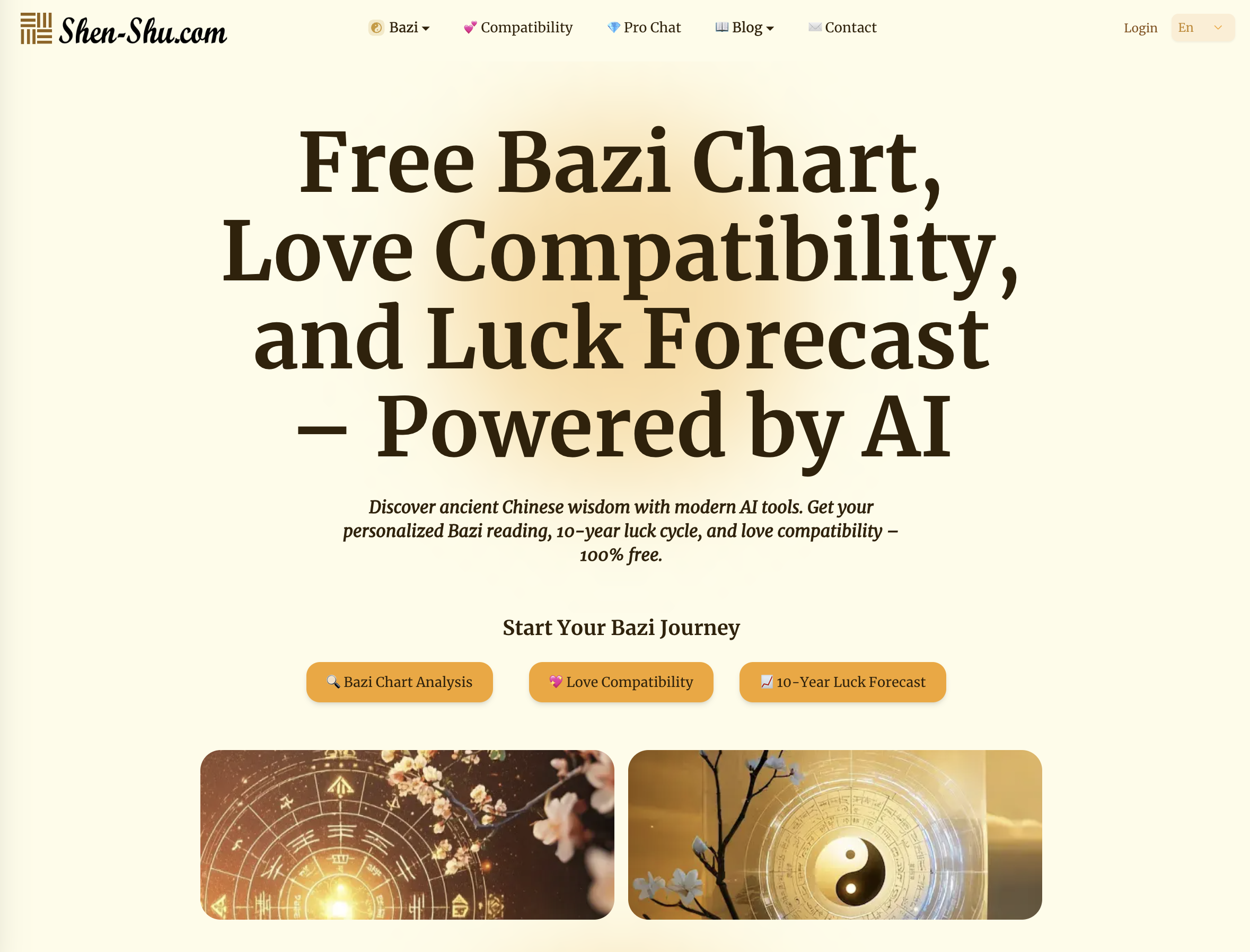
That makes it easier to recommend for someone who wants to see the skeleton of the reading. The tradeoff is that the experience can feel less companion-like. It is better as a first serious chart stop than as a daily emotional app.
BaziAI is easier to understand at a glance. The screenshot leads with a free Bazi AI reading and a prompt-like flow. It feels built for quick access rather than slow study.
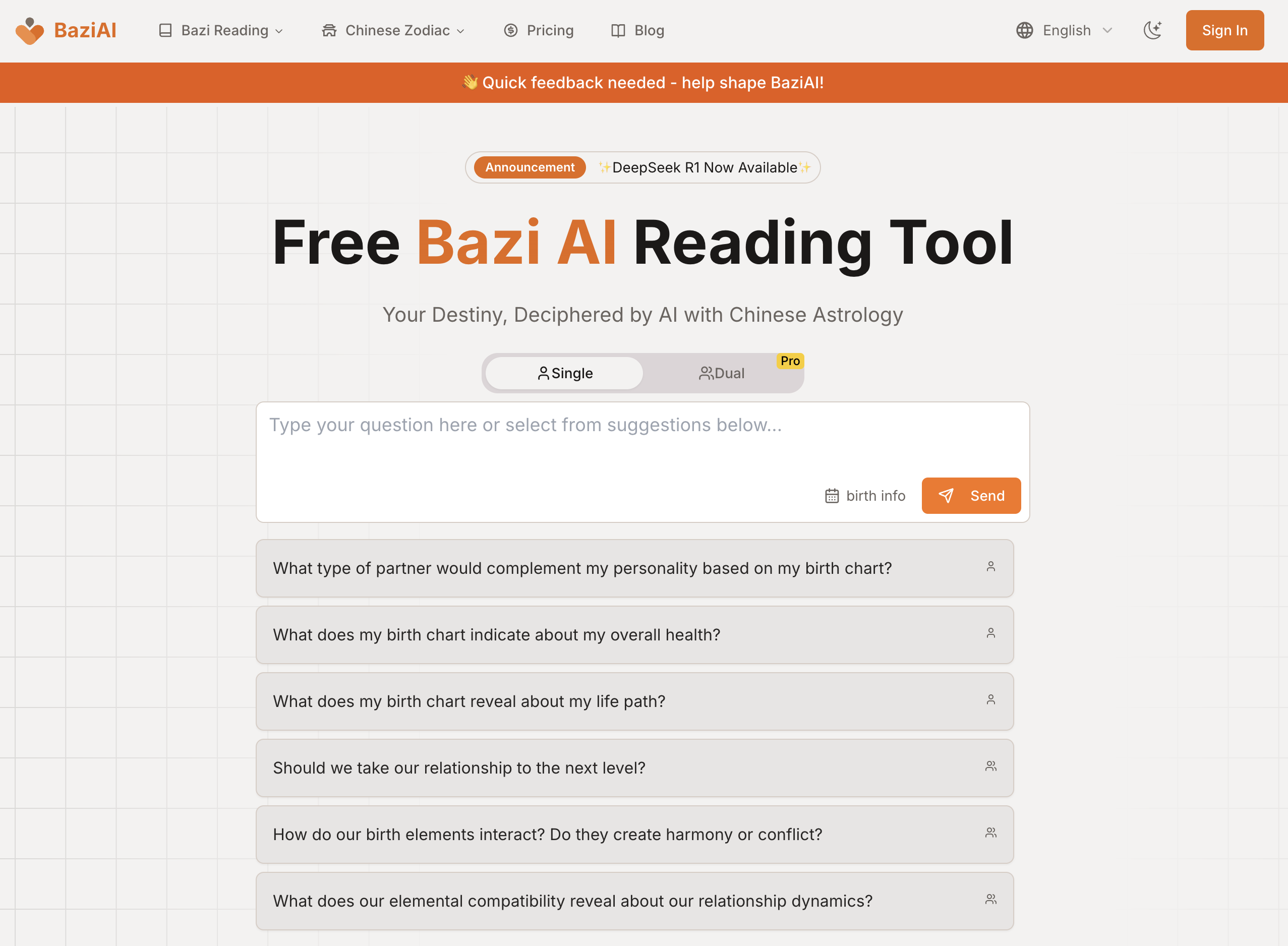
That can be useful. Many users do not want a full metaphysics workspace. They want to enter a date, ask a question, and see whether the first answer has any bite.
The risk is sameness. If the answer sounds like general life advice with a few Bazi words attached, the product loses its reason to exist. The reading has to point back to the chart often enough to feel earned.
Tianfu Agent is interesting because it reads less like a consumer horoscope app and more like an AI engine for Chinese metaphysics. The screenshot is not trying to charm a beginner. It suggests a tool layer behind the reading.

That is a different buyer. A casual user may not care. A practitioner, builder, or serious hobbyist might. This lane needs reliability and structure more than soft copy.
Zendi comes from the Korean Saju and tarot side, but it belongs in this comparison because it shows where East Asian destiny products often go on mobile. The product promise is less about inspecting a chart and more about returning to a familiar reading companion.
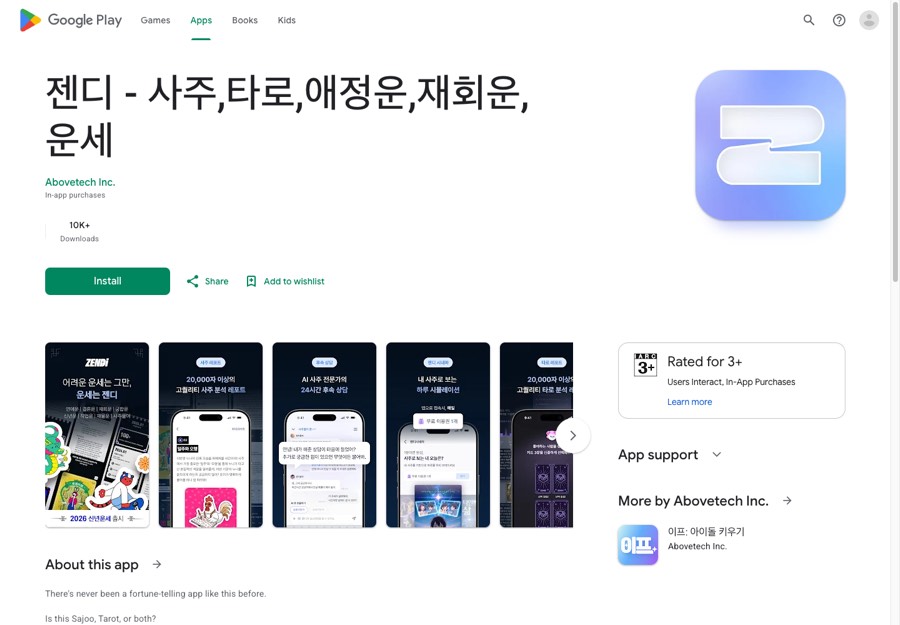
That version can be stickier. It can also get shallow quickly. The product has to decide whether it is a habit app with metaphysics flavor or a serious reading tool with a softer door.
When I look at a Bazi AI product, I ask one question first. Can I see why the answer was produced?
Not every user wants technical explanation. But every serious product needs some trail back to birth data, pillars, elements, timing, or the specific method being used. Without that trail, AI turns Bazi into personality copy.
Cantian AI has the strongest room to become a serious Eastern-method library. It already has breadth. The next product question is not whether it can add more systems. It is whether each system can feel distinct and accountable.
For Bazi specifically, I would keep the first experience narrow: chart, interpretation, method limits, then conversation. Make the user trust one reading before inviting them into the whole library.