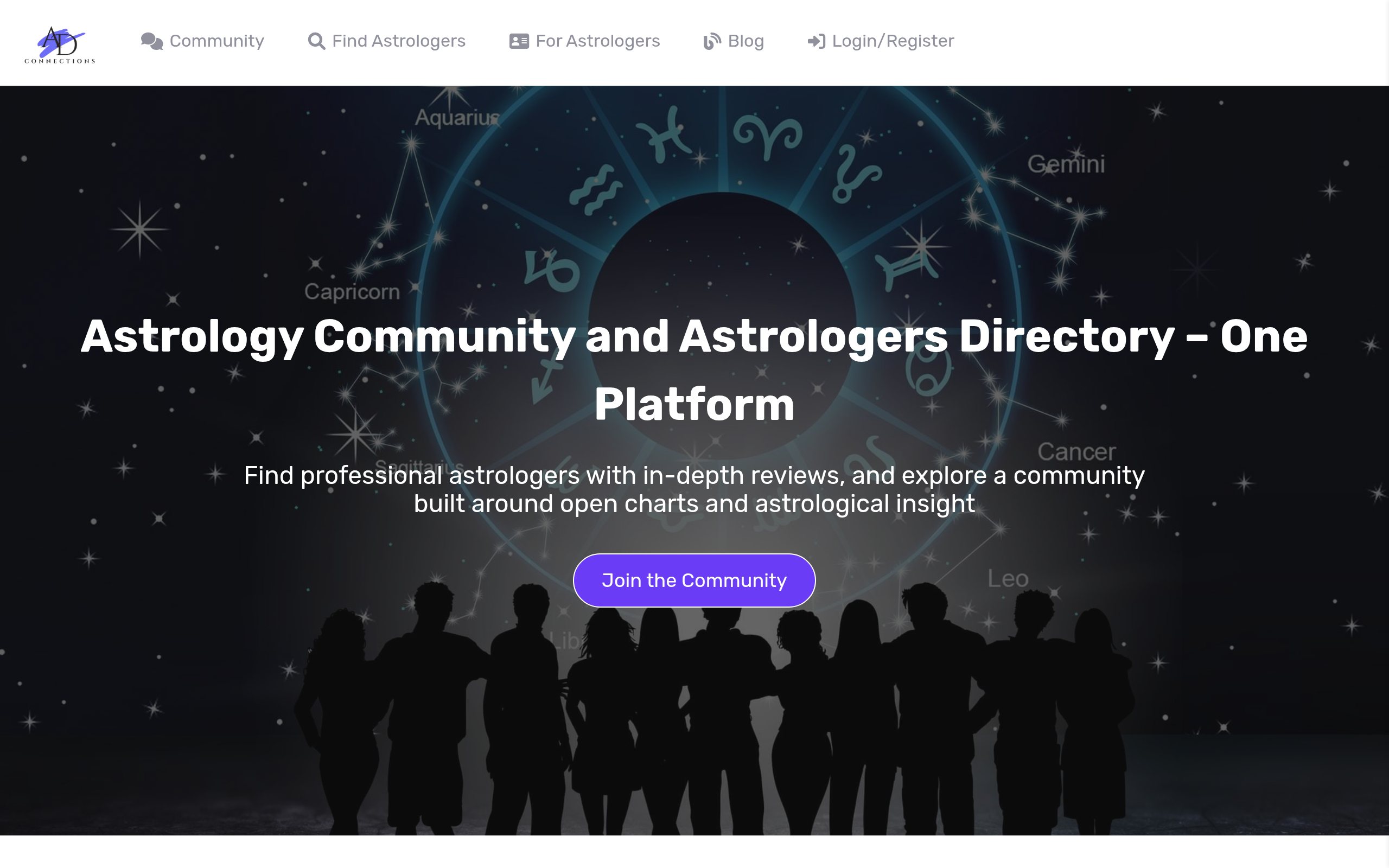

Astrodune is built around a useful idea: astrology is easier to understand when you can see real charts, real placements, and real conversations around them. The platform combines Astrodune Connections, a social astrology community, with an astrologer directory for comparing practitioners.
Community features
Members can create a natal chart, add profile context, join groups, follow activity, and search the network by placements. The search is the most interesting part for learners: you can look for people with specific planets, signs, houses, or aspects and see how those placements appear in actual lives.
Transit journaling gives the site a slower, more reflective use case. You can log current transits with notes, moods, or personal reflections, then keep those entries private or share them. That makes Astrodune useful beyond quick chart lookup.
Astrologer directory
The directory side is more specific than a basic list of names. Astrologer profiles can include specialties, traditions, certifications, experience, price range, location, and session options. Reviews are also shaped for astrology sessions, with attention to preparation, interpretation clarity, communication style, reasoning, and practical takeaways.
This makes Astrodune a good fit for people who want to understand an astrologer’s working style before booking. It also helps that astrologers can participate in the community, because you can see how they explain placements and respond to astrology discussions outside a polished profile page.
Chart sharing controls
Astrodune says birth time and place are not shown publicly. The more useful part is that users can decide which charts and profile details are visible, so the community can discuss placements without forcing every piece of birth data into public view.