
Astrology apps are learning to sound like a phone call
PANDIT AI, AstroVoice, AstroFate, and Tomorrow point to a small but important shift: astrology and divination apps are moving from typed questions toward spoken, always-available consultation.
Astrology apps used to feel like reports that could talk. A user entered birth data, read a chart, checked transits, or typed a relationship question into a box. AI made the answers faster and more fluent, but the basic interaction still looked like reading text.
A newer set of astrology and divination apps is changing the input. They are not only waiting for typed questions. They want the user to speak.
PANDIT AI makes that move explicit. Its listing asks users to choose a Pandit, choose a language, and ask anything. It places Jyotish, palm reading, face reading, numerology, Kundli, and daily readings inside a voice-first AI consultation product, with support for more than 50 languages. The interesting part is not another divination menu. It is the feeling of an answered call.
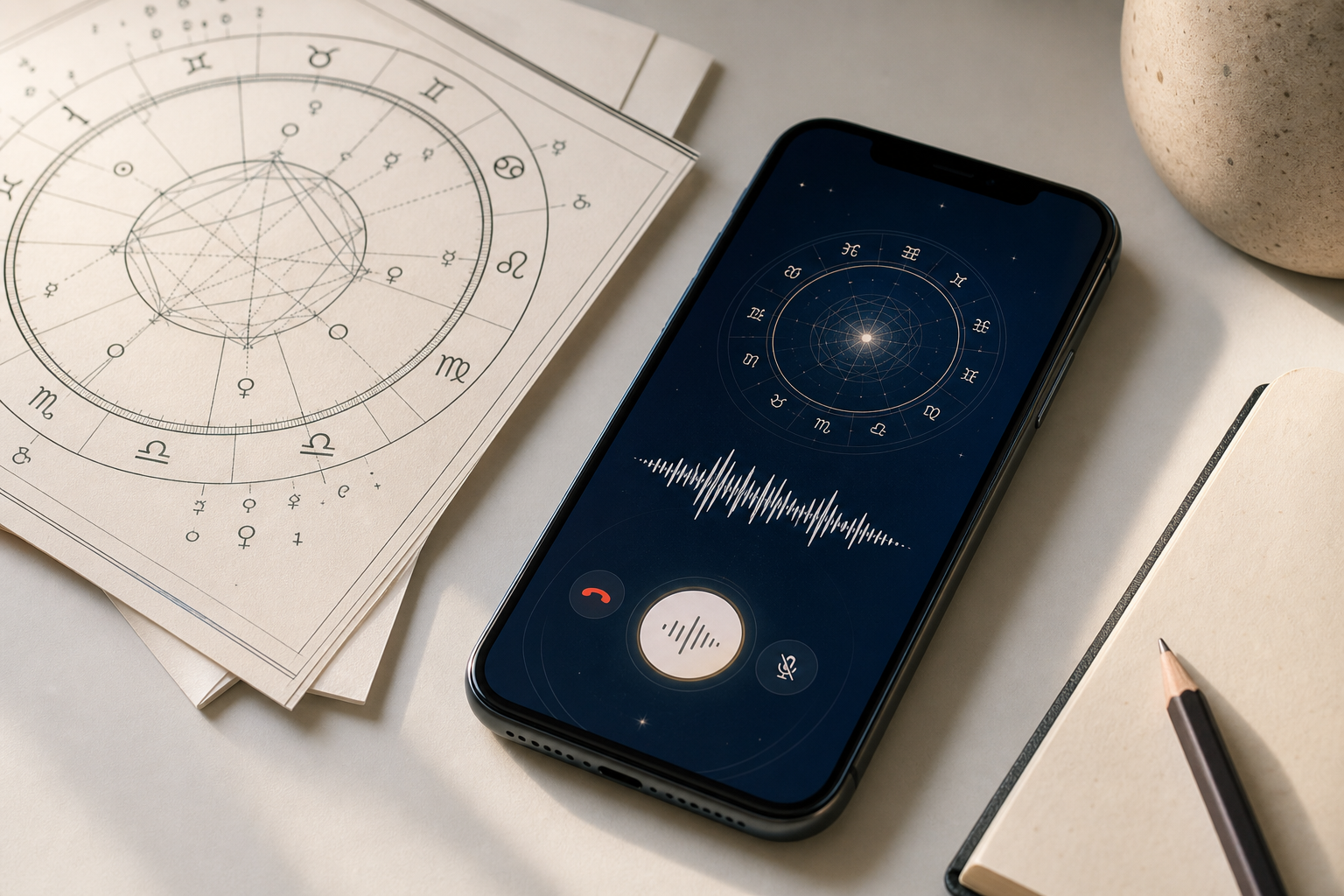
Voice makes astrology feel like consultation
AstroVoice follows a similar pattern on Google Play. Its listing leads with Voice Mode: hold the mic and talk to a personal AI astrologer in Hindi, English, Tamil, Telugu, Marathi, and other Indian languages. It reports 100K+ downloads and sells a premium tier for unlimited voice chats at ₹399.
That pricing detail matters. Voice is not just a nicer input method. It changes the product from a horoscope generator into something closer to an always-available consultation line. A user hears one answer, then asks another question. Love, work, marriage, money, and uncertainty start to blend together. The product borrows the social shape of a phone call while keeping AI, subscriptions, and wallet mechanics underneath.
Western astrology apps are testing the same shape. AstroFate offers a daily two-minute AI astrology audio session, with birth charts, transits, and tarot in the same product. Tomorrow lists live voice chat with an AI astrologer alongside birth charts, tarot, palm reading, and multiple languages. These apps are not only making readings more polished. They are removing the need to write a clean question.

Speaking makes the data more personal
Voice changes what the user gives away.
Typing still gives people time to edit themselves. Speaking brings hesitation, pacing, and emotion into the request. Someone may begin with a simple timing question, then drift into a breakup, family pressure, health anxiety, money, or self-doubt. Once astrology apps collect voice, they are no longer holding only prompts. They are holding private states.
That is also why the format is commercially attractive. Spoken consultation supports repetition. The user can ask about love today, work tomorrow, money at the end of the month. The product can sell daily audio, unlimited voice, premium astrologers, more languages, more systems, and longer sessions. It feels like someone is listening. It also keeps the user inside the app.
The trust problem becomes sharper here. Birth data, charts, palm images, face scans, spoken questions, and long-running chat history are not ordinary preference data. If an app only says an AI astrologer is always available, without explaining how voice is handled, whether records can be deleted, whether human advisors see the material, or whether answers come from rules, practitioners, or model generation, the consultation feeling gets thin fast.
The shift is not that AI astrology has finally learned to speak. Astrology apps are borrowing the emotional shape of a phone call. A user is no longer only reading a horoscope. They are speaking into the phone at a moment of hesitation. That small act pulls the product closer to consultation, with all the commercial power and personal sensitivity that consultation carries.
Related apps
 PANDIT AIPANDIT AI. Talk, chat, scan your palm, scan your forehead, and read your full Kundli. Free Daily Reading.
 AstroVoiceUseful for Android users who want Vedic astrology in a spoken, multilingual format and do not want to wait for a human astrologer to pick up.
 AstroFateAstroFate. AI-Powered Astrology Reports Explore detailed birth chart and horoscope transit reports custom-generated by AI astrologers. AI Intelligent Conversation Q&A Explore deeper with interactive AI chat, which remembers your horoscope and answers all your questions about love, timing, strengths or challenges.
 Tomorrow: Horoscope & TarotTomorrow: Horoscope & Tarot. AI palmistry combined with astrology chart Astrology chart and birth chart. Voice chat with your personal AI astrologer 24/7.
Recommended
 FateKitSponsoredBest for astrology and Chinese-metaphysics readers who want to compare several chart systems for the same moment, inspect the sky data behind them, and prepare structured context for an external AI without uploading a profile by default.
 Cantian AIFor people who want AI Bazi readings and also want to cast a hexagram, check feng shui, or choose a name in the same app.
Sources
- App StorePANDIT AI
- Google PlayAstroVoice
- App StoreAstroFate - Personal Astrology
- App StoreTomorrow: Horoscope & Tarot
Similar stories
You Can Now Ask Siri to Ask Your AI Astrologer
A month into iOS 27, Hypergate AI and yap let the new Siri pass questions to their AI astrologers. Both are tiny apps; Co-Star, Nebula and CHANI haven't mentioned Siri, and the answers depend on each app's own AI.
AI AstrologyVoice AI
Siri Can Tell You the Planetary Hour. It Can't Read Your Horoscope Yet
Two weeks into iOS 27, Siri handles astrology only in a narrow way: a few small apps let it answer what planet rules the hour or where the Moon is tonight. Ask about your day and it has nothing, because Co-Star, CHANI, Nebula and the other big reading apps have not plugged in.
AI AstrologyApp store updates
This AI Astrology App Thought It Was Still 2023. Now It's Back
SINE shipped version 2.0 on Oct. 15, its first update since December 2024, with a new backend and tarot readings matched to the cards drawn. While it sat untouched, reviewers said its AI read their transits for October 2023, then the app stopped loading altogether.
AI AstrologyAI Tarot