
The cards are random. The reading is starting to ask AI.
A CHI 2026 study interviewed 12 tarot practitioners who already use AI in personal readings. The interesting shift is not automated card pulling. It is AI entering the interpretive step.
Tarot is easy to misunderstand from the outside. The random draw looks like the whole trick.
The harder part is the reading.
The Tower does not mean the same thing in every situation. In one question, it may suggest collapse. In another, it may point to a false structure finally giving way. A tarot reader is not just matching a card to a definition. They are moving between symbol, question, context, intuition, and the person sitting with the card.
AI is now entering that step.
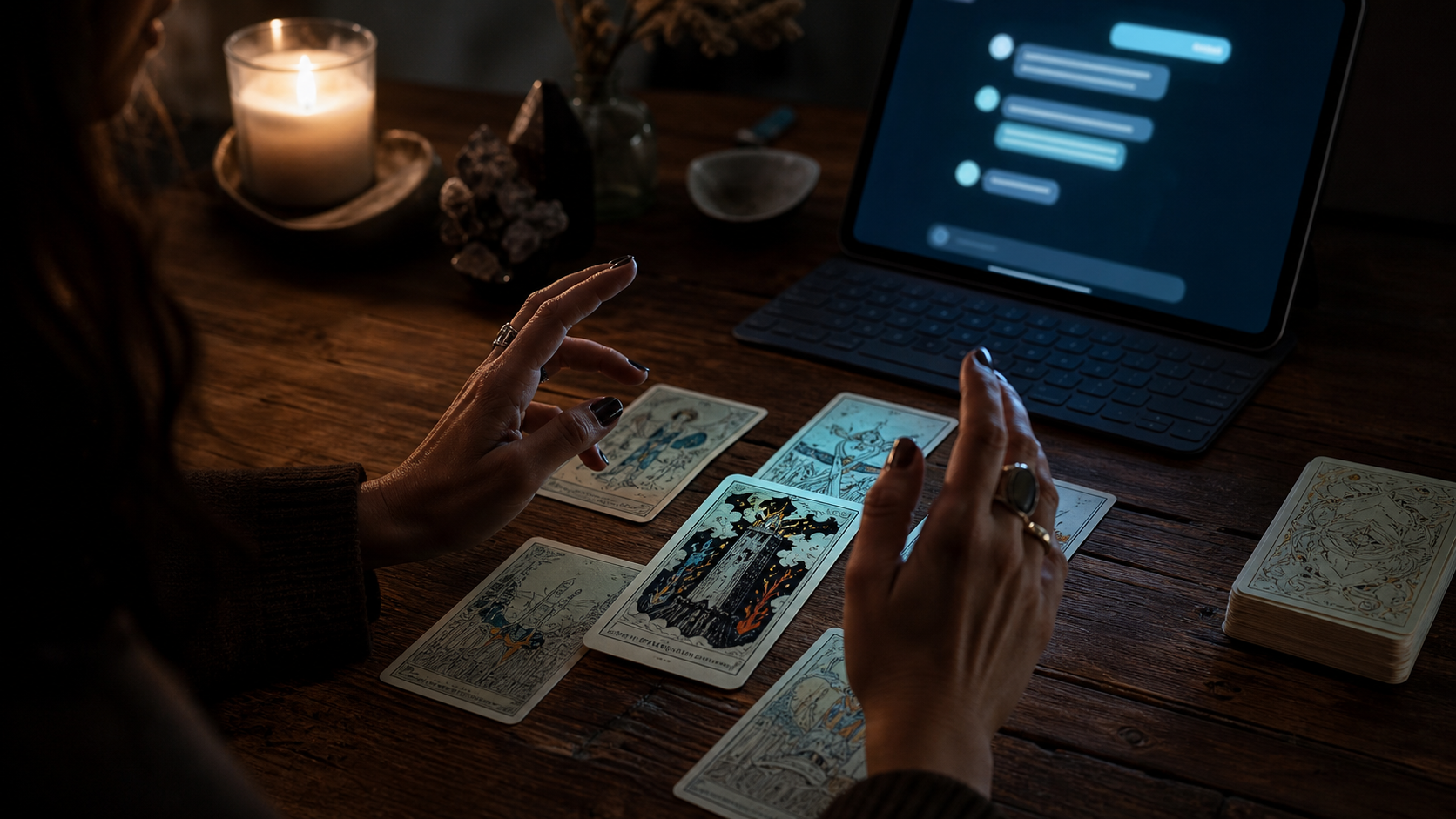
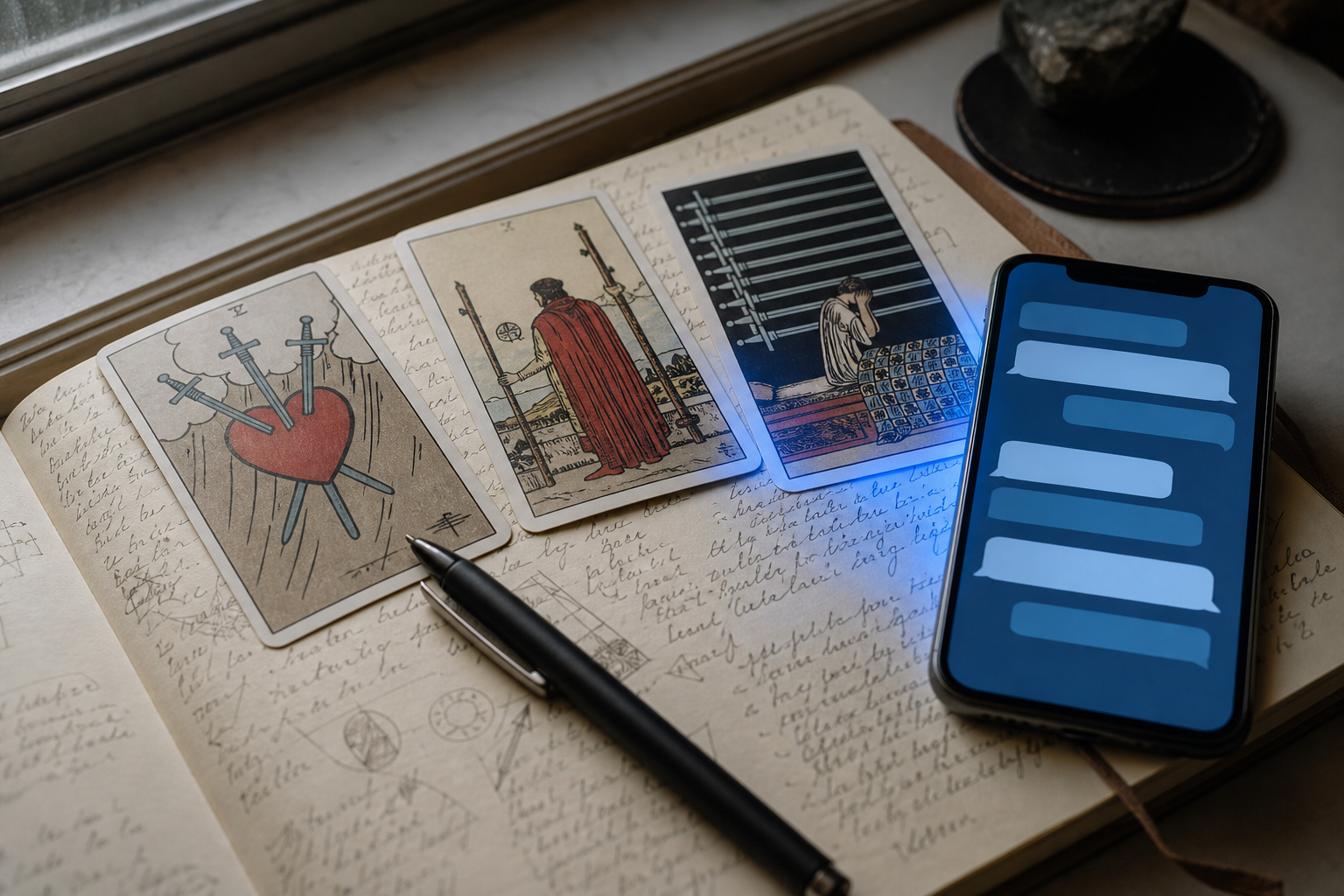
A CHI 2026 paper interviewed 12 tarot practitioners who already use AI in personal readings. The important detail is that many were not simply asking a chatbot to pull cards. They had already drawn physical cards, then turned to ChatGPT or similar tools when the interpretation felt difficult.
That sounds small. It is not. Tarot can leave the random draw to chance. Interpretation has usually belonged to the human reader. Now some readers are handing part of that pressure to AI.
Some readers want a second reader
The interesting question is not whether AI can read tarot. It is why readers ask it to.
Some want an outside angle. A hard spread can make a person too hopeful, too afraid, or too committed to the answer they already want. AI can generate several possible readings, giving the practitioner something to compare against their first instinct. In that role, it acts less like a replacement and more like a tireless second reader.
The TechXplore article, republished from The Conversation, describes practitioners using AI for guidance during self-reflection and for alternative interpretations. That feels plausible because tarot is often used when someone is already stuck. A relationship question, a career question, a decision that keeps circling back. Asking a friend can feel embarrassing. Asking the same friend for the fifth time can feel worse. A chatbot does not look tired.
That is part of the appeal. AI is available, fluent, and willing to turn ambiguity into a paragraph.
It is also the problem.
The real argument is over interpretation
Tarot is not built around one clean answer. At its best, it gives someone a symbolic place to sit with uncertainty. A difficult card may matter because it slows the person down. It refuses to disappear immediately.
AI tends to do the opposite. It smooths the mess. It gives shape to hesitation. It can make a complicated situation sound more settled than it is.
StudyFinds summarizes the study's findings in a useful way: participants turned to AI because of self-doubt, the wish for an outside perspective, and the time it takes to interpret a spread. The article also notes that recruiting through online tarot communities met visible resistance. Many communities were hostile to AI-related discussion, and some rejected the researchers because the study involved AI.
That resistance is not just nostalgia. The worry is that chatbots can be too agreeable. They can help someone see a new angle, but they can also dress up the answer the person already wanted. A tarot reader who asks AI every time a card feels hard may move faster, but the reading may lose some of its weight.
The most difficult card is often difficult for a reason.
Good tools should preserve the pause
This matters for spiritual and self-reflection products.
The easiest app to build is the one that accepts a question, pulls a spread, and produces a polished answer. It is smooth. It is fast. It is probably easy to sell.
But tarot's pull is not only the answer. It is the pause before the answer. People come to the cards and admit something they are afraid of, something they want, something they are avoiding. A good AI tarot tool should not erase that moment.
AI can still help. It can offer alternative readings, ask follow-up questions, challenge an overly comfortable interpretation, and keep a record of what someone keeps asking. It can make the practice easier to return to without pretending to be the source of truth.
What it should not do is perform certainty.
If an AI tarot product rushes every spread into a single confident answer, it turns divination into emotional outsourcing. The user does not have to sit with the card, or the question, or their own reaction. They click, receive relief, and come back the next time uncertainty hurts.
The better direction may be quieter: three possible readings instead of one verdict, a follow-up question instead of a command, a reminder that the tool does not know the user's life, and enough space for the reader to disagree.
The cards are still random. The reading is starting to ask AI. The delicate part is whether AI can support reflection without swallowing the ambiguity that made the practice useful in the first place.
Recommended
 FateKitSponsoredBest for astrology and Chinese-metaphysics readers who want to compare several chart systems for the same moment, inspect the sky data behind them, and prepare structured context for an external AI without uploading a profile by default.
 Cantian AIFor people who want AI Bazi readings and also want to cast a hexagram, check feng shui, or choose a name in the same app.
Sources
- arXivInterpretive Cultures: Resonance, randomness, and negotiated meaning for AI-assisted tarot divination
- TechXploreHow tarot readers are using AI, and what it says about our growing reliance on chatbots
- StudyFindsTarot Card Readers Are Turning To AI For Guidance
- FortuneWe talked to 12 tarot card readers who are using AI. They split in 2 camps
Similar stories
Sleep-Talk Apps Used to Share Your Mumbles. Now They Interpret Them
Japan's Negoto Uranai now turns overnight sleep talk into clean sentences and a dream-style reading, and two new English-language recorders hand the transcript to AI. A decade ago these apps were about uploading funny clips to a public leaderboard. The new ones can keep recordings on the phone and read them back to you alone.
AI Dream JournalSelf Reflection
This AI Astrology App Thought It Was Still 2023. Now It's Back
SINE shipped version 2.0 on Oct. 15, its first update since December 2024, with a new backend and tarot readings matched to the cards drawn. While it sat untouched, reviewers said its AI read their transits for October 2023, then the app stopped loading altogether.
AI AstrologyAI Tarot
The App That Scores Your LINE Chats Now Pulls Tarot Cards
Merotalk, a Japanese app that scores relationships from LINE chats, added AI-read tarot in October, and its developer helped the 100-million-take Love Type Diagnosis quiz launch a daily love fortune slip. A quiz is taken once; a fortune can be drawn every day.
AI Relationship SupportAI Tarot