
Manifestation apps want the vulnerable parts of your day
Manifest, Manifestive, and Seeded point to the same shift: manifestation apps are moving beyond affirmations and vision boards into AI chat, goal coaching, voice practice, and paid daily routines.
Manifestation apps used to be easy to place. They offered daily affirmations, a vision board, a few minutes of visualization, maybe a reminder to believe harder. The newer product pages are less tidy.
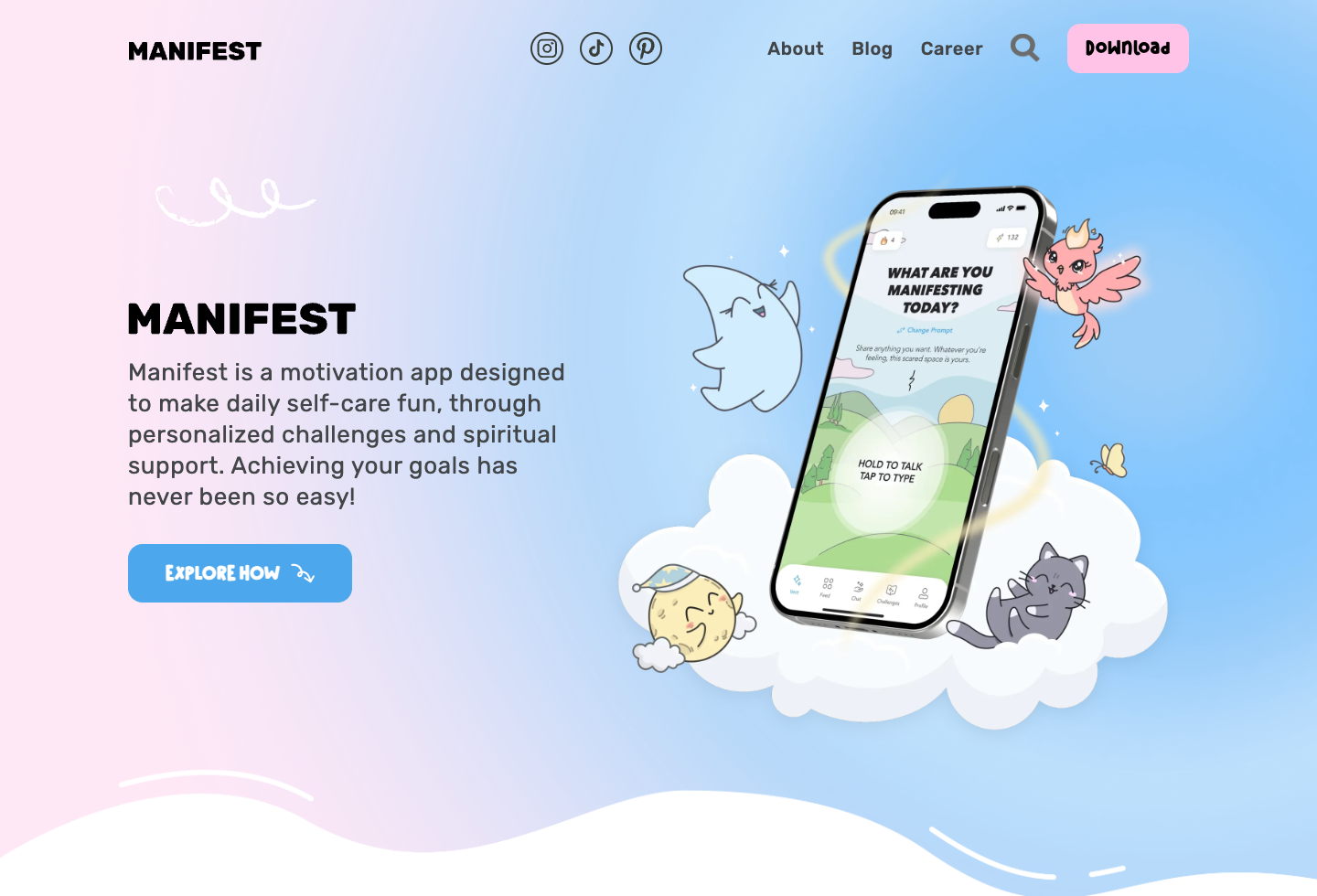
Manifest still looks playful, with a star mascot and soft colors. But its App Store listing now reads much closer to a support product than a simple affirmation app. It is in Health & Fitness, carries an 18+ age rating, and talks about anxiety, stress, anger, mood patterns, bedtime reflection, and a 24/7 AI-powered chat. Recent update language adds relationship chats, new manifestation rituals, challenges, and flows that resemble AI therapy journals.
That matters because the category is moving from desire into distress. A user may not open Manifest because they want a nicer quote. They may open it at lunch because anxiety has arrived, at night because sleep is not coming, or after a hard conversation because they need somewhere to put the feeling before it becomes a message.
Manifest also draws the obvious line. Its listing says the product can offer supportive conversations, mental-health motivation, and therapy alternatives, but it is not a substitute for professional therapy or medical care. That disclaimer is not just legal housekeeping. It shows how close this category now sits to mental wellness.
The product wants an ongoing thread
Manifestive moves the same idea toward structured goal work.
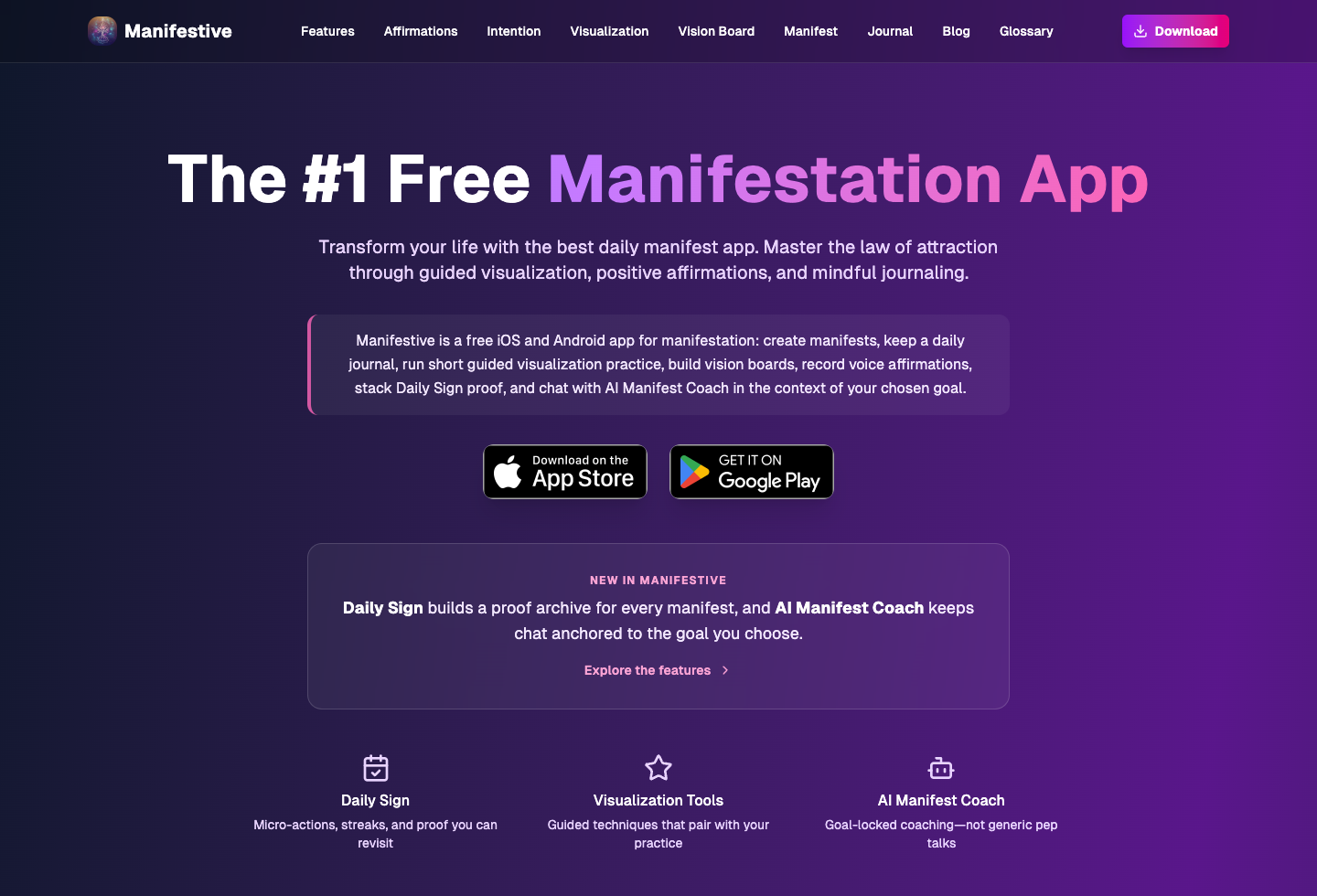
The product asks users to create a manifest, then keep a journal, run short visualization practice, build vision boards, record voice affirmations, collect Daily Sign proof, and talk with an AI Manifest Coach in the context of a chosen goal. The official site describes Daily Sign as one small proof per manifest per day, forming a proof archive the user can revisit when belief dips. The AI coach is also framed as goal-locked, not a generic pep talk.
Its recent App Store update points in the same direction: full chat history, resumed sessions, a redesigned coach screen, and paywall changes. When a manifestation app starts emphasizing chat history, it is no longer optimizing for a single moment of inspiration. It wants continuity.
The business logic is plain. A static vision board is hard to charge for every week. A daily practice is not. Daily Sign, chat history, voice affirmations, cloud sync, premium content, and an AI coach turn a loose wish into something a user can subscribe to.
Voice makes it more intimate
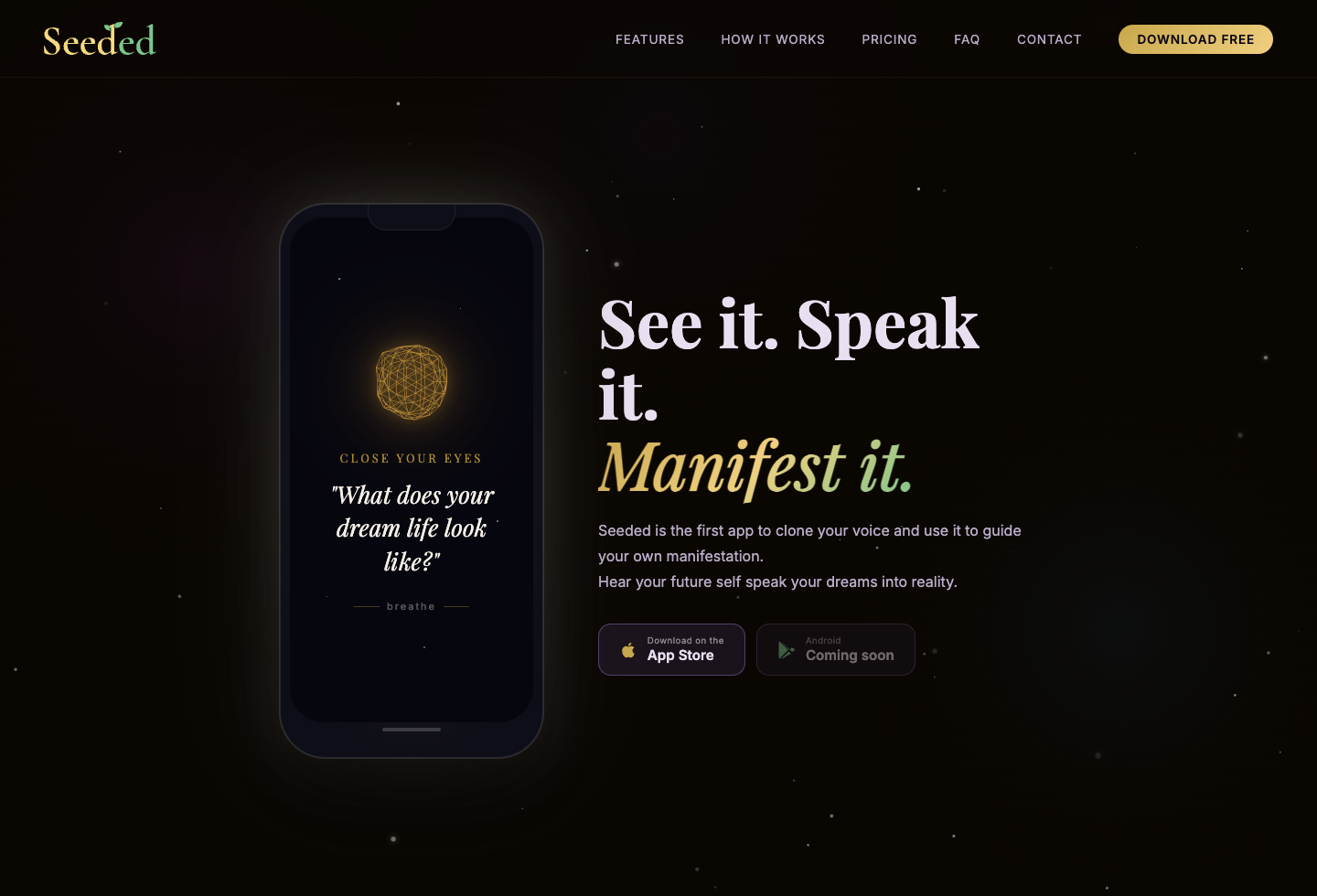
Seeded pushes the category into a more personal place. It starts with voice. The user closes their eyes and speaks a future out loud. The app transcribes those words, turns them into a living vision board, and in its premium tier can use voice cloning so the user's own voice narrates the future back to them.
It is a clever product idea. It is also more sensitive than a normal journal field. Manifestation used to happen through sentences and images. Seeded asks for spoken desire, emotional detail, future-self fantasy, and voice data. Its site says recordings are encrypted in transit and at rest, and that users can delete recordings and accounts. That matters because a person's imagined future is rarely neutral. It often includes money, love, body image, home, escape, and the life they are embarrassed to want.
The Moon Calendar is useful as adjacent context. It combines moon phases, self-care ideas, rituals, a daily journal, to-do lists, and calendar sync. It is not the center of this story, but it shows the same pull inside spiritual apps: move from occasional inspiration toward planning, emotional processing, and repeated daily use.
The hard part is not pretending to be therapy
This category can work because people do need small outside voices during the day. A morning reminder, a short chat, a journal prompt, a replayed voice note before sleep. AI makes these products feel less like templates. It can remember, respond, and make each practice feel a little more personal.
But that is also the risk. Manifestation products are very good at selling hope. Mental-wellness products need restraint. When users bring anxiety, relationships, money pressure, and self-doubt into the app, the product cannot only think about retention. It can offer a practice, a pause, a writing space, or a reminder. It should not pretend to know what a person's life means.
The shift is not that one app added a coach or another added a voice board. The center of the category is changing. Manifestation apps are moving from "picture the outcome" toward "come back every day when you are trying to keep yourself together." That is a real market. It is also a delicate one. The closer these apps move to support, the less they can behave like ordinary subscription software.
Related apps
 ManifestManifest. DAILY MOTIVATION & POSITIVITY Get your daily dose of inspiration with personalized affirmations, positive reminders, and motivational quotes. Our friendly, AI-powered chat is here to listen without judgment.
 Manifestive – Manifest It Official SiteManifestive – Manifest It Official Site. Manifestive: #1 Manifestation App | Free Daily Manifest App. Transform your life with the #1 free manifestation app.
 SeededSeeded. speak freely, AI listens and builds your vision. Future You: voice chat with the version of yourself who already achieved your goals.
Recommended
 FateKitSponsoredBest for astrology and Chinese-metaphysics readers who want to compare several chart systems for the same moment, inspect the sky data behind them, and prepare structured context for an external AI without uploading a profile by default.
 Cantian AIFor people who want AI Bazi readings and also want to cast a hexagram, check feng shui, or choose a name in the same app.
Sources
- App StoreManifest: Daily Journal
- ManifestManifest App Homepage
- App StoreManifestive - Manifest It
- ManifestiveDownload Manifestive
- SeededSeeded
- The Moon CalendarThe Moon Calendar
Similar stories
AI wellbeing apps now have to know when not to be the therapist
AI wellbeing, journaling, and self-reflection apps are moving from an always-available support pitch into a sharper trust question: can the product make its limits visible before users treat it like care?
AI WellnessSelf Reflection
Swipe Up for a Shaman: A Korean Video App for Fortune-Tellers Hits the Top-Grossing Chart
FlipToc turns human fortune-tellers into a swipeable video feed with per-minute calls, leaving AI to subtitle, translate and take notes. It reached Korea's top 25 grossing Lifestyle apps within a week on three ratings, and its public ranking shows 1,659 sessions in 18 days.
Astrology MarketplacesEast Asian divination
You Can Now Ask Siri to Ask Your AI Astrologer
A month into iOS 27, Hypergate AI and yap let the new Siri pass questions to their AI astrologers. Both are tiny apps; Co-Star, Nebula and CHANI haven't mentioned Siri, and the answers depend on each app's own AI.
AI AstrologyVoice AI