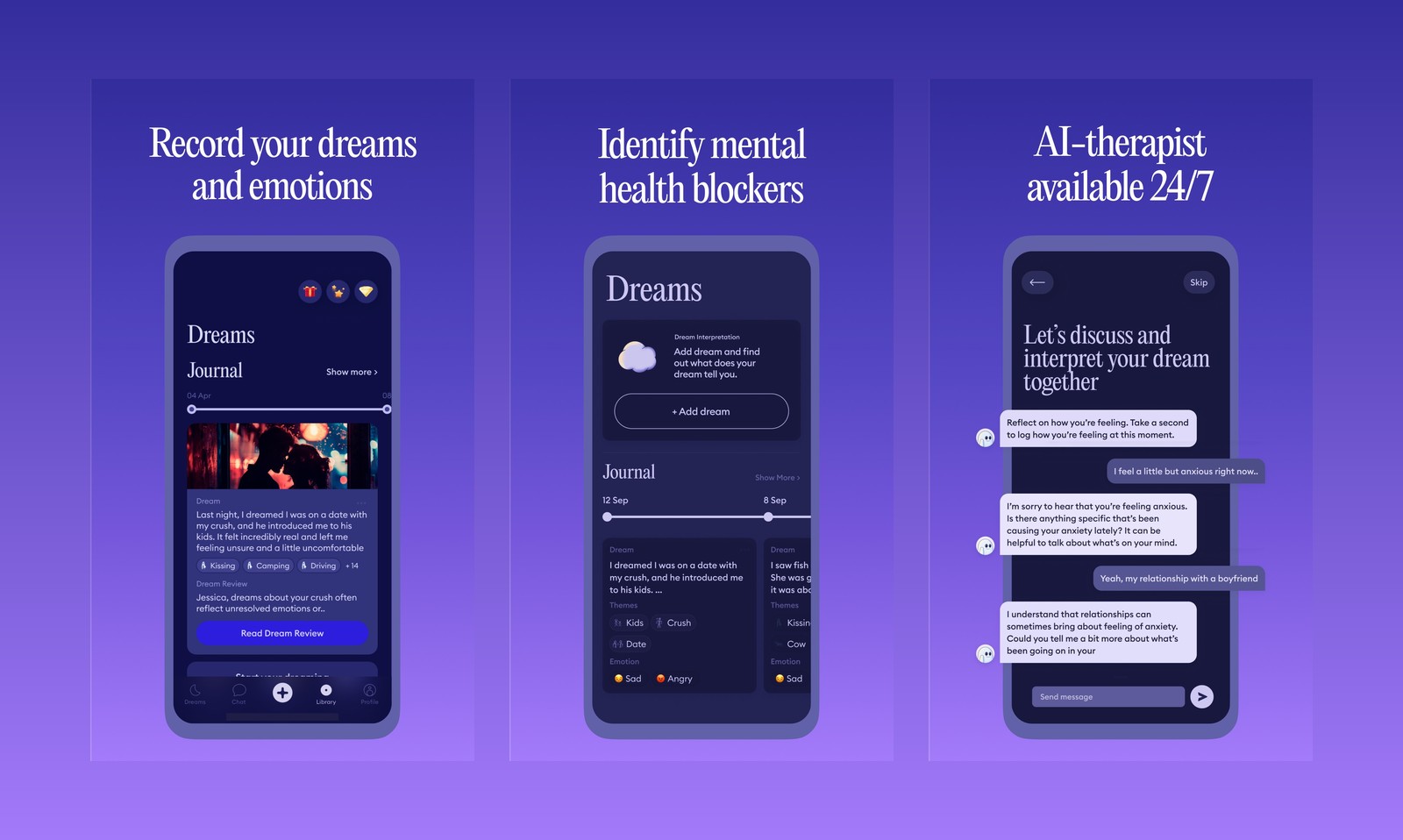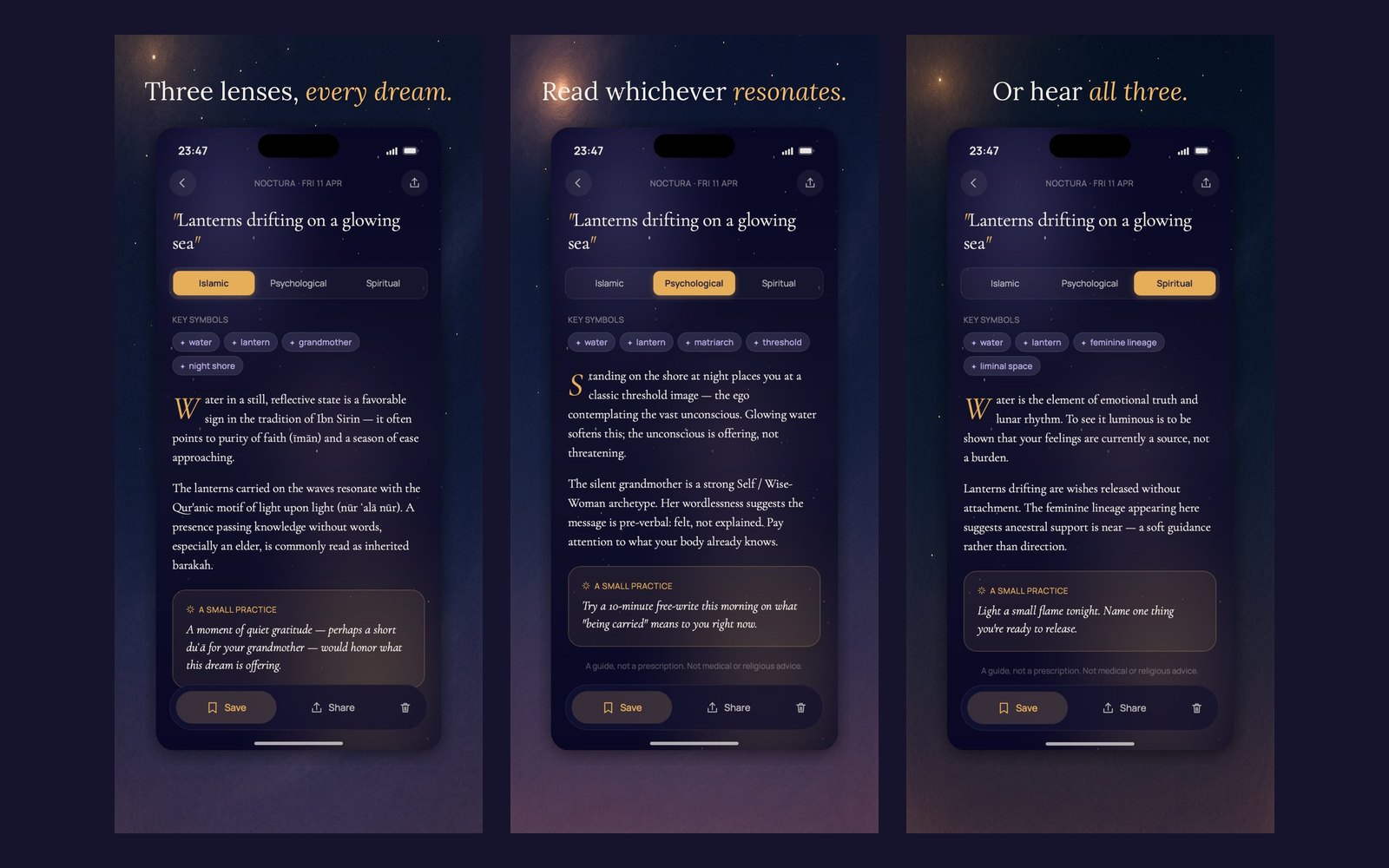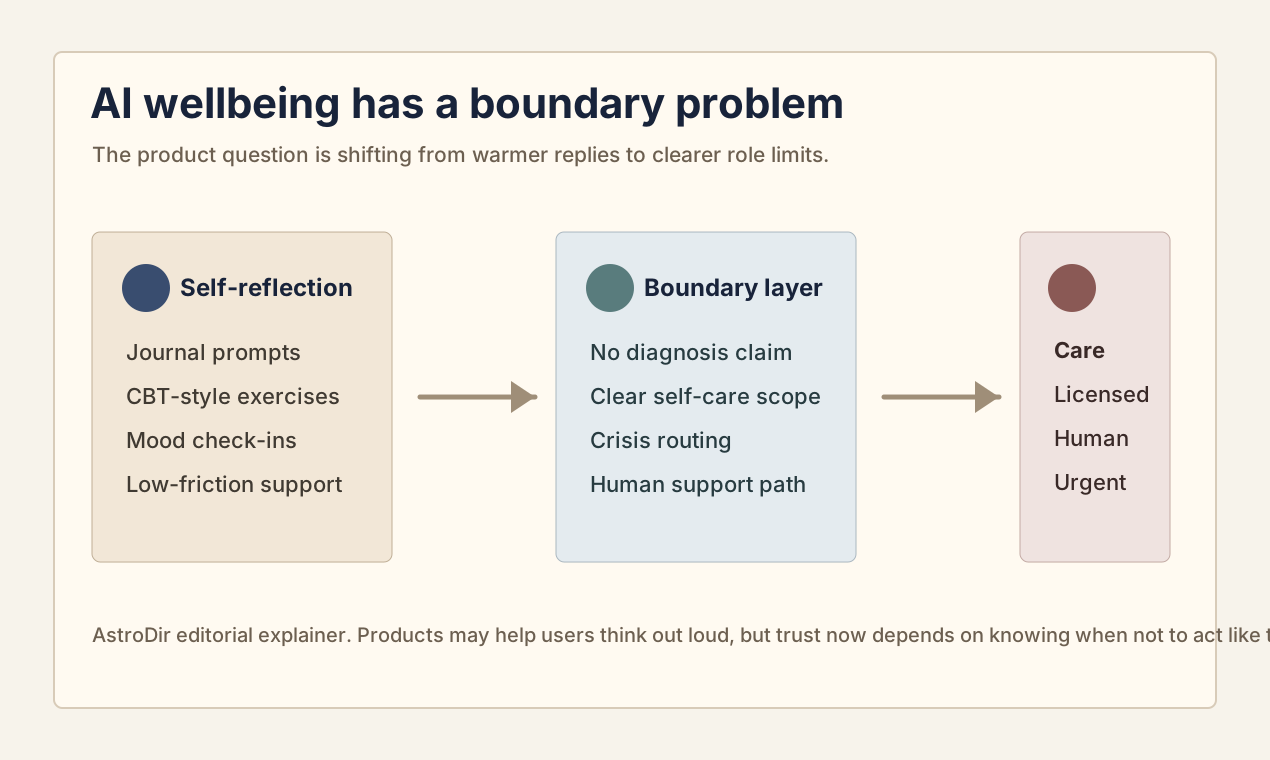

Dream apps are becoming memory tools, not answer machines
Dreamvibe, Dreamly, and Reverie show the same shift: AI dream apps are moving from one-off interpretation into sleep context, weekly reports, journal questions, and long-running personal records.
The morning is the product moment
Most dream tools used to have a very short loop.
You woke up, typed a dream, received an interpretation, and left. The product treated the dream as a question with an answer. Sometimes the answer was interesting. Often it was just a longer version of a symbol dictionary.
The newer AI dream journal apps are trying to keep the moment alive for longer. They are less focused on explaining one dream in isolation and more interested in recording what happens around it: sleep stages, mood, recurring symbols, voice notes, morning reminders, weekly reports, and questions the user can ask later.
Dreamvibe is the clearest recent example. Its App Store page brings dream capture, AI analysis, speech input, AI images, bedtime stories, morning reminders, home-screen widgets, exports, and a paid upgrade flow into the same product. The most telling piece is HealthKit Sleep. Dreamvibe says it can read REM, Deep, Core, and Awake stages from Apple Watch, then blend dream analysis with real sleep data inside a brain map.
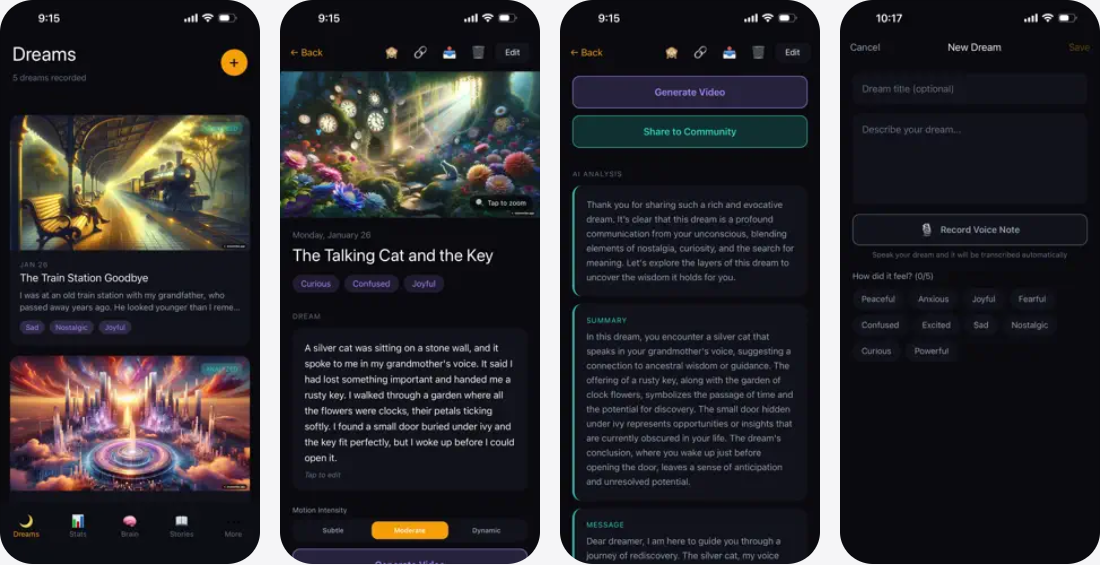
That is a different kind of dream app.
It is no longer only asking what the dream meant. It is asking what the night looked like, what the user felt when they woke up, whether certain symbols are returning, and how the dream fits into a broader pattern. The AI layer becomes less of an answer machine and more of a way to preserve fragile morning material before it disappears.
Weekly reports change the habit
Dreamly makes the same shift in a quieter way.
Its latest App Store version notes mention three things: weekly report, asking questions to the journal, and improvements to statistics and progression. None of that sounds dramatic. But together, they point to the real product change.
A one-off interpretation is easy to try and easy to abandon. A journal with weekly reports gives the user a reason to return. The question becomes less “what does this dream mean?” and more “why do I keep seeing this place?” or “what changed in my dreams this week?”
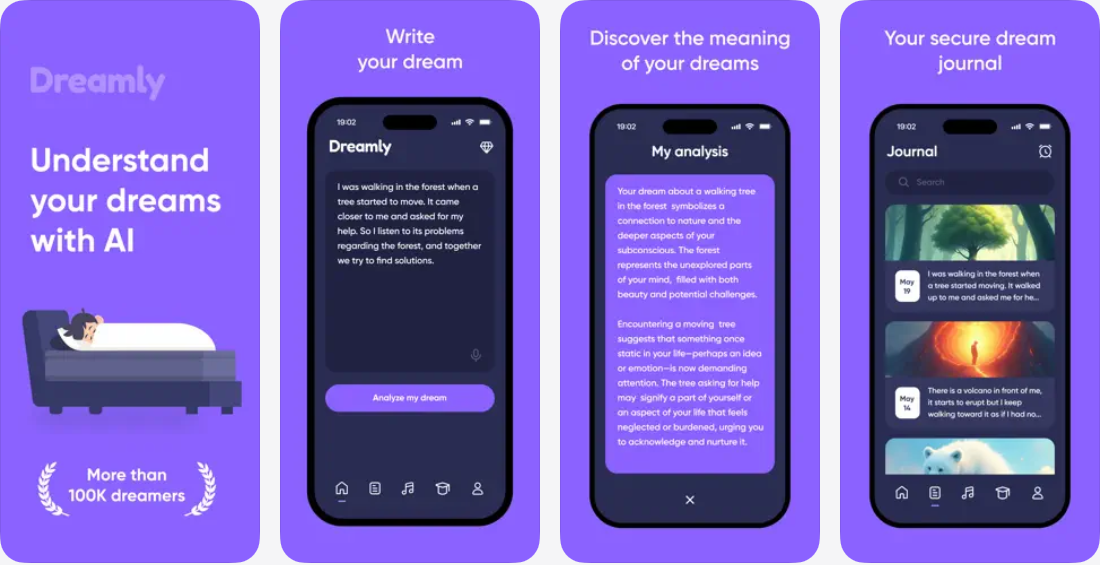
That matters because dream content is unusually good at becoming an archive. Users may not remember every entry, but they do remember repetition. A staircase, a former partner, a flooded room, a missed train, the same animal showing up again. Once the app can track symbols, emotions, and themes across time, it becomes closer to a self-reflection tool than a novelty.
This is also where the business model makes more sense. People do not usually subscribe because one interpretation was clever. They subscribe because the app has become part of the morning routine: record the dream, check the journal, look at the pattern, ask a follow-up question, maybe turn the dream into an image, then move into the day.
Dreams are becoming sleep and mood data
Reverie makes the sleep-and-mood side of this category easier to see.
Its listing talks about a dream calendar, mood by date, voice recording, recurring symbols, HealthKit sleep rhythms, and Apple Intelligence features that run locally on compatible devices. The update notes describe browsing the journal by date and seeing the mood of each night at a glance.
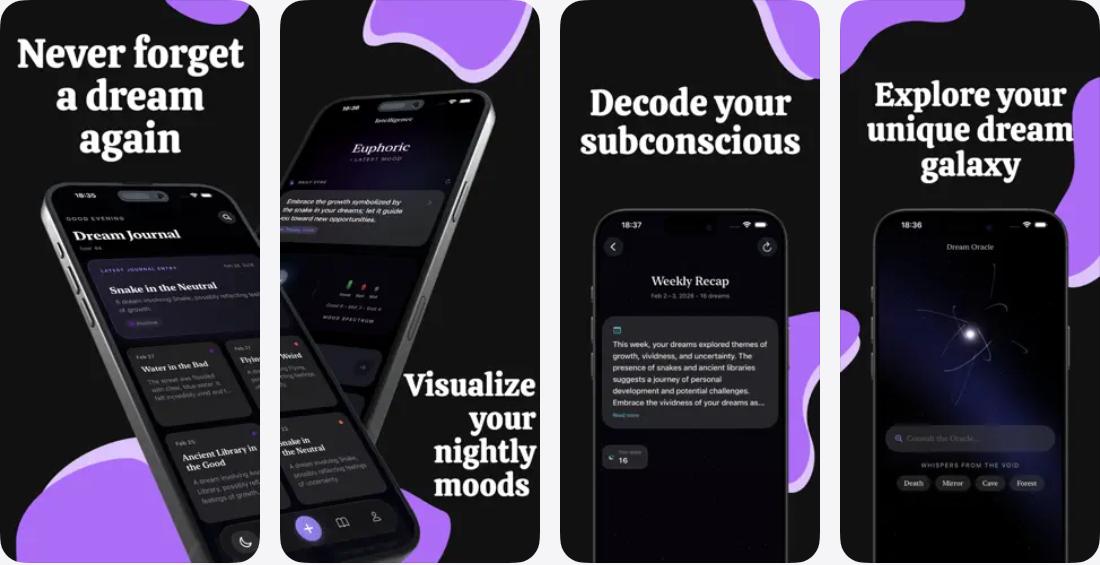
That is the adjacent category opening up: sleep tracking, mood tracking, and private journaling.
Dreams are different from ordinary journal entries. They are unstable, sometimes embarrassing, often emotional, and rarely written in a clean narrative. That makes them hard material for AI. If the app rushes into overconfident interpretation, it can feel silly or intrusive. If it helps the user keep, compare, and revisit the record, the value is more believable.
The trust problem gets heavier
As dream apps become journals, the privacy question becomes harder to treat as a small footer.
Users are not entering lightweight content. A dream can contain relationships, family conflict, fear, desire, grief, body anxiety, or something the user would never write in a public note. When voice recording, sleep stages, heart-rate context, images, and long-term mood patterns join the same app, the product is holding a very private slice of life.
That is why Dreamvibe, Dreamly, and Reverie are worth looking at together. They are not the same product. Dreamvibe is heavier on sleep context, brain mapping, media, and reminders. Dreamly is pushing interpretation toward journals, weekly reports, and follow-up questions. Reverie leans into calendar, mood, local AI, and sleep rhythm.
But they point in the same direction: AI dream journals are moving from interpreting one dream to recording a stretch of sleep and mental state.
The change is quiet, but it fits real behavior. The best moment for this category is not late at night. It is the few minutes after waking, when the dream has not vanished yet and the day has not fully started. Any app that can make that moment easy to capture, private enough to trust, and useful enough to revisit has a stronger reason to exist than a basic dream dictionary.
Related apps
 DreamvibeUnlock the hidden meaning of your dreams with Dreamvibe, the AI-powered dream journal that transforms your nightly adventures into profound personal insights. AI Dream Journal.
 Dreamly0 adds weekly report, ask questions to your journal, and improvements to statistics and progression. Dreamly helps you understand dreams and nightmares with accurate AI dream interpretation, clear dream meanings, and powerful personal insights.
 ReverieDiscover the hidden landscape of your mind with Reverie, the ultimate AI-powered dream journal and sleep companion. Use customizable reality checks, WBTB (Wake Back To Bed) timers, and intention-setting reminders to cultivate lucid dreaming and enhance dream recall.
Recommended
 FateKitSponsoredBest for astrology and Chinese-metaphysics readers who want to compare several chart systems for the same moment, inspect the sky data behind them, and prepare structured context for an external AI without uploading a profile by default.
 Cantian AIFor people who want AI Bazi readings and also want to cast a hexagram, check feng shui, or choose a name in the same app.
Sources
Similar stories
This Dream App May Sell Your Dreams to AI Developers, If You Say Yes
DreamApp's July 21 privacy update lets it train its own models on dream content and, with opt-in consent, license or sell dream datasets to AI developers; withdrawing can't recall copies already delivered. A few small apps are moving readings onto the phone instead, with trade-offs.
AI Dream JournalRisk and trust
Freud, Jung or Ibn Sirin? Dream Apps Now Let You Choose
A run of new AI dream apps turns Freud, Jung, Ibn Sirin and other interpretive traditions into tabs. The tab you pick decides what kind of answer you get, and in some apps, whether you pay for it.
AI Dream JournalAI Divination
AI wellbeing apps now have to know when not to be the therapist
AI wellbeing, journaling, and self-reflection apps are moving from an always-available support pitch into a sharper trust question: can the product make its limits visible before users treat it like care?
AI WellnessSelf Reflection