
Auvylo turns birth charts into people you can talk to
Auvylo turns Four Pillars, natal charts, and relationship context into AI personas, making relationship patterns feel less like a static report and more like a conversation.
A question people rarely ask cleanly
Some relationship questions are awkward because they are not really questions.
You want to know why you keep feeling pulled toward the same kind of person. You want to know why someone becomes warm, then distant, then warm again. You can ask a friend, but the answer often becomes advice before it becomes observation. You can ask yourself, but the thought usually circles back to the same place.
Auvylo enters through that gap.
It does not treat a birth chart as a finished report. It turns Four Pillars, the East Asian birth-data system often called Bazi, and a natal chart into an AI persona. That persona can represent you. It can also represent someone already living in your head.
That is a strange product idea, but a very recognizable user need.
A chart becomes a persona
The basic move is simple. Auvylo takes birth data and relationship context, then creates a character you can talk to.
The product is framed around inner motives, emotional patterns, compatibility, timing, and repeated relationship dynamics. In plain terms, it gives users a way to ask the kind of thing they normally would not put into a clean form field: why do I react like this, why does this person make me anxious, why does this connection keep returning to the same scene?
This matters because most astrology and Bazi products still make the user adapt to the report.
You enter a date, a time, and a place. The product gives you paragraphs. Some of those paragraphs may be useful, but the experience ends just when the real question starts.
Auvylo moves the follow-up into the product itself.
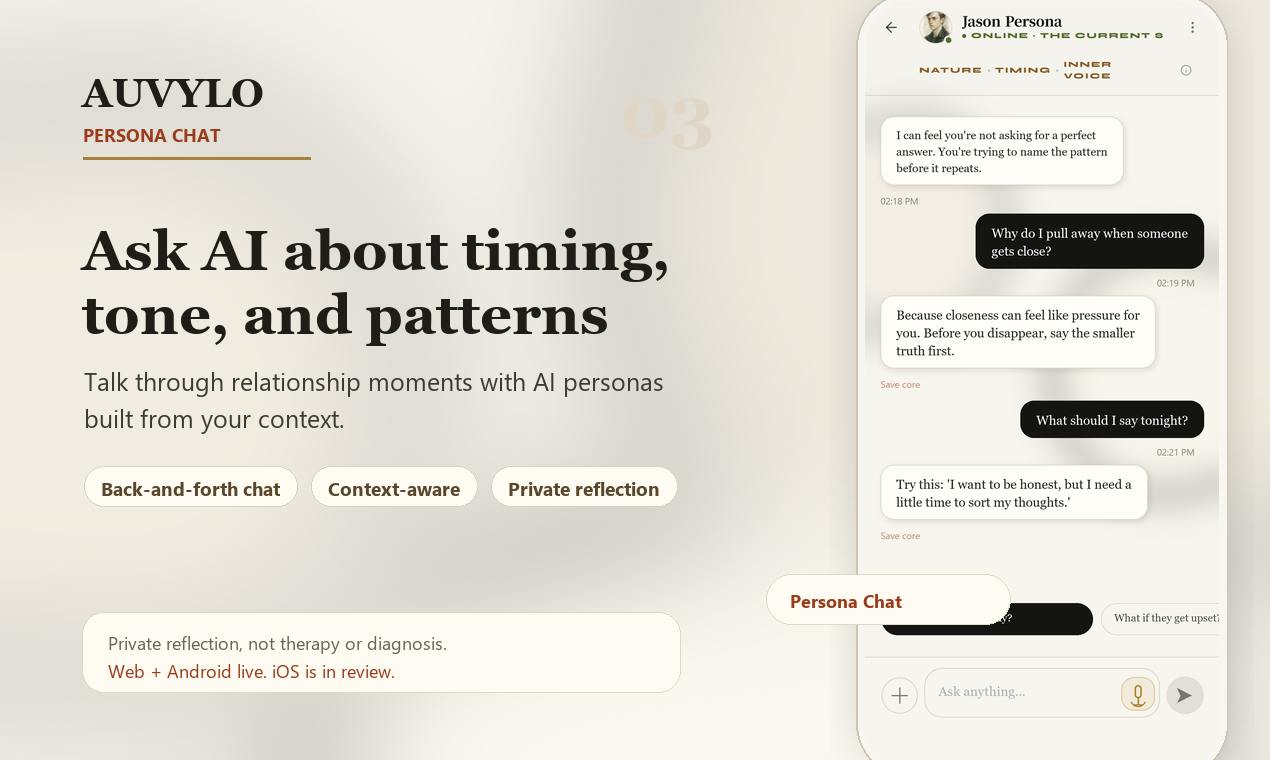
You can ask something closer to the actual feeling: why do I overthink this type of relationship, why does this person feel hard to read, is this mismatch real or am I reacting from an old pattern?
The answer is not valuable because it knows the other person. It is valuable if it helps the user separate a vague worry from a repeatable pattern.
There is a small design trick here. The persona format makes the reading feel less final.
If a report tells you that you tend to withdraw under pressure, the sentence sits there. You either accept it or ignore it. If a persona says something similar, you can push back. You can ask for an example. You can say that the pattern only appears with one person, not with everyone. That back-and-forth is where a chart reading starts to behave more like a notebook.
The report is still there
Auvylo has not abandoned the familiar structure of astrology products.
There are deeper reports around personality, relationship style, emotional patterns, and hidden tendencies. That part makes sense. People still want a stable explanation of themselves. A long reading gives the product weight, and it gives the user something to return to when the chat feels too open-ended.
But the more interesting part is the everyday loop.
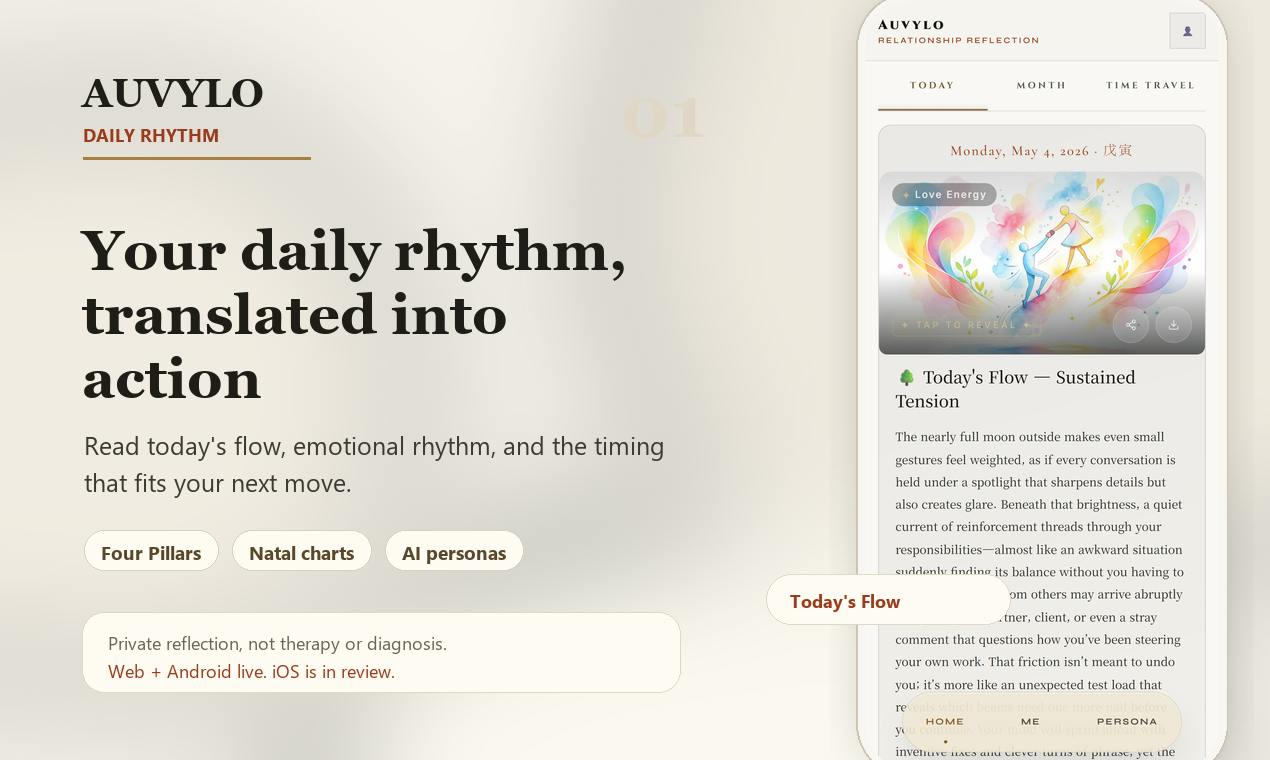
Auvylo also shows daily rhythm, relationship signals, and what HuntScreens describes as people flow mapping. That changes the reason to open the app. You may not want to reread your own personality report every morning. You may, however, want to check how a particular relationship is being framed today.
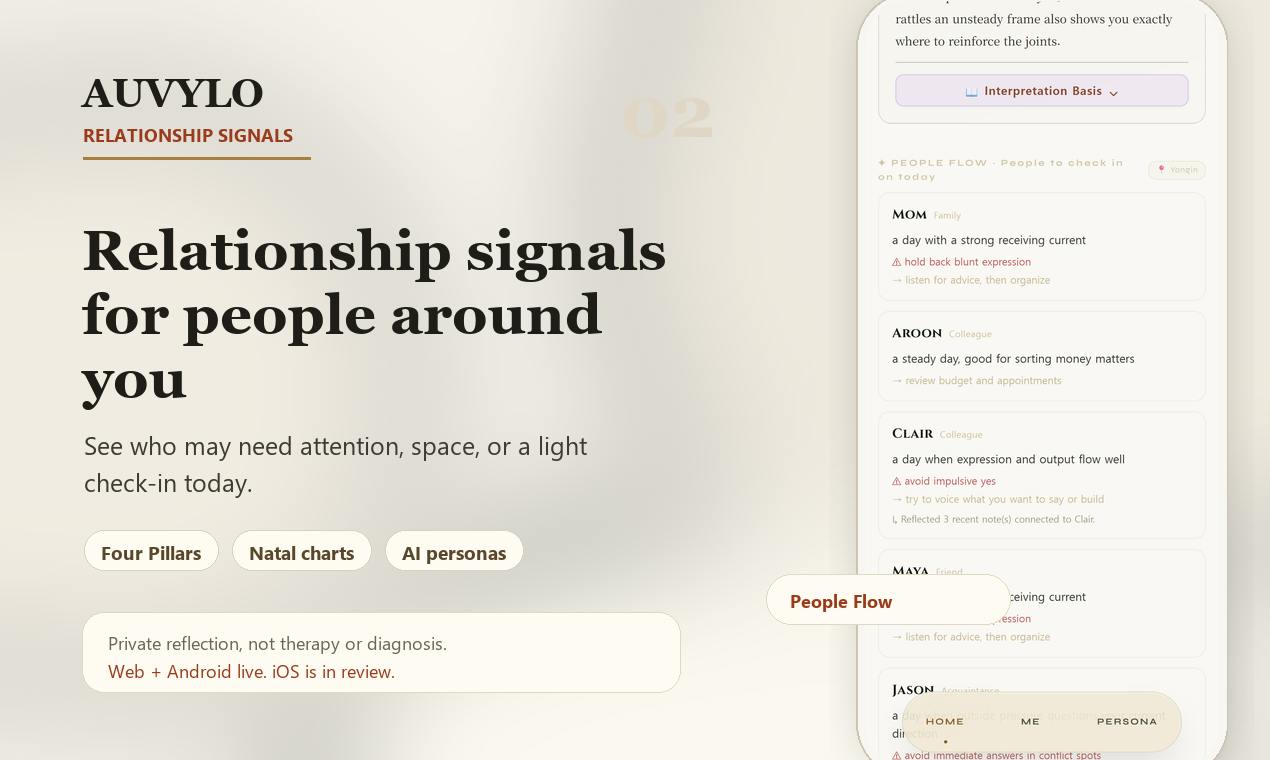
That is where Auvylo becomes more than a romantic curiosity.
The product is not only about crushes or dating. The screenshots and positioning point toward a wider map of people: family, friends, coworkers, and the relationships that are too ordinary to become a dramatic conversation but too present to ignore.
That is probably the strongest reason the idea works. The app is not asking the user to perform a formal reading every time. It lets a half-formed thought enter first, then gives that thought some shape.
What the product has to be careful about
The hard part is tone.
When someone asks what another person is thinking, they are usually already carrying hope, suspicion, or fear. If an AI persona sounds too certain, a guess can start to feel like evidence.
That would be the wrong use of this product.
Auvylo works best when it stays reflective. It can suggest a pattern. It can help a user name a reaction. It can offer another angle on a conversation that keeps going badly. It should not pretend to know the private interior of another person.
This is especially important because the interface makes the other person feel present. A report is easier to keep at a distance. A persona can feel closer, and closeness makes the wording matter more.
The signal
Auvylo is listed on Product Hunt under AI Characters. Web and Android are available, while iOS is still in App Review.
The signal is not that another astrology app now has AI chat. That is already common.
The signal is that Auvylo gives the chat a very specific job. It turns relationship uncertainty into something the user can revisit, question, and compare against patterns from their own chart and someone else's.
For the right user, that is enough.
Not because it resolves the relationship.
Because it gives the question somewhere to sit before it becomes a decision.
Related apps

Recommended
 FateKitSponsoredBest for astrology and Chinese-metaphysics readers who want to compare several chart systems for the same moment, inspect the sky data behind them, and prepare structured context for an external AI without uploading a profile by default.
 Cantian AIFor people who want AI Bazi readings and also want to cast a hexagram, check feng shui, or choose a name in the same app.
Sources
- Product HuntAuvylo on Product Hunt
- AuvyloAuvylo Product Hunt landing page
- HuntScreensAuvylo on HuntScreens
Similar stories
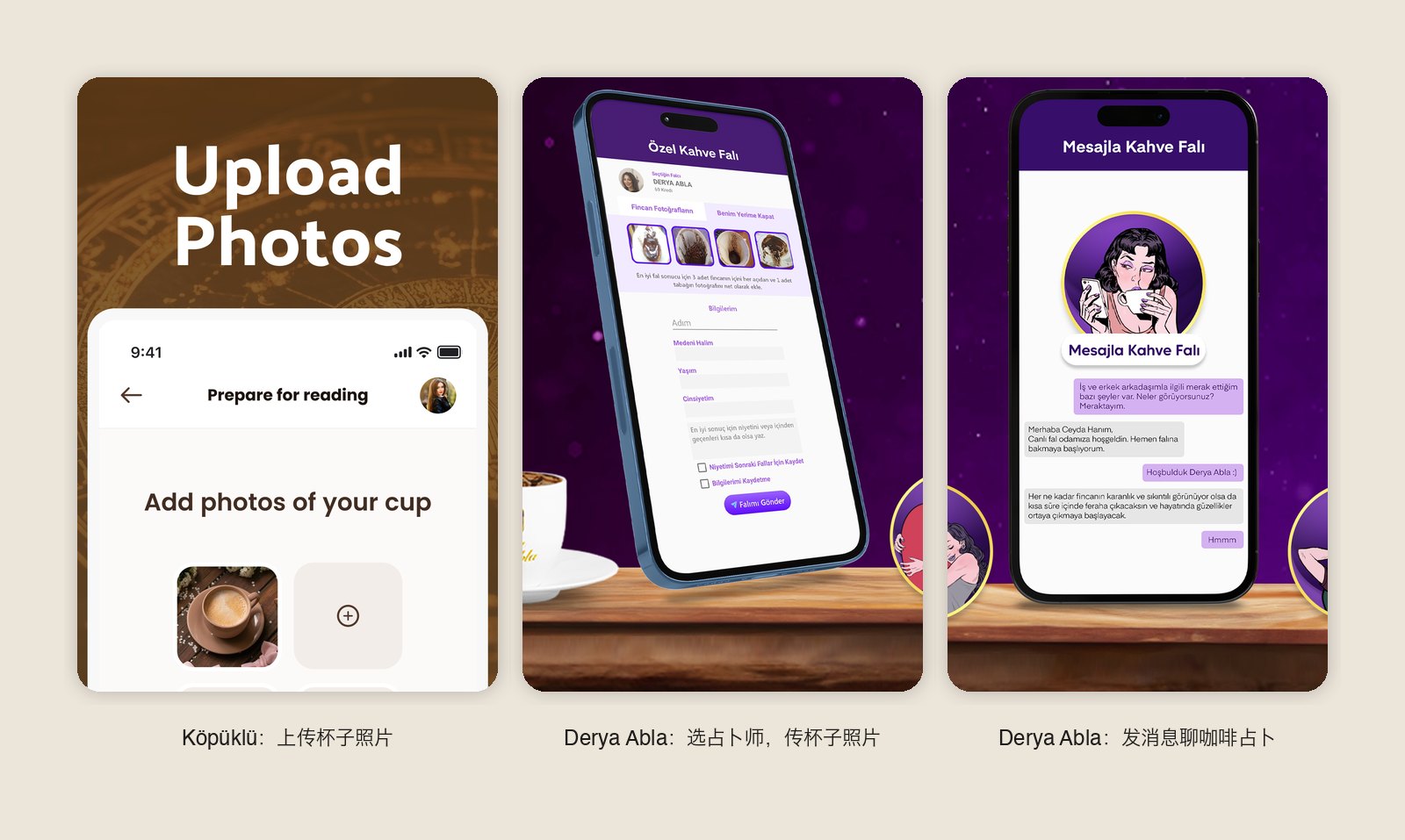
An AI Reads Your Turkish Coffee Cup in Seconds. The Human Readers Make You Wait
Turkey's coffee cup reading apps have long sent your photos to human readers, and reviews complain about hours of waiting and stock phrases. Telveden lets AI read the grounds in seconds, publishes its 85-shape atlas and sources, and admits a different model would see different shapes.
AI DivinationAI metaphysics products
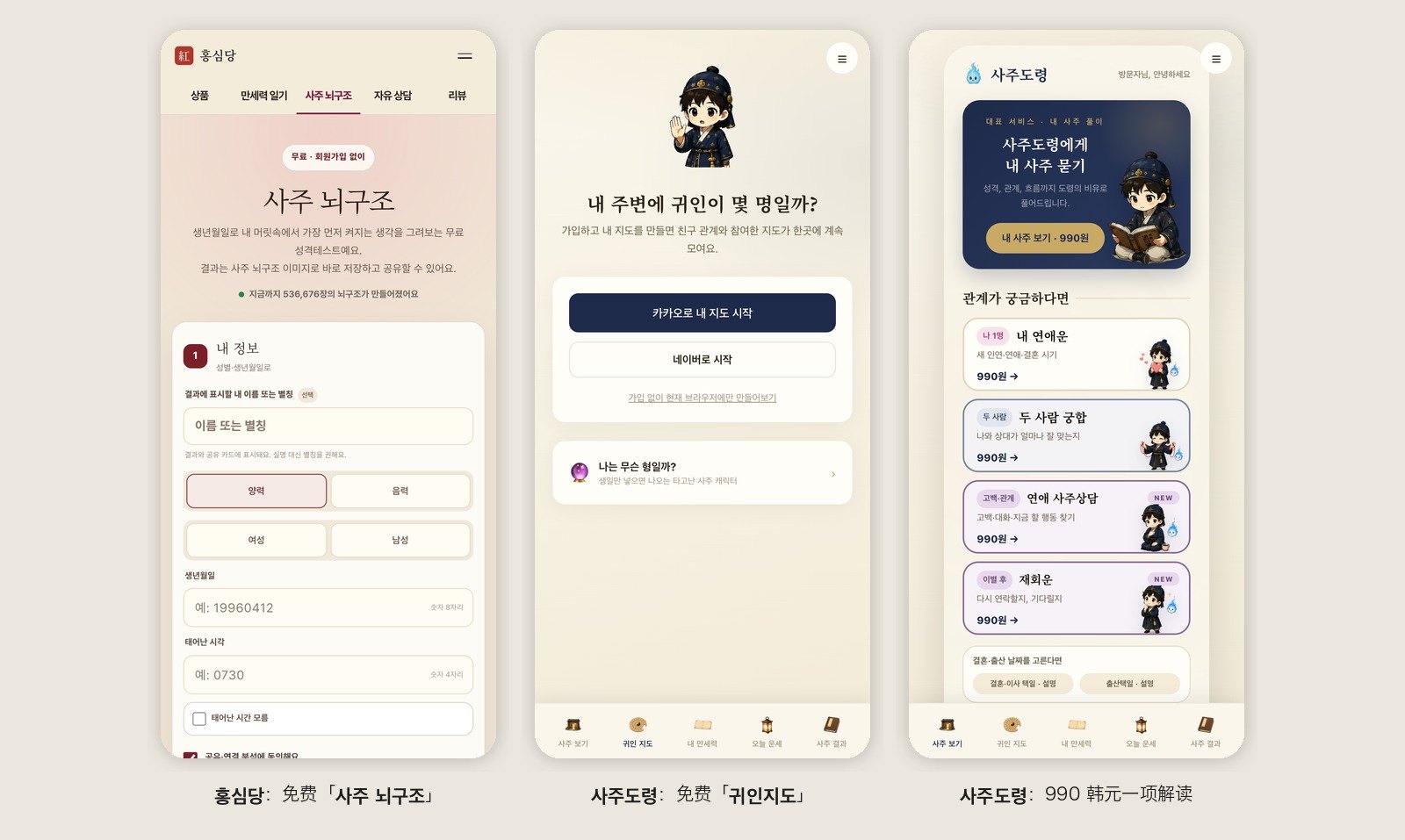
A Saju "Brain Map" Went Viral in Korea. The Money Is in 990-Won AI Readings
Hongsimdang's free saju brain map has passed 530,000 images, and its operator credits one X post with 4.57 million views. Like August's viral benefactor map, the free image is made to be shared, while the money comes from AI saju readings at 990 won each.
BaZiEast Asian divination
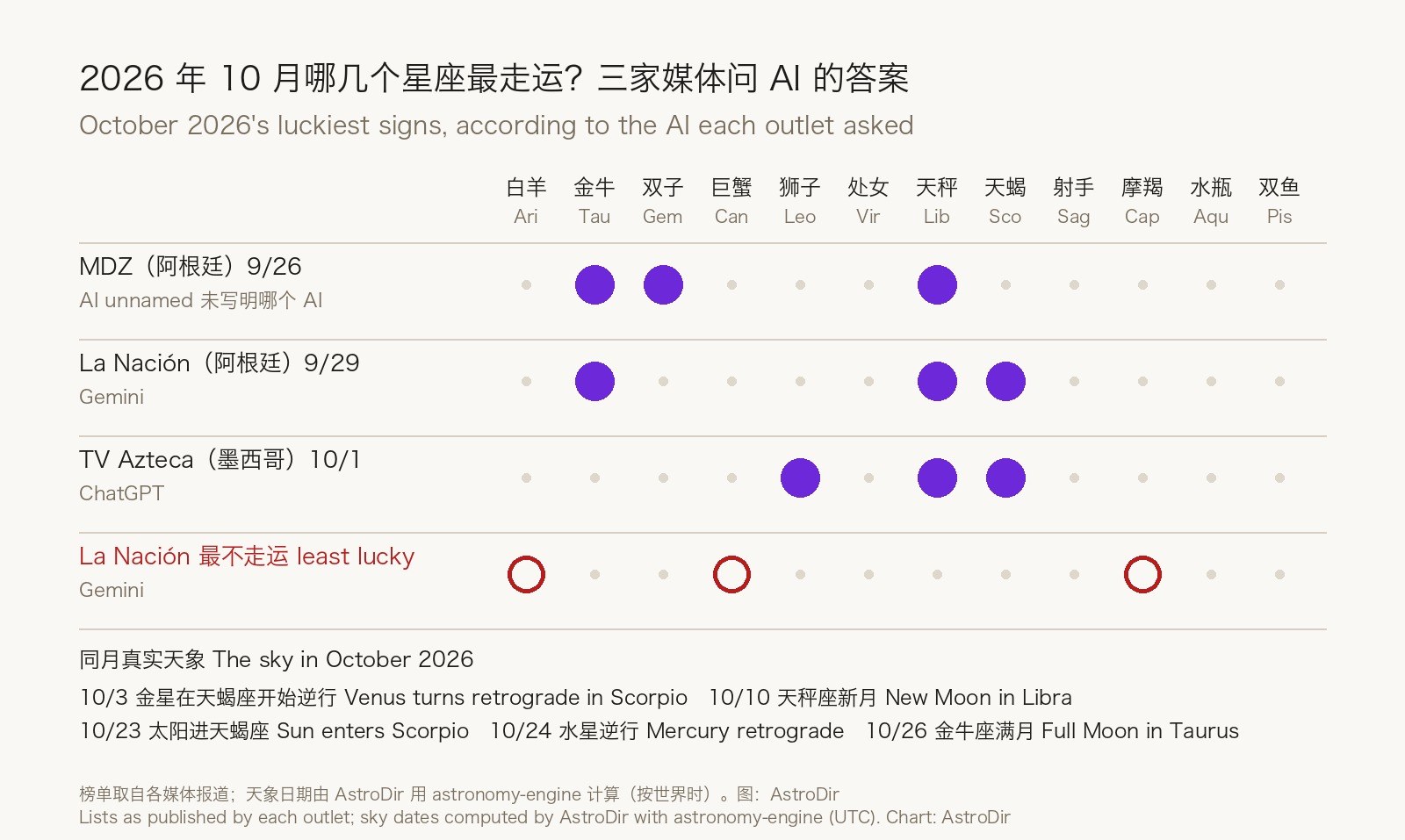
Three Newsrooms Asked AI for October's Luckiest Signs. They Got Three Answers
AOL runs a daily horoscope credited to Google Gemini, and Argentine and Mexican outlets publish monthly AI luck rankings. Checked against an ephemeris, the AI gets the sky right. Who gets lucky depends on which outlet asked which bot, and one paper now credits Gemini to OpenAI.
AI AstrologyContent formats