
AI is starting to read floor plans
Room photos, floor plans, and LiDAR scans are moving into the core flow of Feng Shui apps. The market is early, but the new shape is visible: AI reads the space before it gives advice.
The Feng Shui app market is moving through a specific change: the input is shifting from compass readings, birth data, and short questions to room photos, floor plans, and scans.
FengFlow sits between home improvement and Feng Shui design on its US App Store page. It leads with room photo scanning, Feng Shui and design suggestions, custom space direction planning, and daily inspiration. The more interesting part is the workflow: take a photo of any room, and the AI design assistant looks for ways to improve flow, function, and harmony. It does not ask the user to start with theory. It starts with the room in front of them.
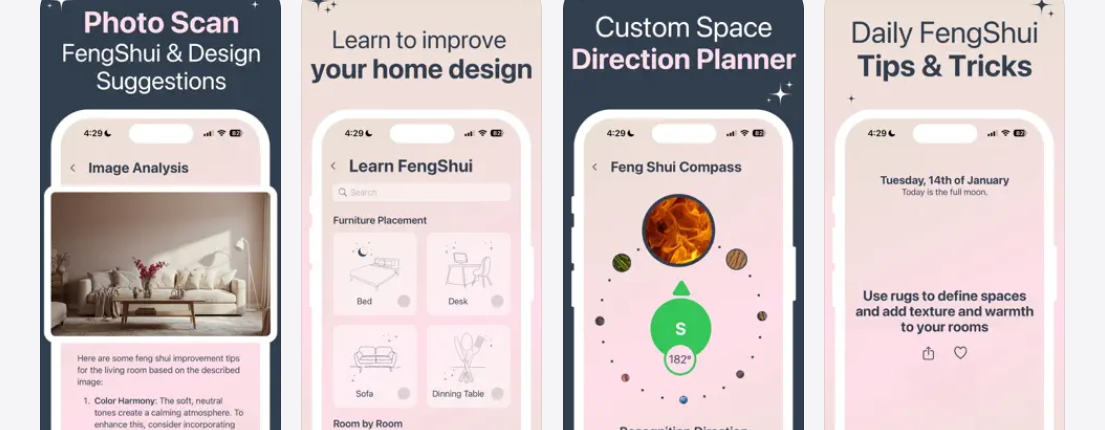
That matters because the product is no longer only answering a typed question. In the older pattern, a user asks where to place a bed or whether a kitchen position is bad, and the app replies from text. In the newer pattern, the app first sees doors, beds, sofas, kitchens, bathrooms, corridors, and room relationships. The advice starts to feel closer to an interior check than a generic reading.
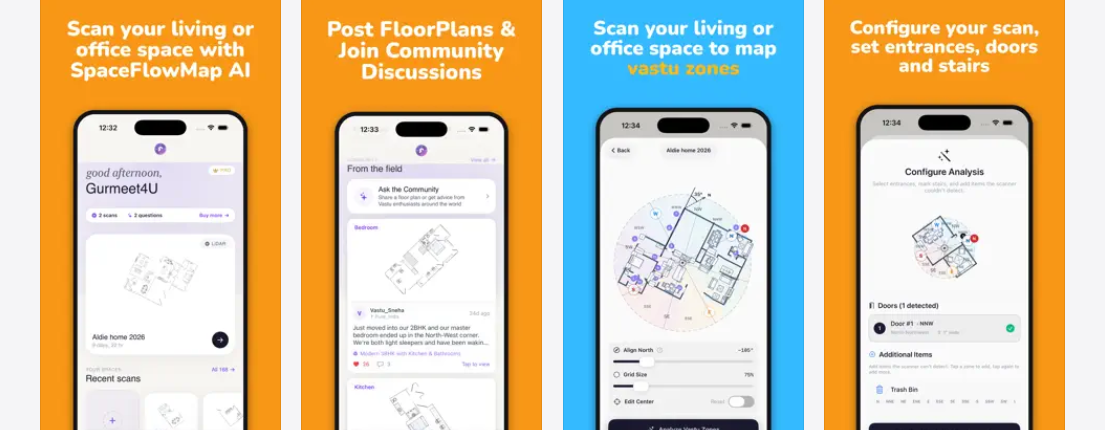
SpaceFlowMap pushes the same direction with a more technical workflow. Its official site is unusually concrete: upload a floor plan, or scan a room with iPhone LiDAR, then place a 16-direction Vastu compass over the plan. The user can move the center point, align the plan to magnetic north, and read what each zone governs, what is strong, and what needs a remedy. The mobile layer adds the AI consultant, photo-based plans, community discussion, and cross-device sync. This is not just "ask AI about Feng Shui." It is a spatial reading workflow.
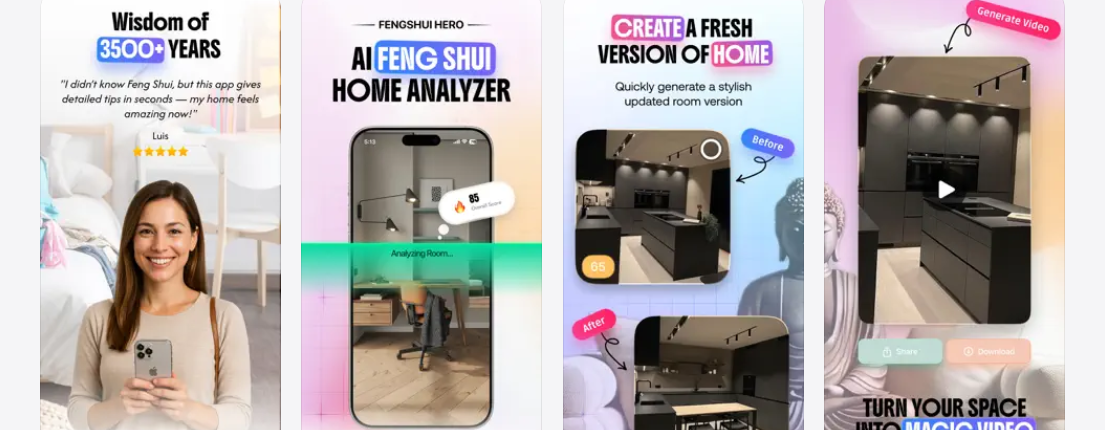
Feng Shui Hero turns the same idea into a more consumer-facing package. Its App Store page promises a Feng Shui Score from one photo of a bedroom, living room, office, kitchen, or entryway, then checks furniture placement, color balance, layout issues, and energy flow. It also stretches the room scan into sleep, focus, romance, wealth, Airbnb setup, storefront flow, and real-estate staging. The copy is clearly more aggressive, but it captures the same demand: people want to see what is happening in their own room, not read a generic explanation.
Put these products together, and the market shift becomes easier to see. FengFlow looks like Feng Shui-flavored home advice. SpaceFlowMap puts scanning and floor-plan overlays at the center. Feng Shui Hero packages room diagnosis as scores and makeover scenarios. AI Feng Shui is moving away from text-only Q&A and toward spatial products that can read images, locate room elements, and suggest concrete changes.
gpt-image-2 helps explain why that shift can continue.
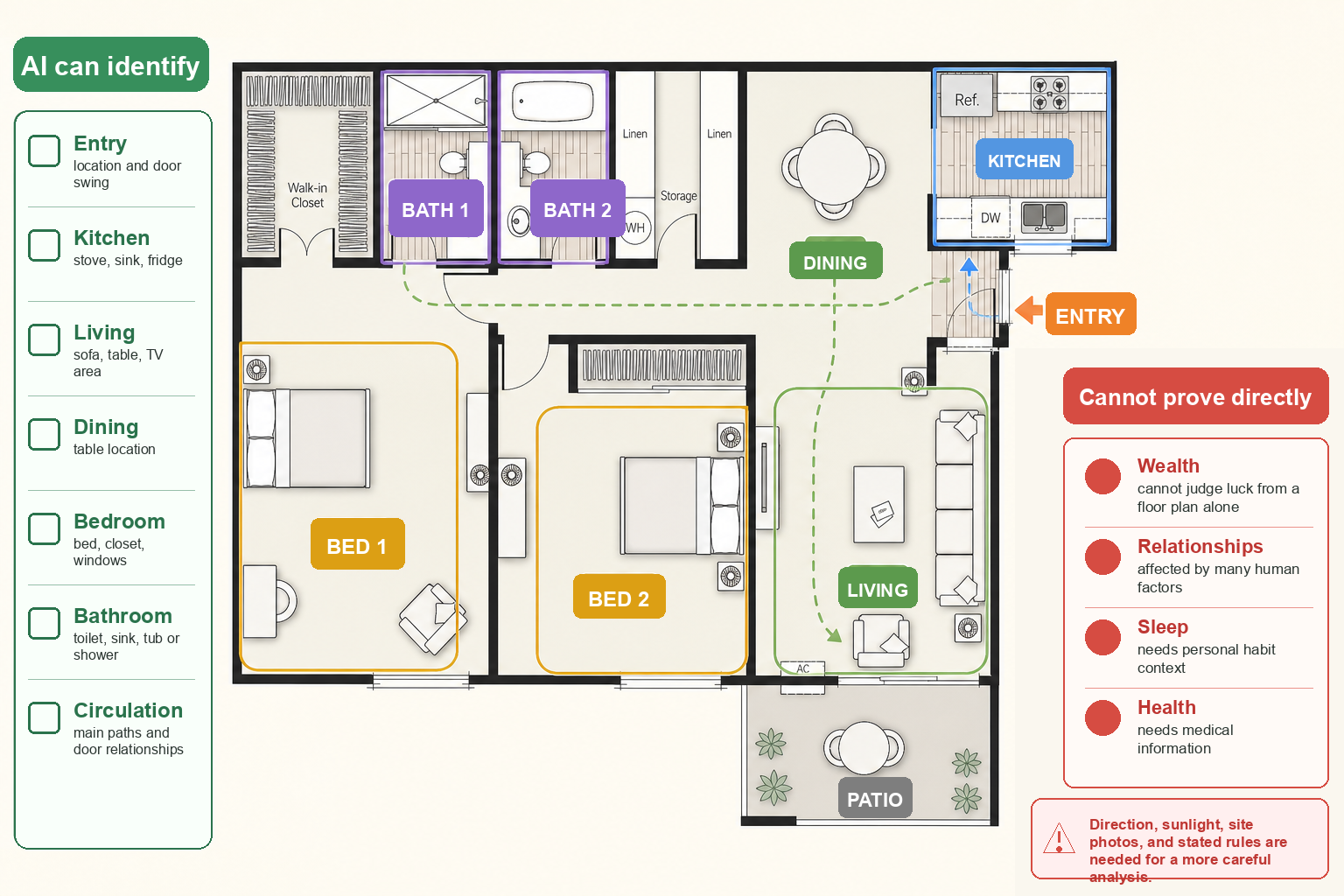
Using the same two-bedroom floor plan, gpt-image-2 can generate an annotation that feels close to a product prototype. It marks the entry, kitchen, living room, dining area, bedrooms, bathrooms, and main circulation path. It also separates wealth, relationships, sleep, and health as areas that need more information. Structure recognition is the important part. Once a model can reliably read a plan, Feng Shui advice can become concrete checks: entry-kitchen distance, living-room circulation, bed-door relationship, missing orientation, sunlight, and site photos.
The market is still early, and some products will keep making claims they cannot fully prove. But one thing is already visible: room photos and floor plans are moving into the core flow of Feng Shui apps. Users are no longer only typing "where should the bed go?" They are handing the app a real room to read first.
That is the point of "AI is starting to read floor plans." The stronger products will turn doors, beds, kitchens, bathrooms, circulation, and orientation into concrete checks. They will also show where photos, compass direction, or site context are still missing. The difference will increasingly come down to whether the app can actually understand the space.
Recommended
 FateKitSponsoredBest for astrology and Chinese-metaphysics readers who want to compare several chart systems for the same moment, inspect the sky data behind them, and prepare structured context for an external AI without uploading a profile by default.
 Cantian AIFor people who want AI Bazi readings and also want to cast a hexagram, check feng shui, or choose a name in the same app.
Sources
- App StoreFeng Shui Design by FengFlow
- App StoreSpaceFlowMap AI
- SpaceFlowMap AISpaceFlowMap AI official site
- App StoreFeng Shui Hero : Room Scanner
Similar stories
This Feng Shui App Scans Your Home and Pins the Flying Stars to the Floor
Hong Kong's Karma Space has you walk your flat with an iPhone, builds a 3D model with LiDAR, takes the door's bearing and lays a Flying Star chart across the floor. It labels AI advisers and human masters separately and says its readings won't use scare tactics. It's still tiny: 18 homes scanned so far.
AI Feng ShuiFloor Plan
This Vietnamese AI Assistant Puts Fortune-Telling Before Math
Tatca.ai puts four divination shortcuts ahead of its homework tools. Its Tử Vi assistant adds a birth-details form and an interactive demonstration for browsing a chart by age.
VietnamEast Asian divination
Your Tarot Deck Can Come Along, Guidebook Included
Scan the cards you own, keep their guidebook alongside them, then use them in readings. Tarot Decks now accommodates Lenormand, oracle and angel decks with custom card counts.
Content formats