
A practical tarot tool stack for learning card meanings, pulling free spreads, keeping a daily habit, and using AI without letting it flatten the cards.
2026/05/19
Most tarot tools fail in the same boring way. They give you a card, a paragraph, and a little glow around the answer. That can be pleasant for five minutes, but it does not help much if you are trying to read better.
A useful tarot tool has to do a specific job. It should help you learn the deck, choose a spread, understand card positions, keep notes, or work through a question without turning the cards into vague advice.
So I would not compare tarot apps by asking which one is best. I would build a small stack: Labyrinthos for learning, Tarot.com for a classic reading portal, Trusted Tarot for a quick free spread, Pana Tarot for mobile habit and multilingual AI-style readings, and TarotReader.ai for testing what AI does well and where it gets thin.
Before I trust a tarot tool, I look for five things. First, does it name the card and position clearly? A card in the outcome position is not the same as a card in the obstacle position.
Second, does it tell you how it treats reversals? Some readers use reversed cards. Some do not. Either can be fine, but the tool should not hide the rule.
Third, does it separate card meaning from life advice? The Tower is not a command to blow up your life. The Lovers is not always a romance answer. Good tools keep the symbol and the situation in conversation.
Fourth, can you save or revisit a reading? Tarot is often more useful after a day or two, when the first emotional reaction has cooled down.
Fifth, does the tool admit its limits? A tarot app should not pretend to replace legal, medical, financial, or mental health advice. I know that sounds obvious. Many products still blur it.
Labyrinthos is strongest as a learning environment. Its site points to tarot meanings, spreads, workbooks, decks, and a free app. The page also says the app lets people get readings and practice card meanings.
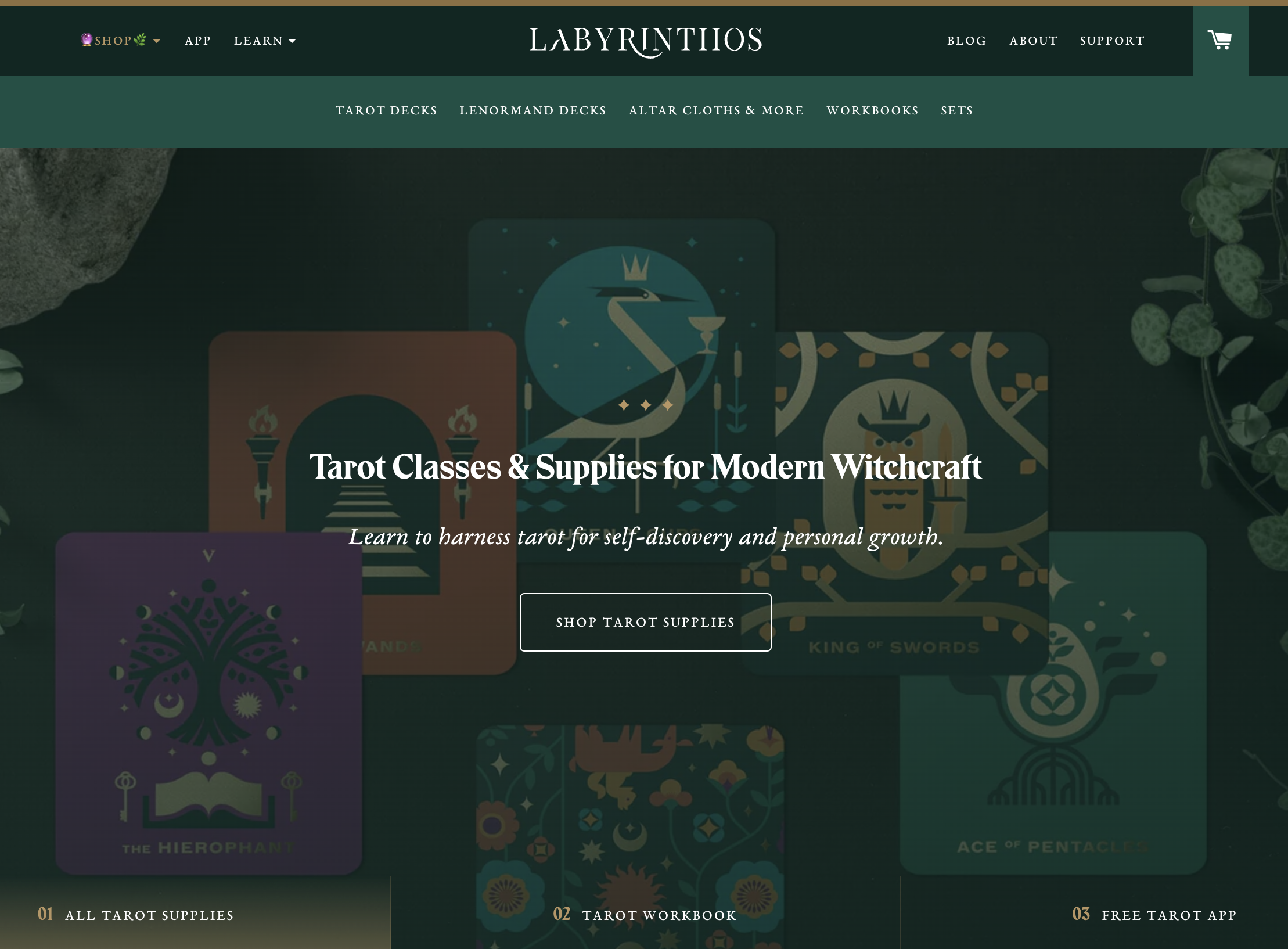
That matters because tarot beginners usually make the same mistake. They pull cards before they have a feel for the deck's grammar. Labyrinthos slows that down in a useful way. It keeps card meanings, spreads, and practice close together.
The weakness is also clear. Labyrinthos has a strong visual and teaching voice, so it can shape how you read. That is fine if you know it is happening. I would use it to build card memory, then compare meanings against another source once the basics feel less slippery.
Tarot.com is not a quiet learning app. It is a broad divination site with tarot readings, daily horoscope pages, love compatibility, birth chart material, card meanings, deck browsing, yes-or-no tarot, yearly tarot cards, and beginner resources.
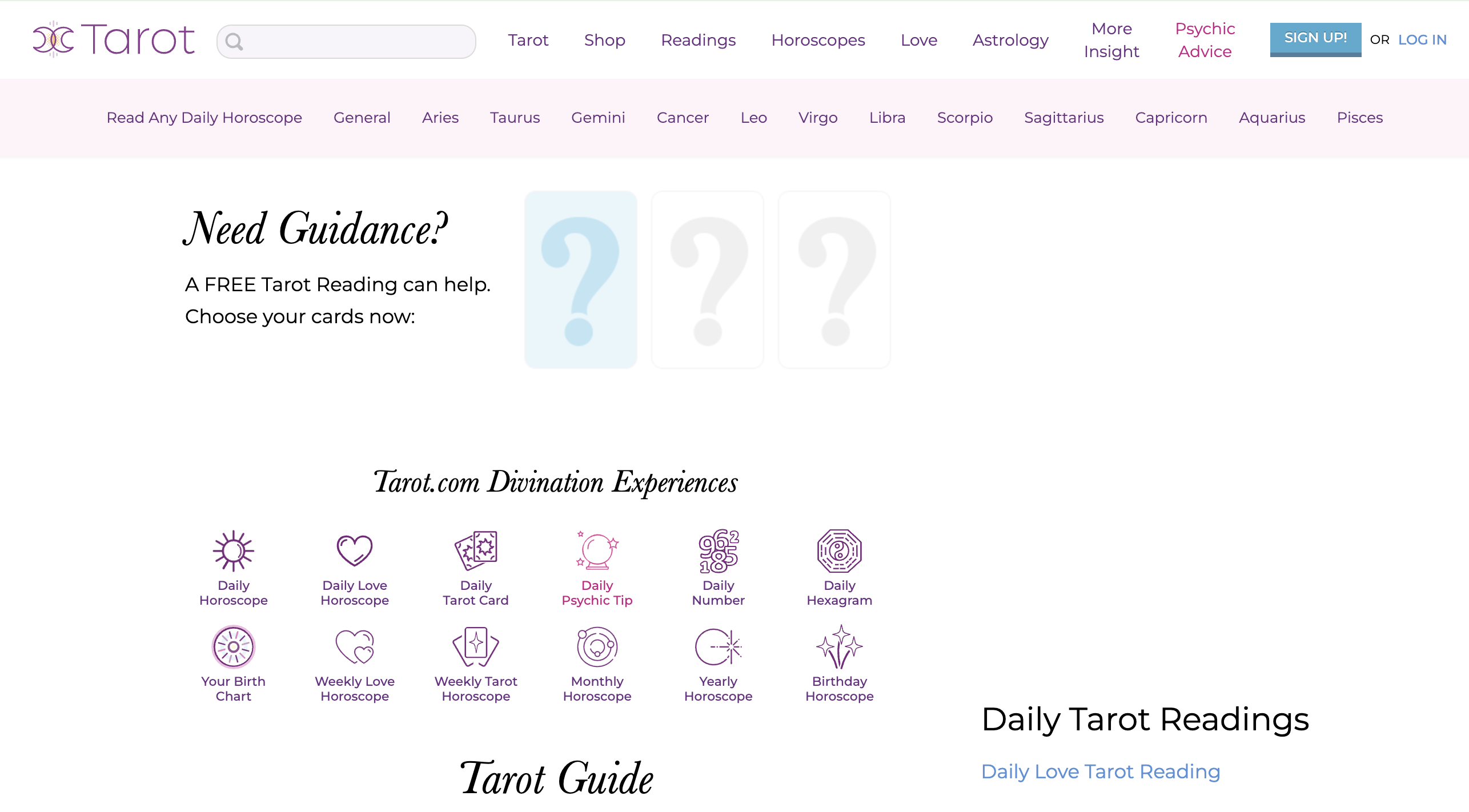
I would use it when I want a traditional web reading experience and a lot of adjacent material in one place. It is useful for browsing. It is less useful if you want a clean practice notebook or a focused study path.
That is the tradeoff with old portals. They have history and a large library feel. They also make you sort through more doors than a modern app would.
Trusted Tarot is not subtle about its claim. The page says its readings use real tarot cards shuffled by hand and uploaded to the site. It also shows a 4.9 rating based on 66,587 reviews, plus free readings, card meanings, love tarot, daily tarot, tarot horoscope, and an app.
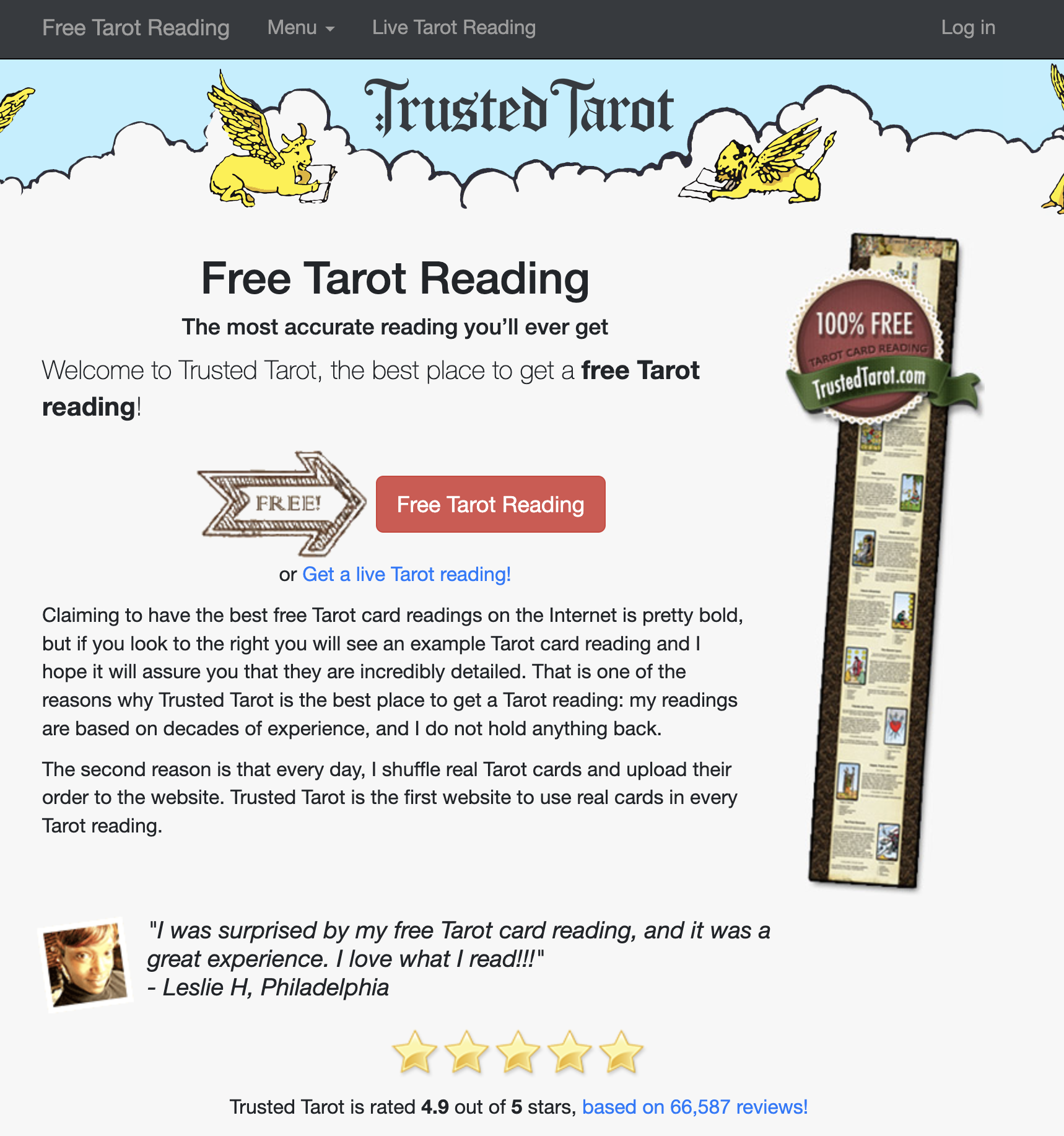
I like it for one reason: the product has a narrow ritual. You go there, take a reading, and read the positions. It does not try to become a full spiritual operating system.
The page copy is very confident, sometimes too confident for my taste. But the specific promise is useful. If you want a fast free spread without installing anything, Trusted Tarot is easier to justify than a random AI card page.
Pana Tarot is a different product shape. Its official page leads with relationship uncertainty, career questions, morning horoscopes, late-night divination, card interpretations, love spreads, wealth flow, workplace relationships, divine sticks, astrology, and lucky wallpapers. It also ships in several language routes, including Chinese, English, and Japanese.
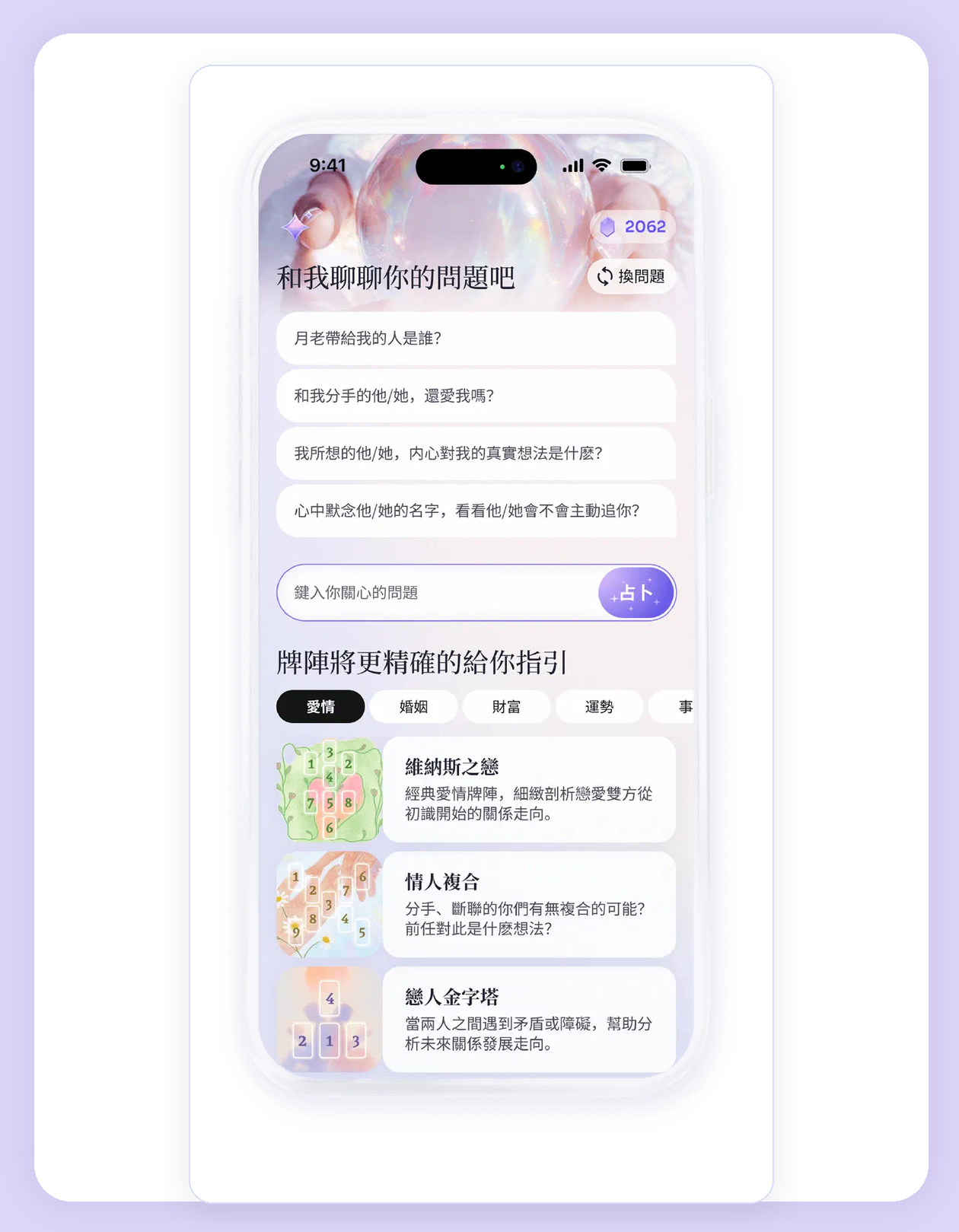
That is not a pure tarot study tool. It is a mobile ritual product. It wants to become the thing you open when your mood is unsettled or when you want a daily prompt.
This kind of app can be useful if you want recurring prompts, relationship spreads, and a softer reading flow. I would not use it as my only source for learning card meanings. The product language is more advice-driven than deck-study-driven.
TarotReader.ai is the AI example I would include because it states the caveat right on the page. It says AI can be used for fun, learning, or quick advice, but also says AI does not have the same personalized human touch as a human tarot reader and cannot fully replace one.
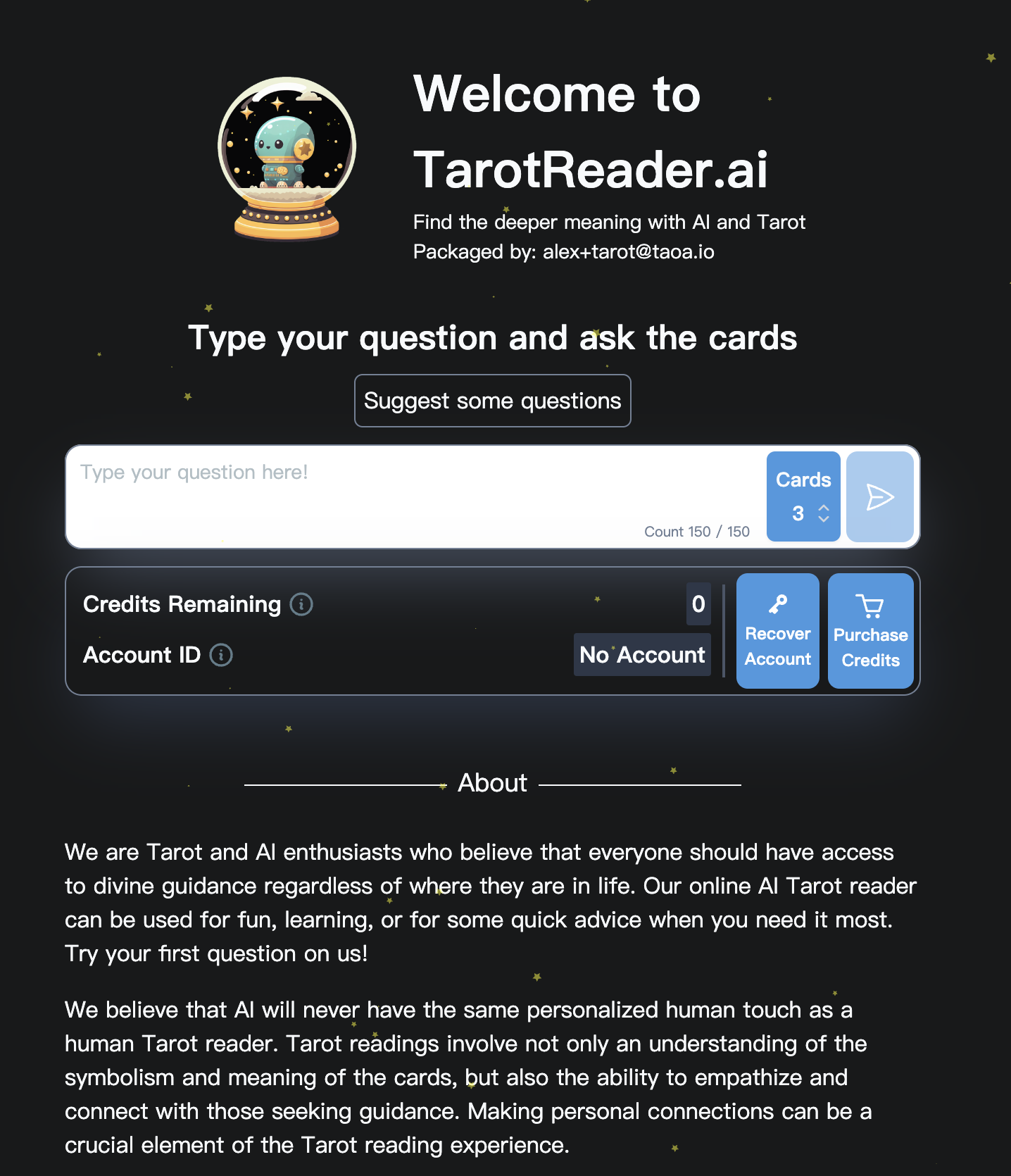
The interface starts with a question box and a three-card reading. It allows follow-up questions, with the first question free and paid follow-up credits after that. That makes sense for AI. The best use is not a one-shot prophecy. It is interrogation.
Ask it what pattern the cards are pointing to. Ask what part of the question is poorly framed. Ask for two possible readings of the same card. AI is better at helping you think around the spread than deciding your life for you.
Bad tarot questions make good tools look worse. I would avoid questions like, will this person come back, will I get the job, or should I quit today. They force the spread into fortune-cookie mode.
Better questions give the cards room to show structure. Try: what am I not seeing about this situation? What pattern keeps repeating here? What would help me make a cleaner decision? What tradeoff am I avoiding? What does this situation need from me this week?
For relationship readings, I would ask about dynamics, not control. What is the emotional pattern between us? Where am I projecting? What boundary would make this cleaner? Those questions are harder to sensationalize and easier to use.
If someone were starting from zero, my order would be simple. Learn card meanings and spreads in Labyrinthos. Use Tarot.com when you want the classic web reading ecosystem. Keep Trusted Tarot for quick free spreads. Use Pana Tarot if you want a mobile daily habit. Test TarotReader.ai only after you can recognize when the answer is flattening the cards.
That last point matters. AI can make tarot sound smoother. Smoother is not always better. A good reading should leave a little friction, because the useful part is often the card you did not want to see.